
Sleep Apnea Care at Home: CPAP, BiPAP, Testing & Family Guide
The short version
- Snoring is a symptom, not the disease. Obstructive sleep apnea is diagnosed by a sleep study that measures how many times breathing stops or becomes shallow per hour — the Apnoea-Hypopnoea Index (AHI).
- Most sleep apnea in India is never diagnosed. An estimated 104 million adults in India have obstructive sleep apnea — the second-largest national burden in the world.
- CPAP is the standard therapy; BiPAP is not an upgrade. BiPAP is used in specific situations such as high-pressure intolerance, hypoventilation, or COPD overlap — decided by the treating doctor.
- The mask decides whether therapy succeeds. Most people who abandon CPAP abandon the mask, not the machine.
- Pressure settings must be titrated, not guessed. Renting first lets a patient trial the therapy and mask type before committing to a purchase.
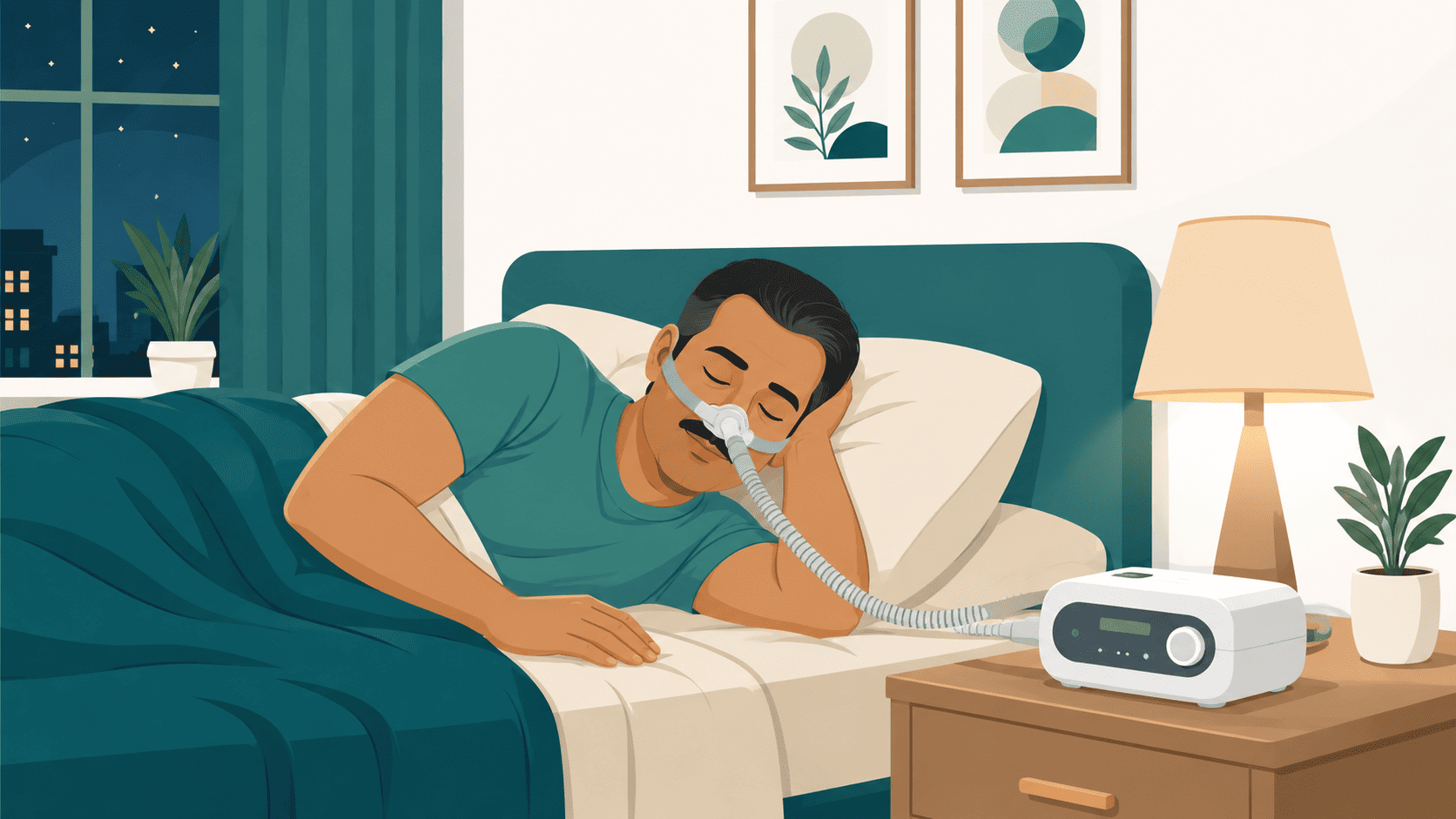
Sleep apnea rarely announces itself. It usually arrives as years of loud snoring, morning headaches, uncontrolled blood pressure, and a spouse who has quietly moved to another room. This guide explains how sleep apnea is actually diagnosed, which machine belongs in which situation, how to set up therapy at home, and what to do in the difficult first month.
What is obstructive sleep apnea, in plain language?
Obstructive sleep apnea is a condition in which the soft tissues at the back of the throat collapse repeatedly during sleep, blocking airflow. Each blockage lowers blood oxygen and forces a brief arousal from sleep. The person is not aware of it, but the sleep architecture is destroyed night after night.
The airway does not close because of weak lungs. It closes because the muscles that hold the throat open relax during sleep. Neck fat, a small or set-back jaw, enlarged tonsils, nasal blockage, alcohol before bed and sedatives all make that collapse more likely.
Two terms matter when reading a sleep report. An apnoea is a near-complete stop in airflow lasting at least ten seconds. A hypopnoea is a partial reduction in airflow with an oxygen drop or arousal. Add them together, divide by hours of sleep, and the result is the AHI — the number that grades severity.
There is also central sleep apnea, where the brain briefly stops sending the signal to breathe. It is much less common, is seen in heart failure and some neurological conditions, and is managed differently from obstructive sleep apnea. Only a sleep study can tell the two apart.
What are the warning signs families usually miss?
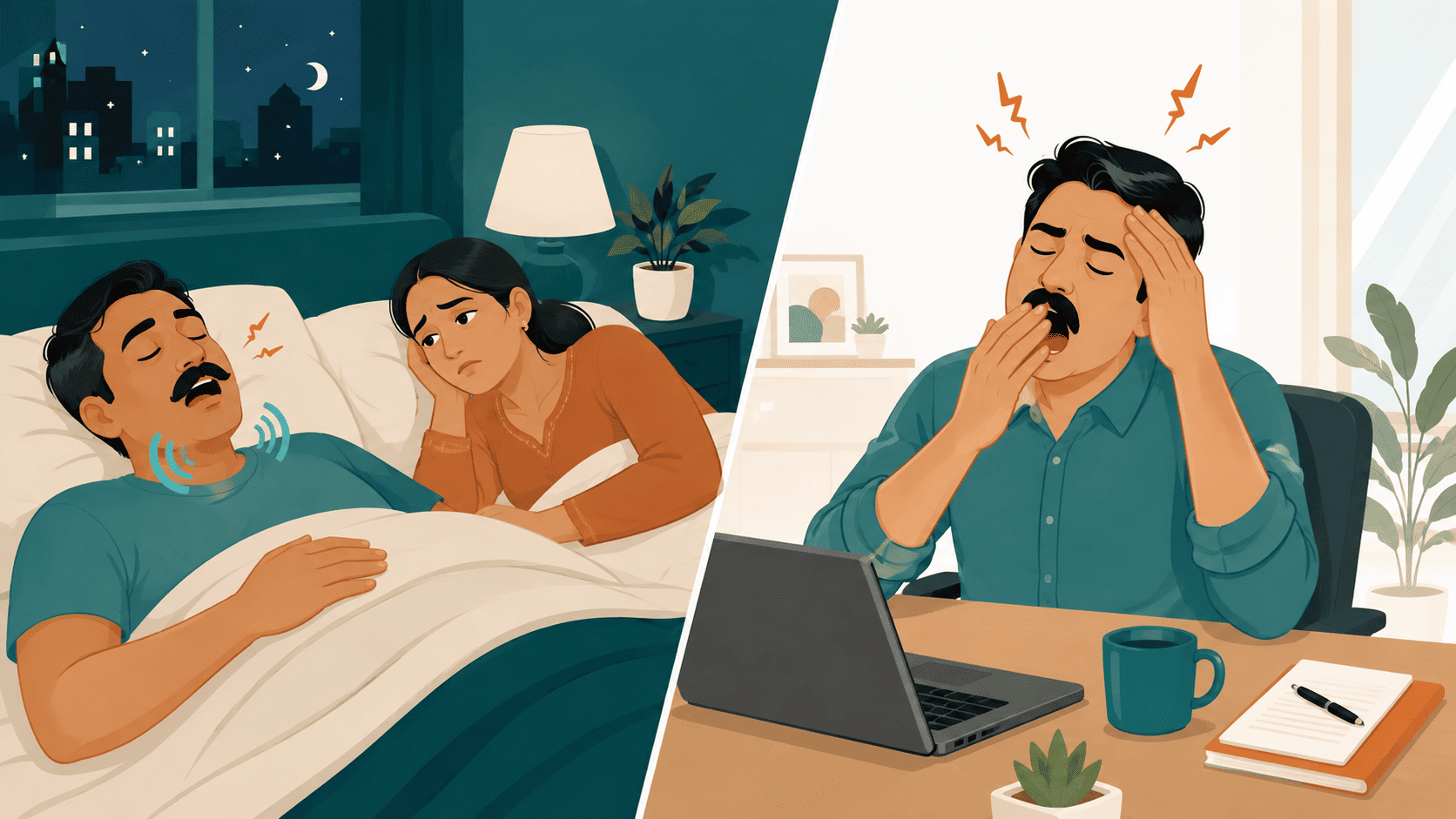
The patient reports daytime symptoms. The bed partner reports night-time symptoms. Neither picture is complete on its own, which is why sleep apnea is so often missed in a short clinic consultation.
| What the bed partner notices | What the patient notices |
|---|---|
| Loud, habitual snoring most nights | Waking unrefreshed even after 7–8 hours in bed |
| Silent pauses in breathing, ending in a gasp or snort | Morning headache or dry mouth on waking |
| Restless, thrashing sleep | Falling asleep while watching TV, in meetings, or at traffic signals |
| Getting up two or more times to pass urine | Irritability, low mood, poor concentration and memory |
| Sleeping propped up on pillows to breathe comfortably | Reduced libido and unexplained daytime fatigue |
Who should be screened even without obvious snoring?
Sleep apnea is strongly associated with several conditions that are common in North Indian households. Discuss screening with a doctor if the patient has:
- Blood pressure that stays high on three or more medicines — resistant hypertension is closely linked with untreated sleep apnea.
- Type 2 diabetes with poor control despite adherence to treatment.
- Atrial fibrillation or other rhythm disturbances.
- Previous stroke or transient ischaemic attack.
- Increased neck circumference and central obesity.
- A profession involving driving or operating machinery.
South Asian patients can have sleep apnea at a lower body weight
Sleep apnea is often assumed to be a disease of visibly obese patients. South Asian populations tend to carry more central and upper-airway fat at a lower body mass index, and craniofacial structure also contributes. A normal-looking BMI does not rule out obstructive sleep apnea, and a sleep study should not be refused on appearance alone.
How is sleep apnea tested at home?
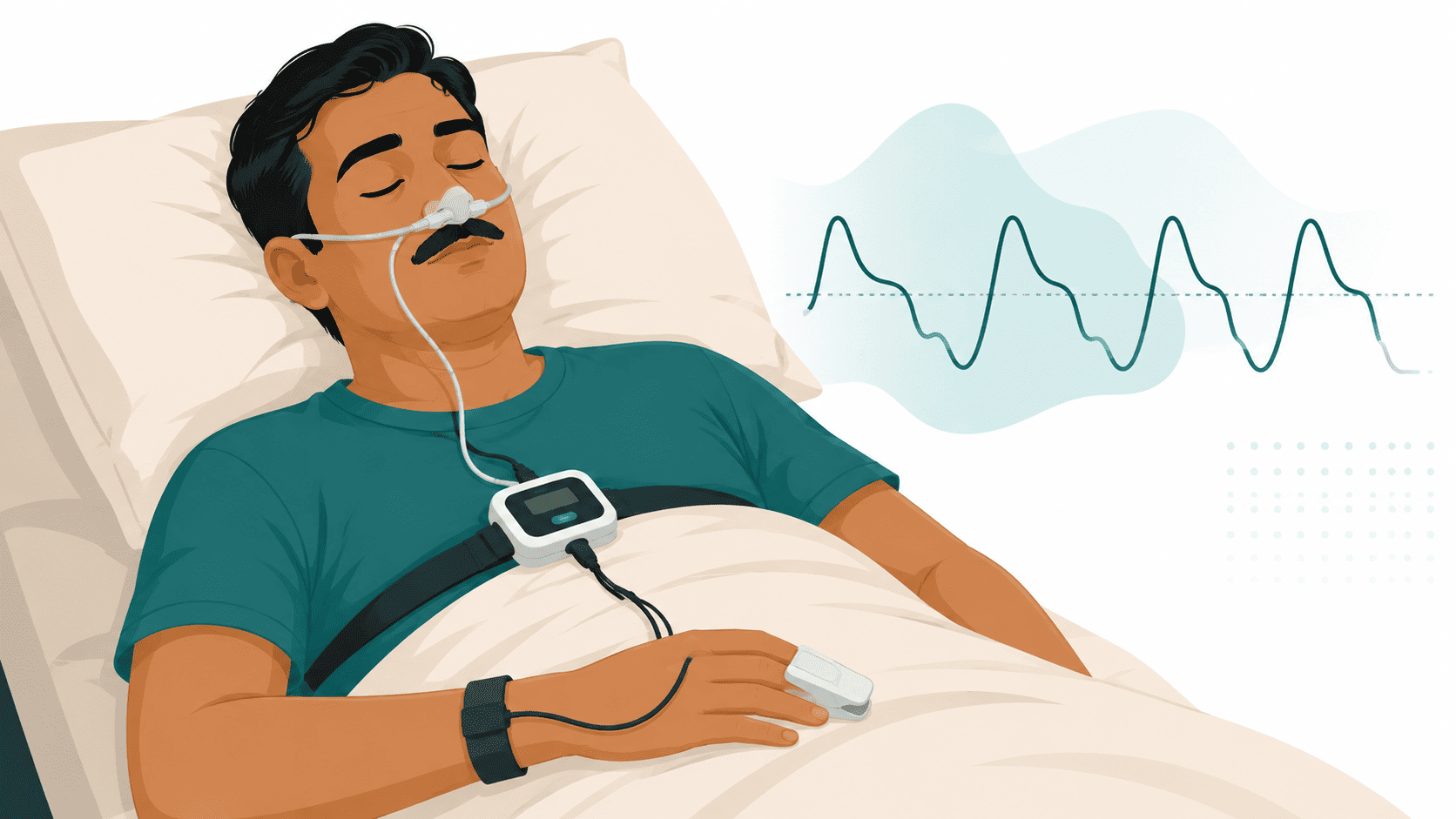
Two routes exist. A home sleep apnea test records airflow, breathing effort, oxygen saturation, heart rate and snoring while the patient sleeps in their own bed. A full in-lab polysomnography adds brain-wave, eye-movement and leg-movement channels and is performed in a sleep laboratory.
For an adult with a high probability of moderate-to-severe obstructive sleep apnea and no complicating conditions, a home sleep apnea test is widely accepted as an appropriate first step. In-lab polysomnography is generally preferred where there is significant heart or lung disease, suspected central sleep apnea, neuromuscular disease, or when a home test is negative but symptoms remain strong.
How to read a sleep study report
| AHI (events per hour) | Severity grade | What usually follows |
|---|---|---|
| Under 5 | Normal range in adults | Snoring may still be addressed, but positive airway pressure therapy is usually not indicated. |
| 5 – 14.9 | Mild | Weight reduction, positional therapy, alcohol and sedative avoidance; therapy considered where symptoms or comorbidities are significant. |
| 15 – 29.9 | Moderate | Positive airway pressure therapy is commonly recommended. |
| 30 and above | Severe | Positive airway pressure therapy is generally recommended, with attention to cardiovascular risk. |
Also look at the lowest oxygen saturation and the time spent below 90% saturation. Two patients can share an identical AHI while one is desaturating far more deeply — that difference influences urgency and follow-up.
Home sleep test availability depends on location, device availability and service coverage.
CPAP, APAP or BiPAP — which machine is prescribed when?
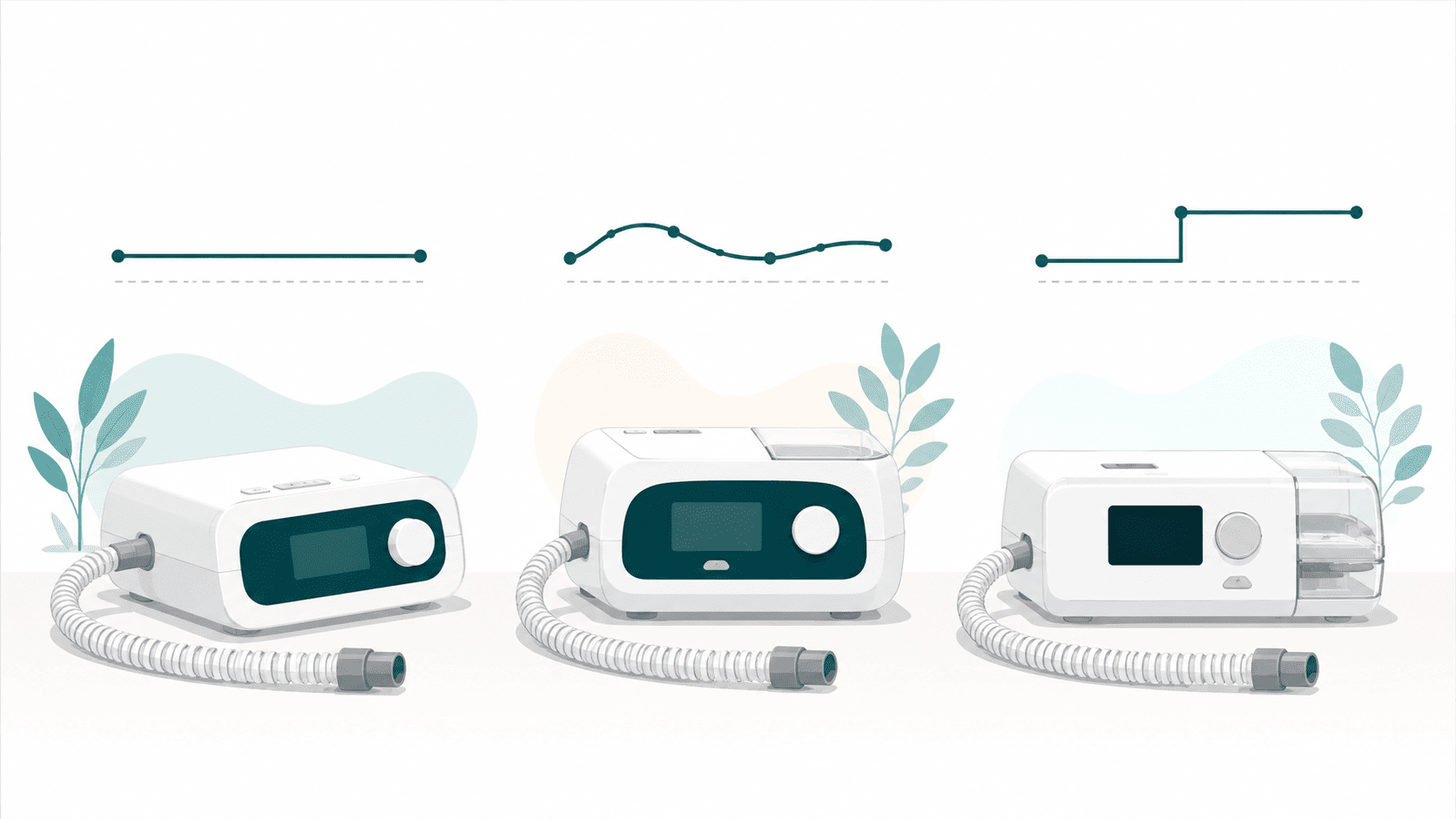
All three deliver pressurised air through a mask to splint the airway open. The difference is how that pressure behaves. CPAP holds one fixed pressure. APAP adjusts pressure automatically within a prescribed range. BiPAP delivers a higher pressure on inhalation and a lower pressure on exhalation.
| CPAP | APAP (Auto-CPAP) | BiPAP | |
|---|---|---|---|
| Pressure behaviour | One fixed pressure all night. | Varies automatically within a prescribed minimum and maximum. | Two separate pressures — IPAP on inhalation, EPAP on exhalation. |
| Typical use | Standard therapy for obstructive sleep apnea once pressure is titrated. | Where a single fixed pressure is difficult to establish or requirements vary by position and sleep stage. | Selected patients — high pressure intolerance, hypoventilation, or COPD overlap. |
| Exhalation comfort | Some relief features available depending on model. | Similar comfort features, with responsive pressure. | Greater relief because exhalation pressure is distinctly lower. |
| Chosen by | The treating physician, based on the sleep study, titration data and coexisting conditions. It is not a comfort preference or a budget decision. | ||
A frequent misunderstanding is that BiPAP is simply a better CPAP. It is not. BiPAP is a different therapy chosen for specific clinical reasons. For a patient with uncomplicated obstructive sleep apnea, CPAP or APAP is usually appropriate, and moving to BiPAP without indication adds cost without adding benefit.
Some patients have both obstructive sleep apnea and chronic obstructive pulmonary disease — described as overlap syndrome. Device selection in these patients is more complex, and CO₂ retention must be considered. Families managing this combination should also read the Healthy Jeena Sikho guide to COPD care at home.
How is the correct pressure decided?
Through titration. Pressure is either established during an attended titration study in a sleep lab, or derived from a supervised trial on an auto-adjusting machine over several nights, with the data reviewed by the treating physician.
The aim is the lowest pressure that keeps the airway open across all sleep positions and sleep stages — including REM sleep and back-lying, when collapse is usually worst. Too little pressure leaves events untreated. Too much pressure causes mask leak, aerophagia and central events, and drives patients to abandon therapy.
Do not adjust pressures yourself
IPAP, EPAP, minimum and maximum pressure, ramp and backup rate are clinical parameters set from the prescription. Healthy Jeena Sikho configures rented machines according to the prescription supplied and does not independently set clinical parameters. If therapy feels wrong, the correct step is to contact the treating physician with the machine's usage data.
Which mask type suits which patient?
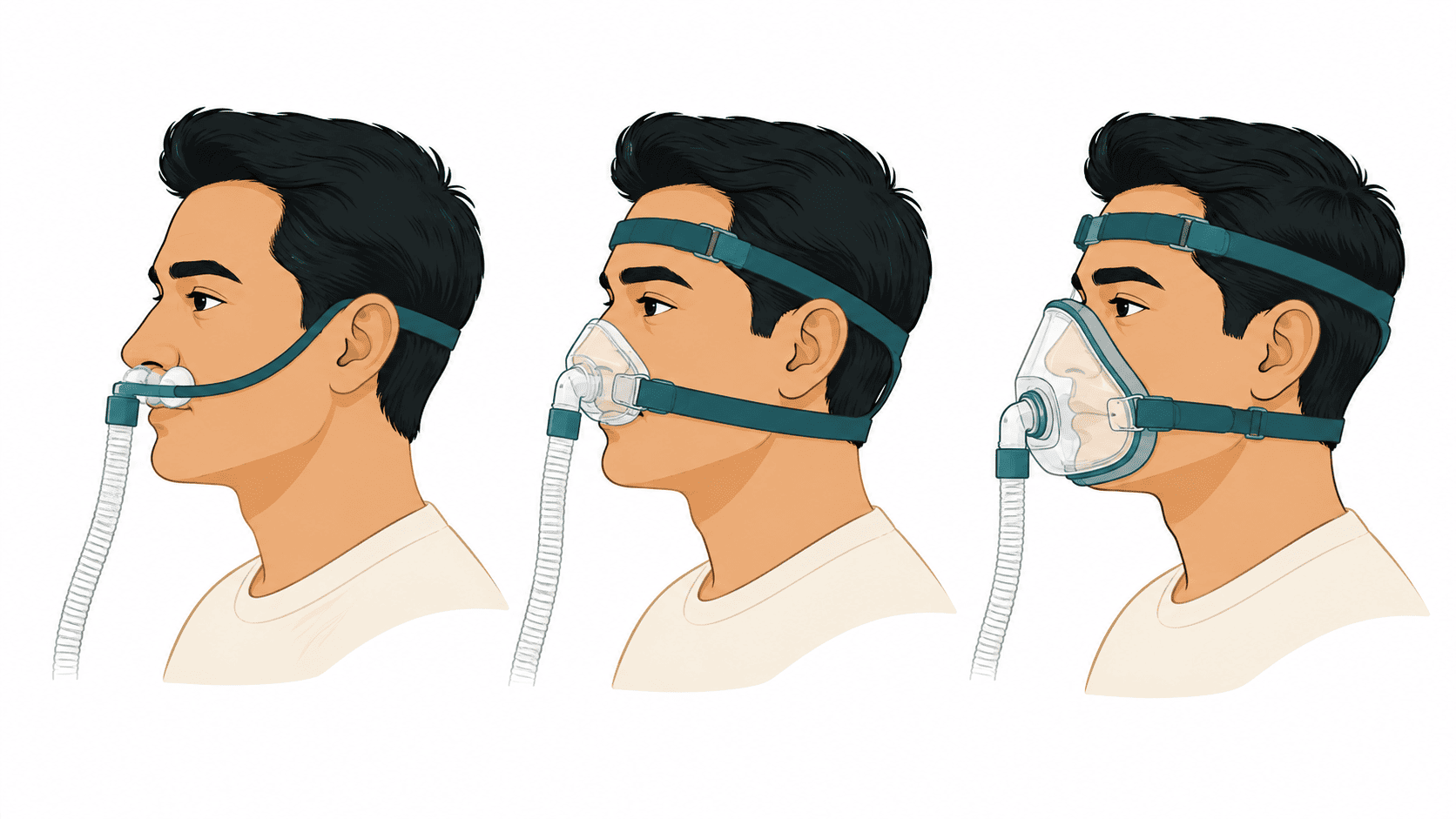
Mask choice is the single biggest predictor of whether therapy continues past the first month. The right mask is the one that seals at the prescribed pressure without pain, allows the patient's usual sleeping position, and matches whether they breathe through the nose or mouth.
| Mask type | Suits | Watch out for |
|---|---|---|
| Nasal pillow | Nose breathers, side sleepers, patients who feel claustrophobic, spectacle and beard wearers. | Nasal dryness at higher pressures; not suitable if the patient is a mouth breather. |
| Nasal mask | Most nose breathers; a common default choice across pressure ranges. | Leak through the mouth if the jaw drops open during sleep. |
| Full face mask | Mouth breathers, chronic nasal blockage, patients on higher pressures. | Larger contact area, more leak points, bulkier for side sleepers. |
Sizing matters as much as type. A mask that is too large is tightened to compensate, which causes pressure marks on the bridge of the nose and still leaks. Cushions are consumables and lose their seal over months of use — a leaking mask is often an old cushion, not a failing machine.
What does a complete sleep apnea home setup include?
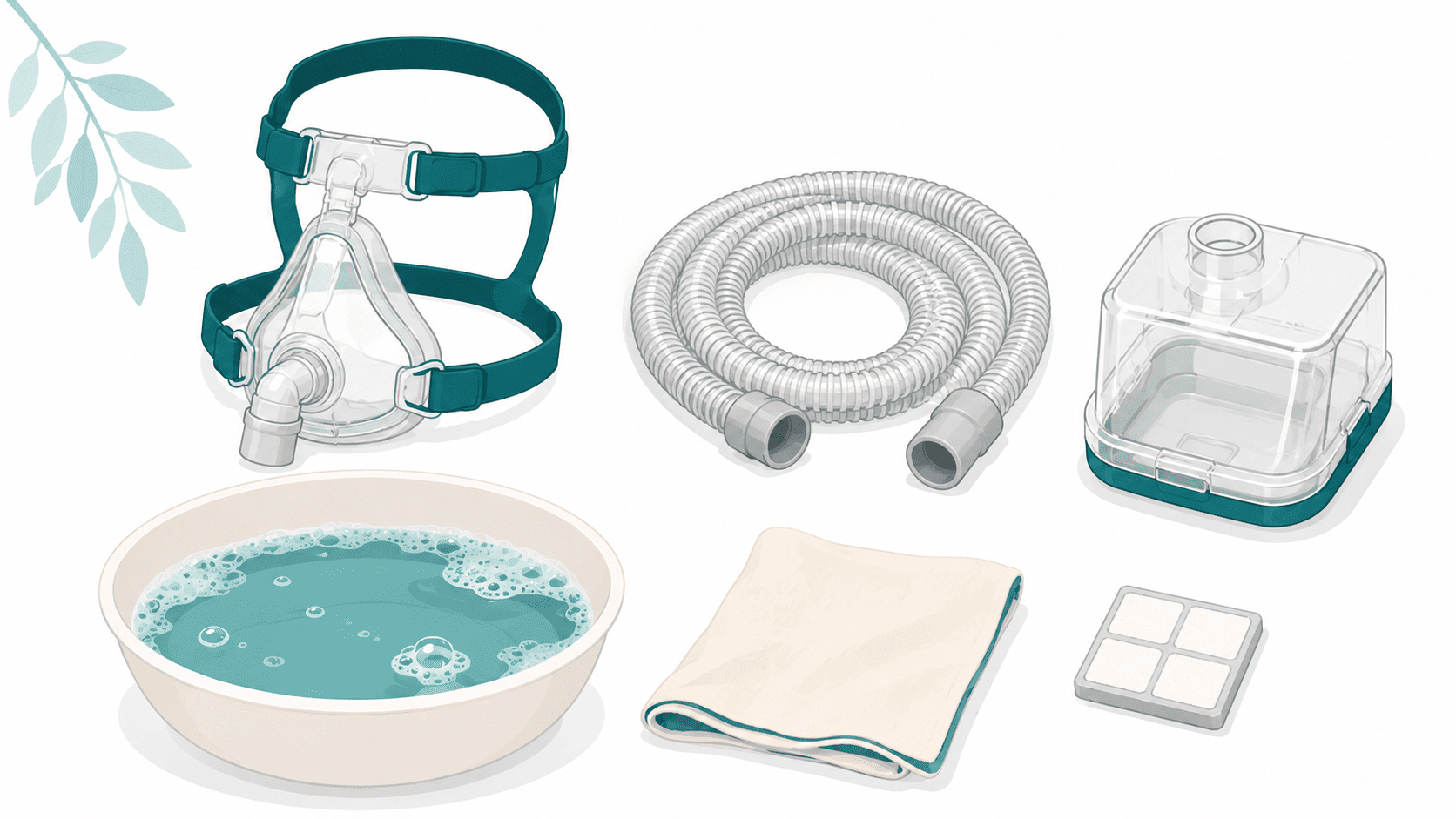
CPAP or BiPAP Machine
The prescribed device, configured to the pressure settings supplied by the treating physician.
Correctly Fitted Mask
Nasal pillow, nasal or full face, in the correct size, with spare cushions available.
Heated Humidifier
Reduces nasal dryness, throat irritation and nosebleeds, which are common complaints in dry North Indian winters.
Pulse Oximeter
Useful for spot-checking oxygen saturation and tracking a personal baseline. It does not replace a sleep study.
Power Backup
An inverter or UPS supply matters where power cuts are frequent, since therapy is needed every night without exception.
Consumables Stock
Filters, tubing, cushions and headgear are replaced on a schedule, not only when they visibly fail.
For patients who also have limited mobility or are recovering after a hospital admission, Healthy Jeena Sikho supplies hospital beds on rent and oxygen concentrators on rent alongside positive airway pressure therapy.
How do you get through the first month of CPAP?
Adherence is usually defined in clinical practice as using the device for at least four hours a night on at least seventy per cent of nights. Most patients who abandon therapy do so in the first few weeks, and almost always for a fixable reason.
| Problem | Usual cause and first step |
|---|---|
| Air leaking into the eyes | Mask too large or over-tightened. Re-check size and loosen straps rather than tightening further. |
| Dry nose, sore throat, nosebleeds | Insufficient humidification. Adjust humidifier level and consider a heated tube; report persistent bleeding to the doctor. |
| Bloating and belching | Air swallowing, often linked to pressure or mask fit. Needs review by the treating physician — not a self-adjustment. |
| Pressure feels too strong at bedtime | Use the ramp feature so pressure builds gradually while falling asleep. |
| Mask removed unconsciously at night | Common early on. Wear the mask awake for short periods during the day to build tolerance, and re-check fit. |
| Marks on the bridge of the nose | Over-tightening or wrong size. Consider a different mask style; do not pad and tighten further. |
Cleaning routine that actually gets followed
- Wipe the mask cushion daily with a damp cloth and mild soap; allow it to dry away from direct sunlight.
- Wash the tubing and humidifier chamber weekly and dry thoroughly.
- Use fresh distilled or clean drinking water in the humidifier chamber daily — do not top up yesterday's water.
- Replace filters, cushions, tubing and headgear according to the manufacturer's replacement schedule.
What happens if sleep apnea is left untreated?
Untreated obstructive sleep apnea is associated with hypertension, cardiac arrhythmias, stroke, impaired glucose control, daytime sleepiness and a significantly increased risk of road traffic accidents.
Each apnoeic event produces an oxygen dip and a surge in sympathetic activity. Repeated hundreds of times a night across years, this pattern places sustained strain on the cardiovascular system. Treating sleep apnea consistently improves daytime sleepiness and quality of life, and supports blood pressure control alongside standard medical treatment.
The evidence on cardiovascular event reduction is more nuanced. Large trials such as SAVE did not demonstrate a reduction in cardiovascular events with CPAP in secondary prevention, though average nightly usage in those trials was low. This reinforces a practical point rather than undermining therapy: benefit depends on actually using the machine through the night.
Driving, anaesthesia and surgery
- Untreated sleep apnea with significant daytime sleepiness carries a real driving risk. Discuss this openly with the treating doctor, particularly for professional drivers.
- Always inform the anaesthetist about diagnosed or suspected sleep apnea before any surgery. Sedatives and opioids can worsen airway collapse.
- Carry the machine to hospital admissions where the treating team advises continued use.
Should you rent or buy a CPAP machine?
Renting is often sensible at the start, because the first few weeks determine whether the prescribed pressure is right, whether the mask type suits the patient, and whether the patient will tolerate therapy at all.
| Consideration | Renting | Buying |
|---|---|---|
| Upfront cost | Monthly rental plus applicable deposit. | Full purchase price immediately. |
| Trial before commitment | Patient can trial the therapy and mask type before purchasing. | The decision is made before tolerance is known. |
| If the prescription changes | Device may be changed according to requirement and availability. | A different device may require a fresh purchase. |
| Servicing | Usually supported through the rental tenure. | Owner is responsible under warranty and service terms. |
| Long-term stable therapy | Rental cost accumulates over time. | Generally more economical once therapy is established and tolerated. |
A common and practical approach is to rent through the trial and titration period, confirm the settings and mask that work, and then purchase the device that has already proven itself.
How Healthy Jeena Sikho supports sleep apnea patients
- Home sleep test at ₹999. An overnight home sleep apnea test, subject to device and service availability in your location.
- CPAP, APAP and BiPAP on rent or purchase. Machines are configured according to the prescription supplied by the treating physician.
- Mask fitting at home. Nasal pillow, nasal and full face options in multiple sizes, so the patient is not left guessing.
- Delivery across Delhi NCR and Tricity. Service availability includes Delhi, Gurugram, Noida, Faridabad, Ghaziabad, Chandigarh, Mohali, Panchkula and Zirakpur, with wider North India coverage.
- Installation and demonstration. The Healthy Jeena Sikho team demonstrates machine operation, humidifier use, cleaning and mask fitting at handover.
- Recognised equipment brands. Options include ResMed, Philips, BMC and other available models.
- Trusted since 2015. Healthy Jeena Sikho is ISO 9001:2015 certified, rated 4.9 on Google with 10,000+ reviews, and has served 100,000+ families.
Frequently Asked Questions About Sleep Apnea Care at Home
Does loud snoring always mean sleep apnea?
No. Many people snore without having obstructive sleep apnea, and some people with sleep apnea snore only lightly. Snoring is a reason to investigate, not a diagnosis. The distinction is made by a sleep study that measures breathing pauses, oxygen levels and arousals.
Can sleep apnea be cured without a CPAP machine?
In some patients, meaningful weight reduction, treating nasal obstruction, avoiding alcohol and sedatives before bed, and positional therapy can reduce severity substantially. Mandibular advancement devices and surgery are options in selected cases. Whether any of these can replace positive airway pressure therapy depends on the individual's sleep study and must be decided by the treating physician, with a repeat study to confirm.
Is a home sleep test as accurate as a lab sleep study?
For adults with a high likelihood of moderate-to-severe obstructive sleep apnea and no significant heart or lung disease, a home sleep apnea test is an accepted diagnostic option. In-lab polysomnography records more channels and is preferred when central sleep apnea is suspected, when there are significant comorbidities, or when a home test is negative but symptoms persist.
How many hours a night should CPAP be used?
The therapeutic aim is to use the device for the whole sleep period, every night. Clinical adherence is commonly defined as at least four hours per night on at least seventy per cent of nights, but four hours is a minimum benchmark rather than a target — untreated hours in the second half of the night include the REM sleep when events are often worst.
Can I use a BiPAP machine instead of CPAP if I already own one?
Not without a prescription for it. BiPAP settings for one patient are not transferable to another, and a device set for a different indication can deliver inappropriate pressures. The machine, mode and pressures must be confirmed by the treating physician for the specific patient.
Will CPAP therapy help my high blood pressure?
Consistent CPAP use is associated with modest improvements in blood pressure, and the effect tends to be more noticeable in patients with resistant hypertension. It supports, but does not replace, prescribed antihypertensive medication. Do not stop or change blood pressure medicines because CPAP has been started.
What happens to CPAP therapy during a power cut?
The machine stops working. A mask worn without airflow should be removed. Households in areas with frequent outages should plan an inverter, UPS or battery arrangement so that therapy is not interrupted through the night. Discuss the requirement with the equipment provider before installation.
Can children have sleep apnea?
Yes. In children, enlarged tonsils and adenoids are frequent causes, and symptoms may present as mouth breathing, restless sleep, bedwetting, poor school performance or hyperactivity rather than daytime sleepiness. Paediatric sleep apnea is assessed and treated differently from adult sleep apnea and requires a paediatrician or paediatric ENT referral.
How quickly can a CPAP machine be delivered after diagnosis?
Delivery timelines depend on location, stock and prescription details. Across Delhi NCR and Tricity, same-day delivery may be available in selected locations. For other North Indian service areas, timelines may vary. A copy of the prescription and sleep study report speeds up correct configuration.
References
- Benjafield AV, Ayas NT, Eastwood PR, et al. Estimation of the global prevalence and burden of obstructive sleep apnoea: a literature-based analysis. Lancet Respiratory Medicine 2019;7(8):687–698.
- American Academy of Sleep Medicine. Clinical practice guidelines on the diagnosis and treatment of obstructive sleep apnea in adults.
- Sharma SK, Kumpawat S, Banga A, Goel A. Prevalence and risk factors of obstructive sleep apnea syndrome in a population of Delhi, India. Chest 2006;130(1):149–156.
- McEvoy RD, Antic NA, Heeley E, et al. CPAP for prevention of cardiovascular events in obstructive sleep apnea (SAVE trial). New England Journal of Medicine 2016;375(10):919–931.
- National Heart, Lung, and Blood Institute (NIH). Sleep apnea — causes, symptoms, diagnosis and treatment.
- National Heart, Lung, and Blood Institute (NIH). CPAP — what it is and what to expect.
Medical disclaimer. This page is general educational information about home care for obstructive sleep apnea. It is not medical advice and does not replace consultation with a qualified physician. Sleep apnea must be diagnosed by an appropriate sleep study, and CPAP or BiPAP pressures, modes and supplemental oxygen must be prescribed and adjusted only by the treating doctor. Healthy Jeena Sikho supplies, installs and services home medical equipment according to the prescription provided. We do not diagnose conditions or independently set clinical parameters. In an emergency, contact your physician or nearest hospital immediately.