
Stroke Care at Home: A Family Caregiver's Guide to the First Six Months
The short version
- A stroke is a time-critical emergency. Clot-dissolving treatment is usually only possible within about 4.5 hours of symptoms starting, and clot-removal surgery within a longer but still limited window in selected patients. Learn BE FAST and call an ambulance — do not wait to "see if it improves".
- Most measurable recovery happens in the first 3 to 6 months, but improvement can continue well beyond that with continued therapy. The first weeks at home are the highest-value weeks.
- More people are set back by preventable complications than by the stroke itself — pressure sores, aspiration pneumonia, falls, clots in the legs and joint stiffness. Almost all of these are a positioning, feeding and equipment problem.
- The equipment need changes fast. A patient may need a hospital bed for six weeks, a wheelchair for four months and a walking stick after that. That is the strongest argument for renting.
- Preventing the second stroke is a separate job from rehab. Blood pressure control is the single biggest lever, and medicines must never be started or stopped at home.
Families are usually discharged after a stroke with a physiotherapy referral, a bag of medicines and a patient who cannot yet stand, swallow safely or say what they need. Nobody explains how to turn someone in bed, what a safe spoonful looks like, or which machine matters and which one is a waste of money. This guide covers what a stroke home setup actually requires, week by week, and the warning signs that mean the hospital again — not the physiotherapist.
How do you recognise a stroke, and how much time do you have?
Use BE FAST: sudden loss of Balance, Eyes (sudden vision loss or double vision), Face drooping, Arm weakness, Speech that is slurred or confused — Time to call an ambulance. Emergency treatment for a clot-type stroke is generally limited to the first few hours after symptoms begin, so the time the symptoms started is the single most important thing to tell the hospital.
Write down the exact time the person was last seen completely normal. That timestamp determines which treatments are still possible. If the stroke happened during sleep, the last-normal time is bedtime, not waking time.
| Sign | What it looks like at home | What to do |
|---|---|---|
| B — Balance | Sudden unsteadiness, veering to one side, sudden severe dizziness. | Do not let the person walk it off. Sit them down safely. |
| E — Eyes | Sudden loss of vision in one or both eyes, or sudden double vision. | Treat as stroke until a doctor says otherwise. |
| F — Face | One side of the smile does not lift; the mouth pulls to one side. | Ask them to smile. Photograph it if you can — it helps the ER. |
| A — Arm | One arm drifts down when both are raised, or feels heavy or dead. | Ask them to hold both arms up for ten seconds. |
| S — Speech | Slurred words, wrong words, or unable to understand what you say. | Ask a simple question and listen to the reply, not just the effort. |
| T — Time | Any one sign is enough. Symptoms can fade and still be a stroke. | Call an ambulance and go to a hospital with a CT scanner and stroke unit. |
Do not give aspirin, food or water before the scan
Roughly one in five strokes is a bleed, not a clot, and the two are treated in opposite directions. A blood thinner given at home to someone with a brain bleed can be catastrophic. Only a CT or MRI scan can tell them apart. Equally, do not give food or water to someone who has just had a stroke — the swallow is often unsafe, and fluid can go into the lungs.
Why is stroke different in India, and in the North?
Indian stroke patients tend to be younger than their Western counterparts, arrive at hospital later, and are discharged into homes with very little formal rehabilitation support. That combination shifts most of the recovery work onto the family, which is why home setup matters more here than it does in countries with step-down rehab wards.
The ICMR's National Stroke Registry Programme, which tracked first-ever strokes across five population-based registries, reported a crude stroke incidence of 138.1 per 100,000 population, with an age-standardised rate of 103.4.1 Ischaemic (clot-type) stroke was the most common subtype across every registry in the programme.
Estimates from hospital-based registries put stroke incidence in India in the range of 108 to 172 per 100,000, with one-month case fatality reported between 18% and 42% depending on the setting.2 Analyses of Global Burden of Disease data list high blood pressure, air pollution, tobacco, dietary risk and diabetes among the leading contributors to India's stroke burden.3
Stroke in India is also not only a disease of the elderly. Data from the Ludhiana population-based stroke registry reported an annual stroke incidence of 46 per 100,000 among adults aged 18 to 49 — working-age people, often the earning member of the household.4
What this means for families in Punjab and Delhi NCR
- Time to hospital is the weak link. Know in advance which nearby hospital has a CT scanner and a stroke unit, at what hour, and how long the drive takes at that hour.
- Uncontrolled blood pressure is the dominant risk factor. A home BP monitor and a written log are cheap and change decisions.
- Rehabilitation is largely home-based. Inpatient rehab beds are scarce, so home physiotherapy, occupational therapy and speech therapy carry most of the load.
- Winter matters. Cold months bring higher blood pressure readings, reduced walking and more time in bed — which is exactly when pressure sores and chest infections appear.
What equipment does a stroke patient actually need at home?
It depends on one thing above all others: how the patient moves. The right list is decided by whether they can walk, can transfer with help, or cannot move themselves in bed — not by the severity label on the discharge summary. Add to that whether swallowing is safe and whether continence is affected.
Use this as an orientation table before the discharge conversation with the treating team. It is not a substitute for a physiotherapist's assessment of the actual patient in the actual house.
| Level of function | Usually needed at home | Why |
|---|---|---|
| Walking independently, mild weakness or fatigue | Walking stick or quadripod, bathroom grab bars, non-slip mat, BP monitor, home physiotherapy | The main risk at this stage is a fall and a second stroke, not immobility. |
| Walks short distances with support or supervision | Walker, commode chair, shower chair, wheelchair for outdoor distance, home physiotherapy | Fatigue is often the limiter. A wheelchair for distance preserves outings rather than replacing walking. |
| Transfers bed to chair with one person's help | Hospital bed with side rails, wheelchair, commode chair, transfer belt, air or alpha mattress | Adjustable height and rails make a one-person transfer safer for both people. |
| Cannot reposition independently, dense weakness on one side | Electric hospital bed, alpha or air mattress, wheelchair with headrest and elevating leg rests, patient lift or transfer board, positioning pillows | Skin protection and safe handling become the daily priority. |
| Unsafe swallow or tube feeding | Bed with backrest elevation, suction machine, feeding stand and set as prescribed, pulse oximeter | Upright positioning and secretion clearance reduce the risk of fluid entering the lungs. |
| Weak cough or noisy chest | Suction machine, nebuliser if prescribed, pulse oximeter, chest physiotherapy | Chest infection is one of the commonest reasons a stroke patient is readmitted. |
| Bladder or bowel control affected | Commode chair, waterproof mattress protector, absorbent products, catheter care by a trained nurse if prescribed | Skin stays healthier with a commode routine than with prolonged wetness. |
Once you know which level your patient falls into, Healthy Jeena Sikho's stroke recovery setup packages show the three ready-made combinations — mobile, hemiplegia and bedridden — with the exact inclusion list and a same-day installation option.
Does a stroke patient need a hospital bed and an air mattress?
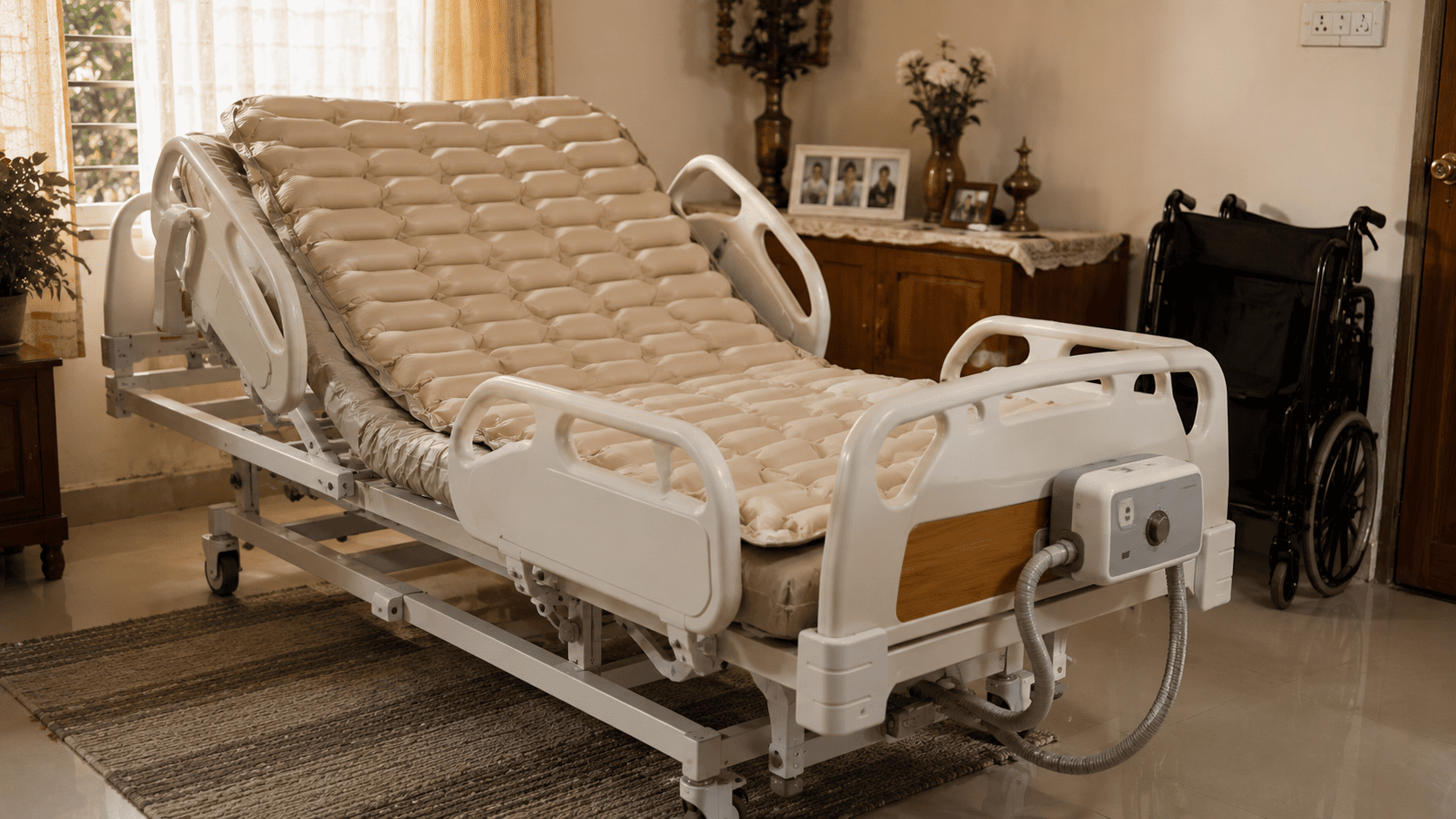
A hospital bed becomes worth it as soon as the patient cannot get in and out of bed unaided, or cannot sit themselves up. The backrest function, the height adjustment and the side rails are what make daily care possible for one caregiver. A pressure-redistributing mattress is added when the patient cannot shift their own weight.
What each feature is actually for
Backrest elevation
Allows a safe upright position for eating, drinking, medicines and chest clearance — usually the single most-used function of the bed.
Height adjustment
Raises the bed to the caregiver's waist for turning and cleaning, then lowers it for transfers to a wheelchair. It protects the caregiver's back.
Side rails
Prevent rolling out of bed and give the patient something to pull against when learning to turn towards the strong side.
Knee-break section
Stops the patient sliding down the bed when the backrest is raised — sliding is what shears the skin over the tailbone.
Alpha / air mattress
Alternately inflates and deflates cells so no single area of skin carries pressure continuously. Used alongside repositioning, never instead of it.
Manual or electric
Electric matters most when position changes are frequent, when the caregiver is elderly, or when the patient can operate it themselves.
The positioning rules that prevent most problems
- Change position regularly, around every two hours, day and night, unless the treating team advises otherwise. Set a phone alarm for the first fortnight until it becomes habit.
- Never pull on the weak arm. The shoulder on the affected side is vulnerable after a stroke and can be injured by being used as a handle during transfers.
- Support the weak arm and hand on a pillow when sitting, so it is not hanging unsupported.
- Keep the ankles and wrists in a neutral position with pillows or a footboard so joints do not stiffen into a fixed position.
- Check the skin at every position change — heels, tailbone, hips, elbows, ears and shoulder blades. Redness that does not fade after pressure is relieved needs medical review.
Same-day delivery across Delhi NCR, Chandigarh Tricity and major Punjab cities, subject to stock and service availability.
Which complications set stroke recovery back the most?
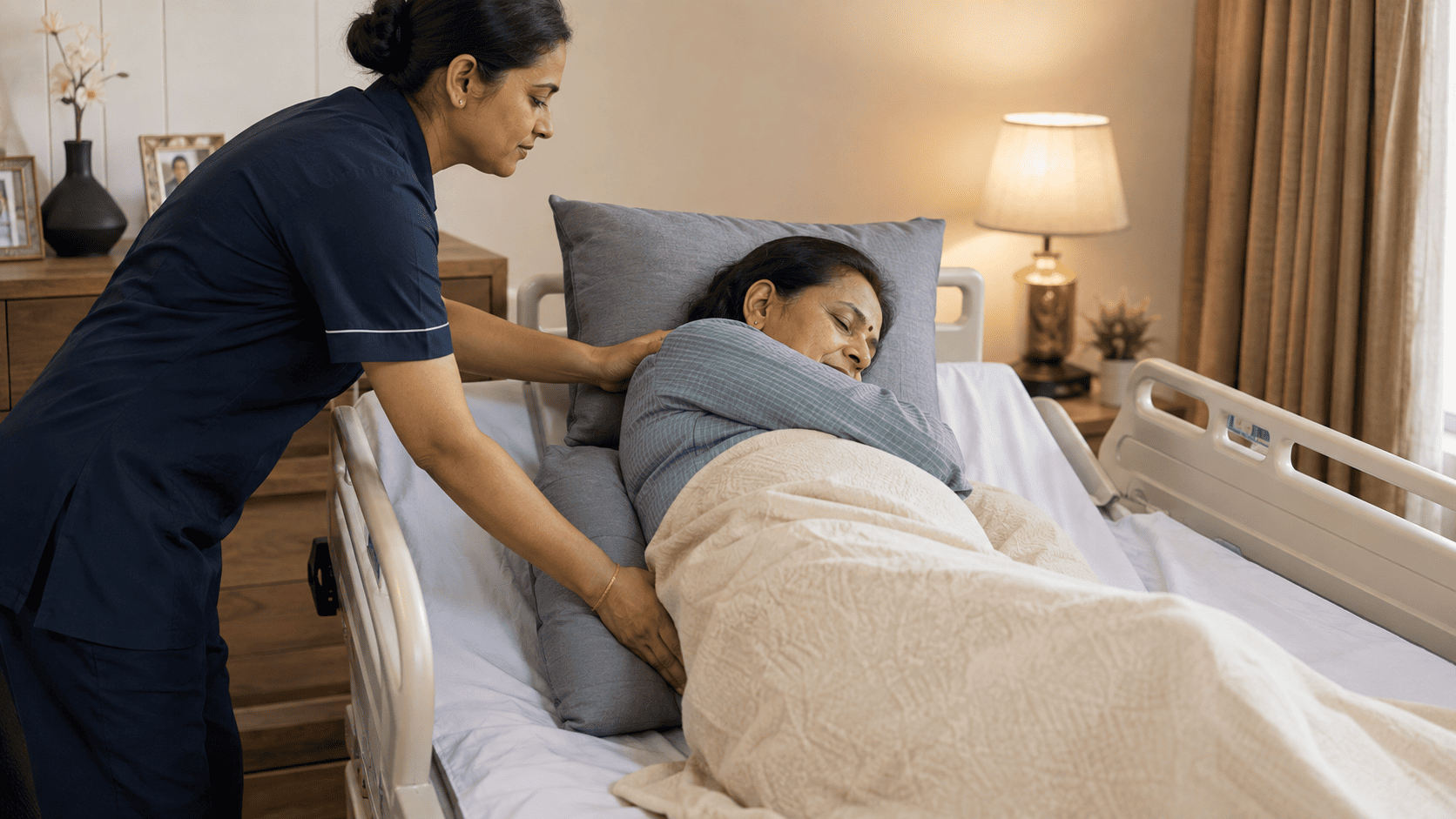
Pressure sores, chest infection from aspiration, clots in the leg veins, joint stiffness, shoulder injury and falls. These are the complications that turn a recovering patient into a readmitted one, and they are largely prevented by positioning, safe feeding, early movement and skin checks rather than by any machine.
| Complication | Early warning sign at home | What reduces the risk |
|---|---|---|
| Pressure injury (bedsore) | Redness over the tailbone, heels or hips that does not fade; broken or blistered skin. | Two-hourly repositioning, pressure-redistributing mattress, dry skin, good nutrition. |
| Aspiration pneumonia | Coughing or a wet, gurgly voice during or after meals; fever; fast breathing. | Swallow assessment before oral feeding, upright posture, modified textures, oral hygiene. |
| Deep vein thrombosis | Swelling, warmth or pain in one calf; sudden breathlessness or chest pain. | Early mobilisation and any preventive measures prescribed by the treating team. |
| Contractures and spasticity | A limb becoming progressively harder to straighten; a clenched hand. | Daily passive range-of-motion, correct resting positions, splints if prescribed. |
| Shoulder pain or subluxation | Pain on the weak side, a visible gap below the shoulder joint. | Support the arm at all times, never lift or pull the patient by that arm. |
| Falls | Usually occur just as the patient starts moving again and overestimates ability. | Supervised transfers, clear floors, bathroom rails, correct footwear, adequate lighting. |
| Post-stroke depression | Withdrawal, refusing therapy, disrupted sleep, loss of appetite. | Raise it with the treating doctor. It is common after stroke and it is treatable. |
| Urinary infection | Fever, confusion, foul-smelling or cloudy urine, sudden worsening of alertness. | Avoid unnecessary prolonged catheterisation, maintain hydration as advised, seek review early. |
How do you feed a stroke patient who has trouble swallowing?
Only after a swallow assessment. Difficulty swallowing — dysphagia — is common in the early weeks after a stroke, and it is dangerous precisely because it can be silent: some patients aspirate food or fluid into the lungs without coughing at all. The safe route is a speech and language therapist or the treating team specifying texture, fluid consistency and positioning before oral feeding starts.
Feeding safety basics, once oral feeding has been cleared
- Fully upright. Sitting at roughly 90 degrees for meals, not propped at an angle in bed.
- Stay upright for 30 minutes afterwards so that food does not travel back up.
- Small spoonfuls, one at a time, with a check that the mouth is empty before the next.
- No talking, television or rush during meals. Distraction is a genuine aspiration risk.
- Follow the prescribed texture and fluid consistency exactly. Thickened fluids are prescribed because thin liquids are the hardest thing to swallow safely, not because they are gentler.
- Clean the mouth after every meal. Oral hygiene is one of the most underrated ways to reduce chest infection risk.
- Give medicines the way the team advised — some tablets must not be crushed. Ask the pharmacist rather than deciding at home.
Stop feeding and seek advice if you see these
- Coughing, choking or throat-clearing during or after every meal.
- A wet, gurgly voice after swallowing.
- Food pooling in the cheek on the weak side.
- Fever, breathlessness or a new chest rattle after a day of poor feeding.
- Meals taking so long that the patient is losing weight or refusing food.
What does the stroke recovery timeline actually look like?
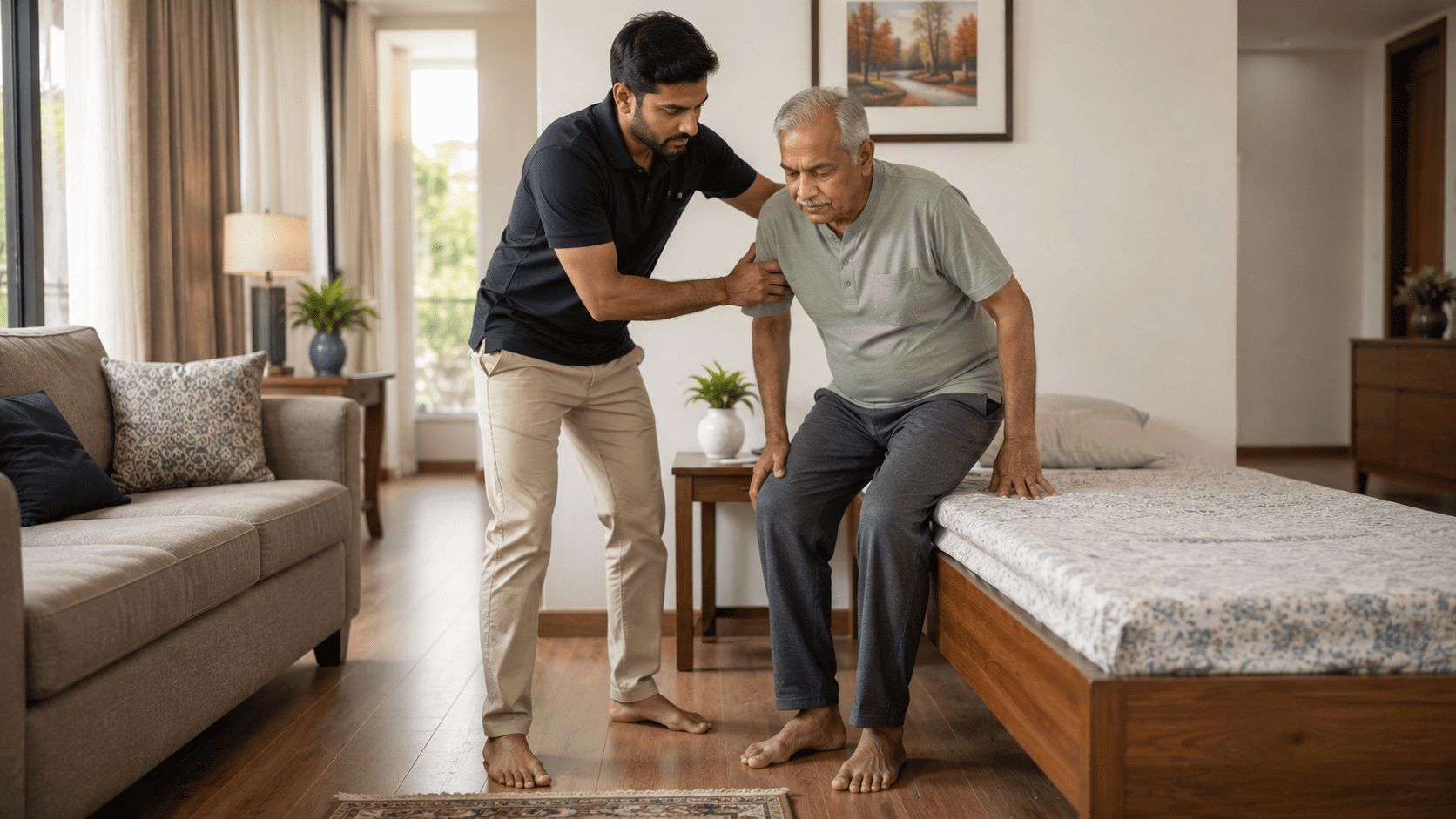
Recovery is fastest in the first weeks and months, and the rate of change gradually slows — but slower is not the same as stopped. What drives it is repetition: repeated, task-specific practice of real movements. Equipment supports that practice; it does not replace it.
| Phase | Typical focus | What the home setup is doing |
|---|---|---|
| Weeks 0–2 at home | Safe positioning, skin protection, safe swallowing, medication routine, sitting balance. | Bed, mattress, commode, suction if needed. Preventing complications is the whole job. |
| Weeks 2–8 | Sitting to standing, transfers, early walking practice, arm and hand activity, speech therapy. | Wheelchair for distance, walker, transfer aids, daily physiotherapy and occupational therapy. |
| Months 2–6 | Walking endurance, stairs, fine hand tasks, self-care independence, return to routine. | Equipment starts stepping down: bed may go back, walker replaces wheelchair indoors. |
| Months 6–12 and beyond | Consolidating gains, community mobility, work or role adaptation, spasticity management. | Minimal equipment: sticks, orthoses, home exercise programme, periodic therapy review. |
The three therapies, and what each is for
- Physiotherapy — balance, standing, walking, strength and the mechanics of movement. Usually the first therapy started.
- Occupational therapy — the actual tasks of daily life: dressing, bathing, eating, using the hand, adapting the house.
- Speech and language therapy — communication after aphasia, and swallow safety. Frequently under-arranged in home care, and frequently the difference between a patient who can express need and one who cannot.
For families arranging therapy at home in Punjab and the Tricity, Healthy Jeena Sikho runs home physiotherapy services and a panel of rehabilitation and pain-management doctors. Our guide to home physiotherapy equipment covers what is worth having between sessions.
How do you prevent a second stroke?
By treating the cause, not the symptoms. Risk of a further stroke is highest in the period soon after the first one, which is exactly when families are most focused on rehabilitation. Blood pressure control, prescribed antiplatelet or anticoagulant medication, cholesterol management, diabetes control and stopping tobacco are the core levers — and every one of them is a doctor's decision, not a home one.
| Lever | What the family does | What the family must not do |
|---|---|---|
| Blood pressure | Measure at the same times daily, keep a written log, take it to every review. | Adjust or skip doses because a reading looked normal. |
| Blood thinners | Give exactly as prescribed and report any unusual bruising or bleeding. | Start, stop or substitute any blood thinner, including aspirin, at home. |
| Cholesterol | Continue prescribed medication and attend lipid reviews. | Stop a statin because the patient "feels fine now". |
| Irregular heartbeat | Report a fluttering or irregular pulse — it may need specific treatment. | Assume palpitations are anxiety and leave them unreported. |
| Diabetes | Monitor as advised; poor intake during recovery changes sugar control. | Continue the pre-stroke dose while the patient is eating far less. |
| Tobacco and alcohol | Ask for help to stop — the whole household benefits. | Treat "he's already had one, what's the point" as a reason to allow it. |
What does a good caregiver day look like?
A predictable one. The routine that works is built around position changes, upright meals, therapy practice and skin checks, with the patient doing as much of each task as they can manage rather than having it done for them.
- Morning. Reposition, skin check, oral hygiene, sit fully upright, medicines, upright breakfast, blood pressure reading logged.
- Through the day. Position change roughly every two hours, sitting out of bed for as long as tolerated, the physiotherapist's home exercises split into short sessions rather than one long one.
- Every meal. Upright, unhurried, prescribed texture, 30 minutes upright afterwards, mouth cleaned.
- Evening. Skin check, passive range-of-motion for the weak limbs, comfortable resting position with the weak arm supported.
- Weekly. Weigh if possible, review what changed, note questions for the next therapy or doctor visit.
And a point that is not sentimental: the caregiver is part of the equipment list. Back injuries from unassisted transfers, and burnout from unbroken 24-hour duty, are among the commonest reasons home care collapses in month two. Learn the transfer technique from the physiotherapist rather than improvising it, use the bed's height adjustment, and arrange relief before it becomes urgent.
If one family member is carrying the whole load, a trained attendant on a 12-hour or 24-hour shift is usually the first thing to add. Shift options and what each one covers are listed on the stroke recovery at home page.
When should you go back to hospital?
Seek emergency care immediately if you see any of these
- Any new BE FAST sign — new weakness, new facial droop, new speech difficulty or new vision loss. Treat it as a fresh stroke, not as a bad day.
- Sudden severe headache, vomiting, or a rapid drop in alertness.
- A seizure, or any episode of shaking with loss of awareness.
- Fever with breathlessness, fast breathing, or a new rattling chest — possible aspiration pneumonia.
- Choking during feeding, or a sudden refusal to swallow.
- Swelling, warmth or pain in one calf, or sudden chest pain and breathlessness.
- Broken skin, a black or blistered area over a pressure point, or a wound with discharge or odour.
- A fall with a head injury, especially if the patient is on blood thinners — even if they seem fine afterwards.
Should you rent or buy stroke recovery equipment?
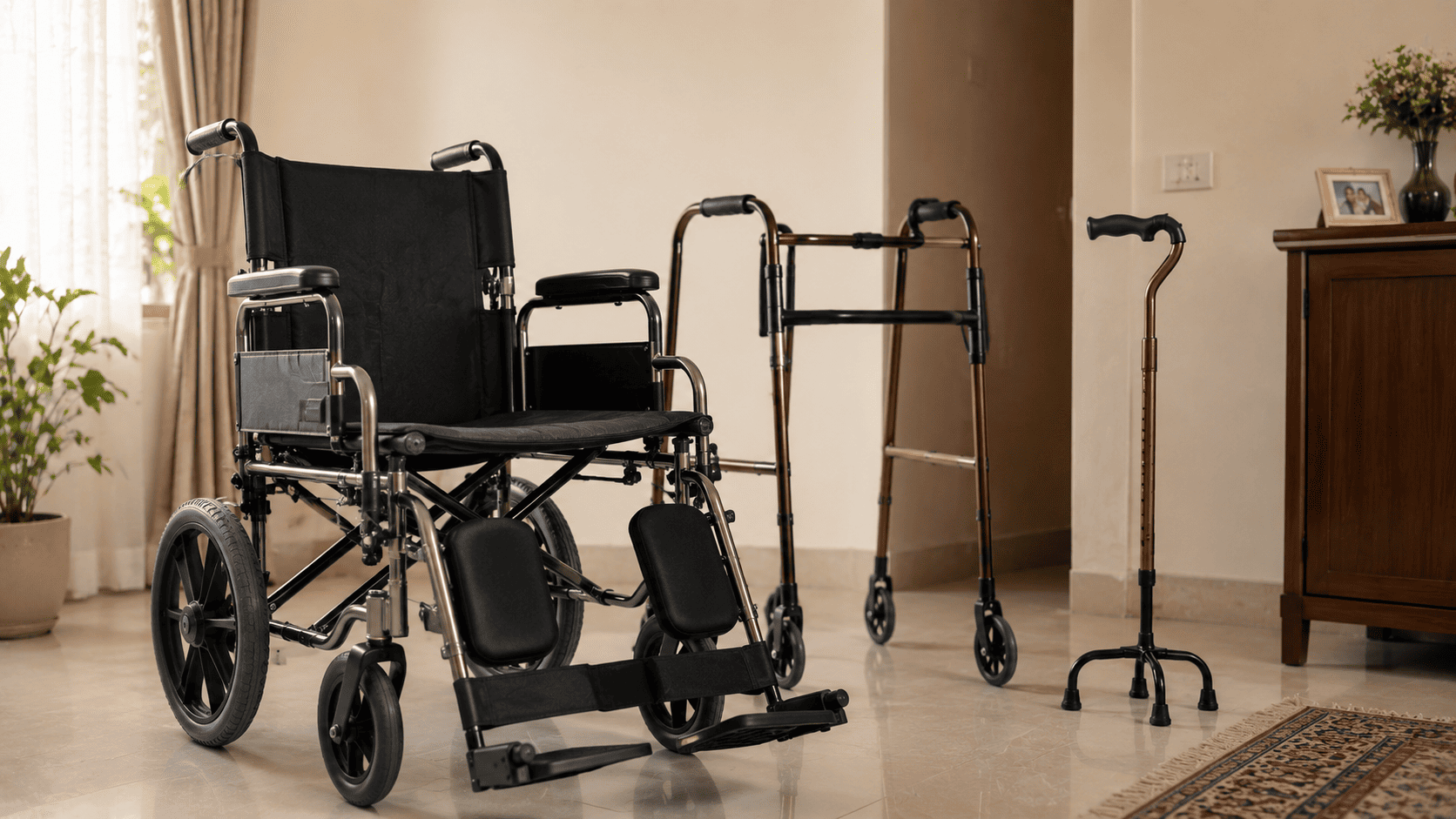
Stroke is the clearest rental case in home healthcare, because the requirement is designed to shrink. Equipment that is essential in week two is often unnecessary by month four. Buying locks a household into the patient's worst week.
| Consideration | Renting | Buying |
|---|---|---|
| Upfront cost | Monthly rental plus applicable deposit. | Full purchase price immediately, usually right after hospital bills. |
| If the patient improves | Equipment can be returned or stepped down as mobility returns. | Items sit unused, and resale value on used medical equipment is poor. |
| If needs change | Equipment may be swapped according to availability and requirement. | A different requirement usually means a second purchase. |
| Servicing | Usually supported during the rental period. | Owner is responsible according to warranty and service terms. |
| Short-term requirement | Well suited to the first weeks after discharge. | Rarely economical for a few weeks of use. |
| Long-term stable requirement | Rental costs accumulate over time. | Makes sense once the requirement is clearly permanent. |
A practical middle path many families use: rent everything for the first two to three months while the picture is still changing, then buy only the one or two items that turn out to be permanent.
How Healthy Jeena Sikho supports stroke families
- Rental-first flexibility. Equipment can be changed as the patient's mobility improves and the requirement steps down.
- The full discharge list in one place. Hospital beds, air and alpha mattresses, wheelchairs, walkers, commode chairs, suction machines and nebulisers.
- Home physiotherapy alongside the equipment. Physiotherapy and rehabilitation support, so the bed and the therapy are not two separate arrangements.
- Delivery across North India. Service availability includes Delhi, Gurugram, Noida, Faridabad, Ghaziabad, Chandigarh, Mohali, Panchkula, Zirakpur, Kharar, Ludhiana, Jalandhar, Bathinda, Amritsar, Patiala, Jaipur, Lucknow and Kanpur.
- Home installation and demonstration. The Healthy Jeena Sikho team can set up the bed and mattress, and demonstrate operation, basic maintenance and safe handling.
- Servicing and replacement support. Rental equipment is supported during the rental tenure according to applicable service terms.
Ready-made setups, inclusion lists and shift options for attendants and nurses are on the stroke recovery at home page.
Frequently Asked Questions About Stroke Care at Home
How long does stroke recovery take?
There is no fixed duration. Improvement is generally fastest in the first weeks and months and slows gradually after that, with most measurable motor recovery occurring within the first three to six months. Gains can continue beyond that period with sustained therapy. The extent of recovery depends on the size and location of the stroke, other medical conditions, and how consistently rehabilitation is carried out.
Can a stroke patient recover fully at home?
Some patients recover close to their previous level of function, others retain lasting difficulties. Home is a reasonable setting for rehabilitation provided three things are in place: a safe physical setup, regular therapy input, and medical follow-up for secondary prevention. The treating team should confirm that home rehabilitation is appropriate for the individual patient.
How often should a bedridden stroke patient be turned?
A common recommendation is a position change roughly every two hours, day and night, adjusted according to the patient's skin condition and the advice of the treating team. A pressure-redistributing mattress reduces risk but does not remove the need for repositioning and regular skin inspection.
Is a wheelchair or a walker better after a stroke?
They serve different purposes and are often used together. A walker supports walking practice over short distances indoors; a wheelchair covers longer distances and outings that walking endurance cannot yet manage. The choice should follow the physiotherapist's assessment of balance, endurance and safety rather than a general preference.
When should physiotherapy start after a stroke?
Rehabilitation generally begins in hospital as soon as the patient is medically stable, and should continue without a long gap after discharge. The gap between hospital discharge and the first home session is a common weak point in Indian home care — arranging therapy before discharge rather than after avoids losing early weeks.
Why does my family member cough while drinking water after a stroke?
This suggests difficulty swallowing. Thin liquids such as water are the hardest consistency to control and are frequently the first thing to become unsafe. Stop giving fluids by mouth and ask the treating team for a swallow assessment. Some patients aspirate without coughing at all, so the absence of coughing does not prove the swallow is safe.
Does an air mattress prevent bedsores completely?
No. An alternating-pressure or air mattress reduces sustained pressure on any one area, but it is used alongside repositioning, skin inspection, keeping skin clean and dry, and adequate nutrition. Pressure injuries can still develop on a good mattress if the patient is left in one position.
Can a second stroke be prevented?
The risk can be substantially reduced. Blood pressure control, prescribed antiplatelet or anticoagulant therapy, cholesterol management, diabetes control, stopping tobacco and treating an irregular heartbeat are the main measures. All of these are prescribed and adjusted by the treating doctor — medicines should never be started or stopped at home.
Is depression normal after a stroke?
Low mood is common after a stroke and it is treatable. It is worth raising specifically with the doctor, because untreated depression reduces participation in rehabilitation and therefore affects physical recovery too. Withdrawal, refusing therapy, disturbed sleep and loss of appetite are worth reporting.
What should a stroke patient eat at home?
The texture is decided by the swallow assessment, and the content by the risk factors. Most stroke patients are advised a low-salt diet because blood pressure is the dominant risk factor for a second stroke, with adequate protein for skin repair and muscle rebuilding, plenty of fibre because reduced movement causes constipation, and fluids as advised. If thickened fluids have been prescribed, water and thin dal are the two things families most often give by mistake.
References
- Rangamani S, Huliyappa D, Kulothungan V, et al. Stroke incidence, mortality, subtypes in rural and urban populations in five geographic areas of India (2018–2019): results from the National Stroke Registry Programme . The Lancet Regional Health – Southeast Asia 2023;23:100308.
- Mathur P, Huliyappa D, Prathyusha PV, et al. Stroke patterns, risk factors, management, and outcomes from hospital-based stroke registries in India . International Journal of Stroke.
- Behera DK, Rahut DB, Mishra S. Analyzing stroke burden and risk factors in India using data from the Global Burden of Disease Study . Scientific Reports 2024;14:22640.
- Commentary on the Ludhiana population-based stroke registry: Stroke epidemiology among young persons in India . Annals of Indian Academy of Neurology 2022;25(1).
- Kamalakannan S, Gudlavalleti ASV, Gudlavalleti VSM, et al. Stroke in India: a systematic review of the incidence, prevalence and case fatality .
- India State-Level Disease Burden Initiative Stroke Collaborators. The burden of stroke in India: a systematic review of population-based studies. Lancet Global Health 2018;6(12):e662–e671.
- American Heart Association / American Stroke Association. Guidelines for the early management of patients with acute ischemic stroke, and Guidelines for adult stroke rehabilitation and recovery.
- National Institute for Health and Care Excellence (NICE). Stroke rehabilitation in adults, NICE guideline NG236.
Medical disclaimer. This page is general educational information about home care and rehabilitation after a stroke. It is not medical advice and does not replace consultation with a qualified physician, physiotherapist or speech and language therapist. Feeding decisions, swallowing safety, mobility progression, medication and secondary prevention must be determined by the treating clinical team. Healthy Jeena Sikho supplies, installs and services home medical equipment and arranges therapy services, and does not diagnose conditions or independently set clinical parameters. If you suspect a stroke, or see any new stroke sign in a recovering patient, call emergency services or go to the nearest hospital immediately.