
COPD Care at Home: Oxygen Targets, Equipment & Caregiver Guide
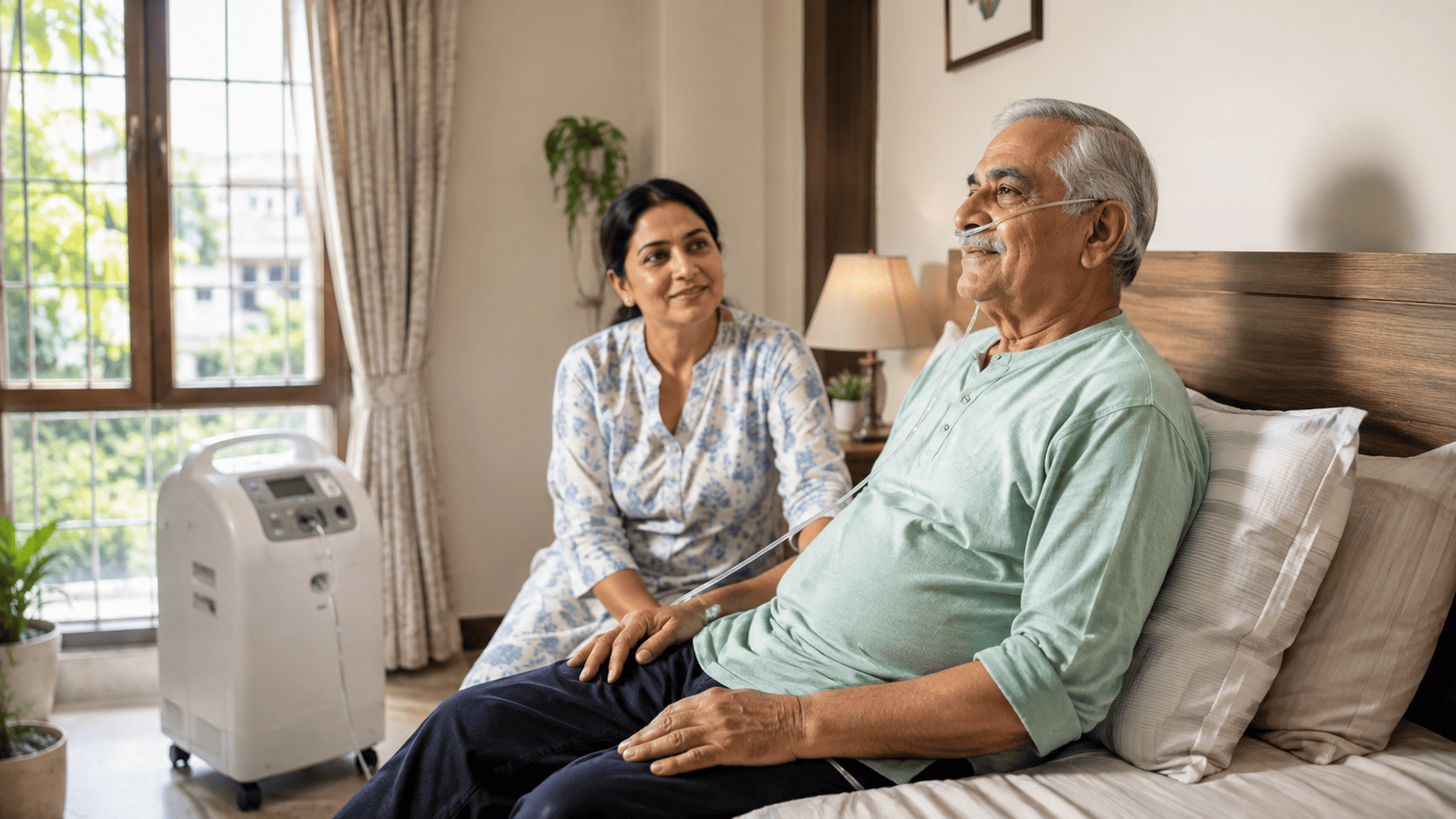
The short version
- Oxygen is prescribed, not bought on instinct. Long-term oxygen therapy is indicated when resting oxygen is severely low — PaO₂ ≤55 mmHg or SpO₂ ≤88% on room air — and the benefit comes from using it 15+ hours a day.4
- In COPD, higher is not better. The usual saturation target is 88–92%, not 98%. Over-oxygenating a COPD patient can raise carbon dioxide dangerously.3
- Breathlessness with high CO₂ needs BiPAP, not more oxygen. CPAP is the wrong machine for COPD unless sleep apnoea coexists.
- Air pollution — not smoking — is India's leading COPD driver, accounting for 53.7% of the COPD disability burden.2
- COPD is progressive, so equipment needs change. This is an important reason to consider renting rather than buying.
A COPD diagnosis rarely arrives with instructions for the house. Families are discharged with a prescription, a follow-up date, and a set of machines they have never operated. This guide covers what a COPD home setup actually requires, when each machine becomes clinically necessary, and how to handle flare-ups that may require urgent medical attention.
Why is COPD different in North India?
Because the primary cause is different. Globally, COPD is largely a smoker's disease. In India, more than half the disease burden is driven by air pollution — which means non-smokers, women who cooked on biomass stoves, and outdoor workers are affected in large numbers.2
COPD is the third leading cause of death worldwide, responsible for roughly 3.4 million deaths in 2023, about 6% of all deaths globally.1 India carries a disproportionate share of it. The ICMR-backed India State-Level Disease Burden Initiative counted 55.3 million COPD cases in India.2
The risk-factor breakdown is important for families in Punjab, Haryana, Delhi NCR and western UP. Of all COPD disability-adjusted life years lost in India, 53.7% were attributable to air pollution, 25.4% to tobacco, and 16.5% to occupational exposure.2
Pollution, winter temperature inversion and cold air can increase respiratory stress during the winter months. Families who have managed comfortably during warmer months may therefore need to prepare their equipment and care plan before winter.
Which COPD patients actually need equipment at home?
Not every COPD patient needs oxygen. The trigger for home equipment is not simply the diagnosis or the label of "severe COPD" — it is measured hypoxaemia, measured carbon dioxide retention, or a recent hospital admission requiring continued support.
Use this as an orientation table for a conversation with the treating pulmonologist. It is not a self-prescription tool.
| Clinical situation | What is usually needed | Why |
|---|---|---|
| Breathless on exertion, saturation normal at rest | Pulse oximeter, nebuliser, inhaler technique review | Monitoring and reliable drug delivery matter more than oxygen at this stage. |
| Resting SpO₂ ≤88% or PaO₂ ≤55 mmHg on room air, in a stable state | Oxygen concentrator for long-term oxygen therapy, 15+ hrs/day | Used for patients meeting clinical criteria for long-term oxygen therapy.4 |
| Borderline PaO₂ 55–59 mmHg plus cor pulmonale, right heart strain or polycythaemia | Oxygen concentrator | The lower threshold may apply in selected patients with complications. |
| Persistent daytime CO₂ retention | BiPAP with ST mode or volume-assured mode, plus oxygen if hypoxaemic | Oxygen alone does not clear CO₂; ventilatory support can provide assistance.5 |
| Just discharged after an exacerbation, CO₂ still high | Home oxygen + home BiPAP | May be considered in appropriately selected patients with persistent hypercapnia.6 |
| Advanced disease, largely bed-bound, poor cough | Hospital bed, suction machine, air mattress | Positioning and secretion management may support comfort and care. |
When does a COPD patient need an oxygen concentrator?
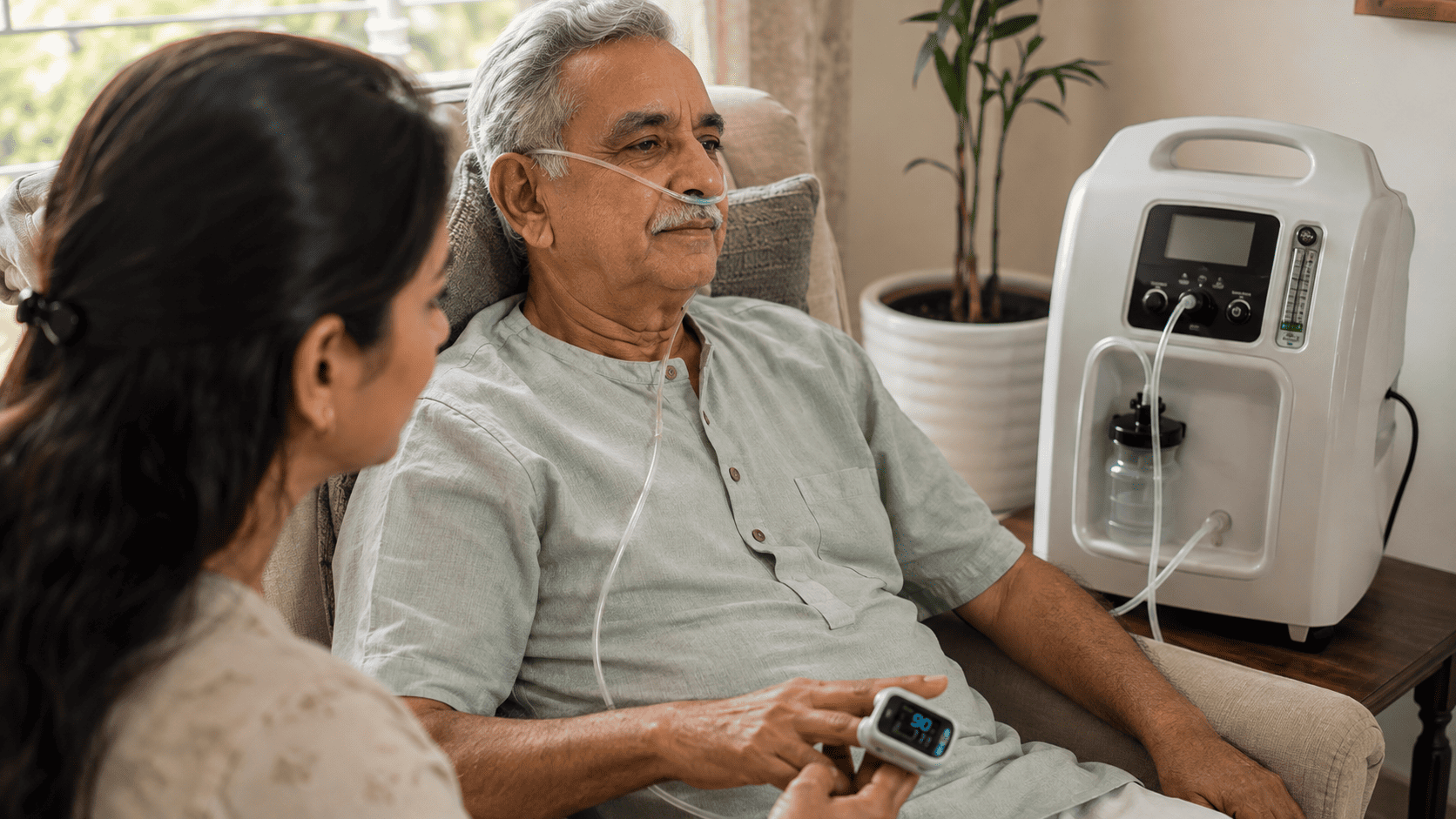
When arterial oxygen is severely and persistently low in a stable state — PaO₂ ≤55 mmHg or SpO₂ ≤88% on room air — confirmed according to the treating physician's assessment. When long-term oxygen therapy is prescribed, the benefit comes from consistent use, commonly at least 15 hours a day including overnight.4
The classic MRC and NOTT trials established that continuous oxygen used for 15 or more hours daily improves survival in severely hypoxaemic COPD. Oxygen used only "when breathless" does not deliver that same benefit.
Why the target is 88–92%, not 98%
In COPD patients at risk of CO₂ retention, the accepted target saturation range is commonly 88–92%.3 Pushing saturation towards 98% by turning up the flow rate can be harmful in susceptible patients because excess oxygen can worsen CO₂ retention.
The practical caregiver rule: the flow rate written on the prescription is a medical instruction, not a comfort setting. If the patient is breathless at the prescribed flow rate, contact the doctor rather than changing the flow independently.
5 LPM or 10 LPM — and continuous flow or pulse dose?
Many COPD patients on long-term oxygen therapy are prescribed lower flow rates, while some patients require higher flows. A 5 LPM continuous-flow concentrator covers many home requirements. A 10 LPM machine may be relevant when the prescription exceeds 5 LPM or when higher flow is specifically prescribed.
Portable concentrators may use pulse-dose delivery, where oxygen is released when inhalation is detected. Whether pulse-dose oxygen is appropriate for a particular patient depends on the prescribed therapy and should be confirmed with the treating clinician.
Concentrator or cylinder?
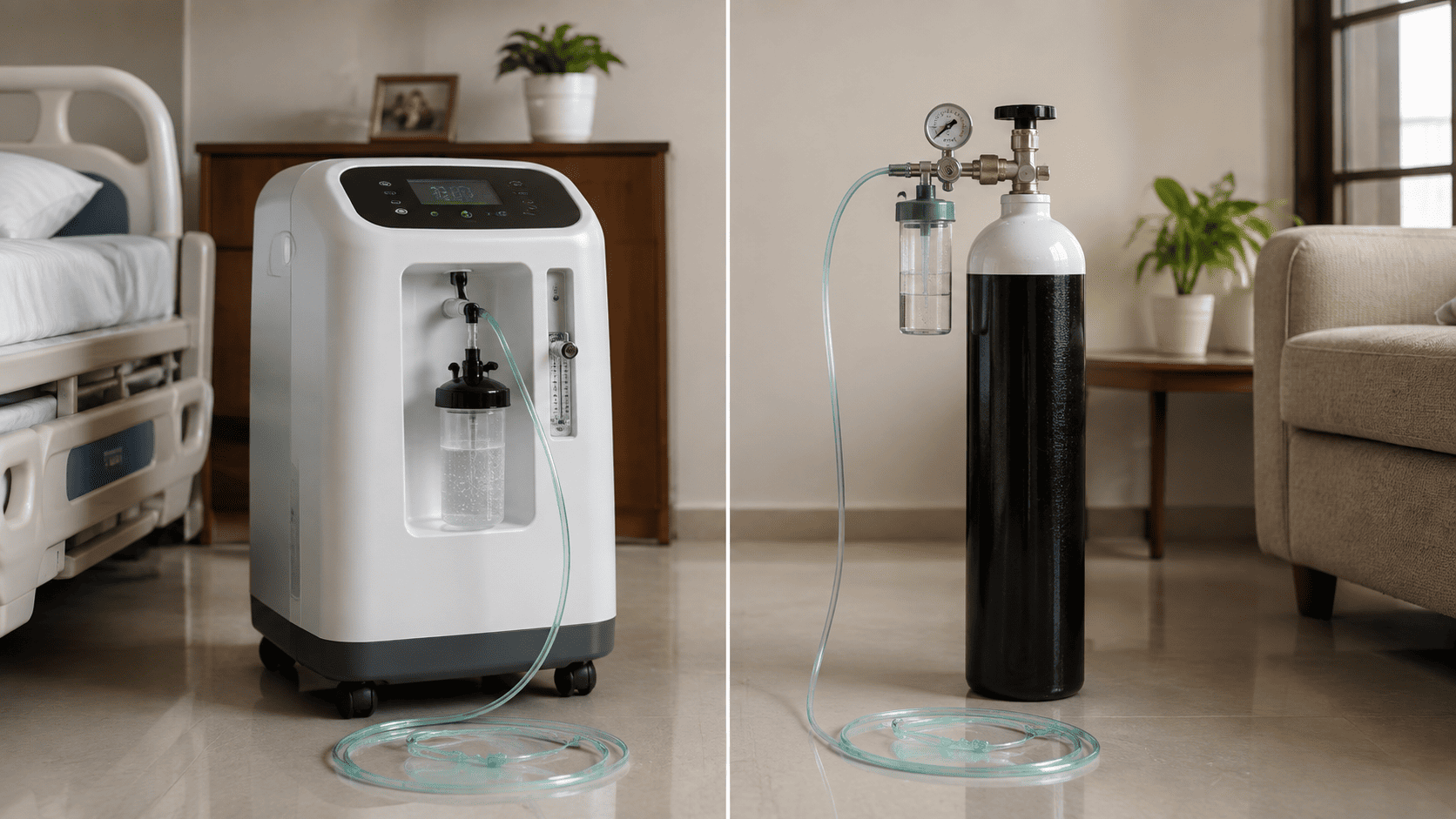
| Oxygen concentrator | Oxygen cylinder | |
|---|---|---|
| Oxygen source | Filters room air continuously; does not need refilling. | Finite compressed oxygen supply; requires refilling. |
| Suits long-term use | Yes — commonly used for long-term home therapy. | Less convenient for continuous long-term use because of refill logistics. |
| Running requirement | Electricity. | Does not require electricity. |
| Typical role | Primary home oxygen source. | Backup during power outages and transport. |
| Flow ceiling | Depends on the machine's rating. | Can provide prescribed flow depending on regulator and cylinder setup. |
For a COPD patient in a region with unreliable power, the family should discuss a backup oxygen plan with the treating physician. A concentrator can serve as the primary home source while an oxygen cylinder may be maintained for emergencies or transport when clinically appropriate.
The fire-safety rules, cannula care, filter cleaning and power-cut planning that apply to any home oxygen setup are covered in when does a recovering patient need oxygen at home.
Same-day delivery may be available across Delhi NCR and Tricity, subject to stock and service availability.
When is BiPAP needed in COPD — and why not CPAP?
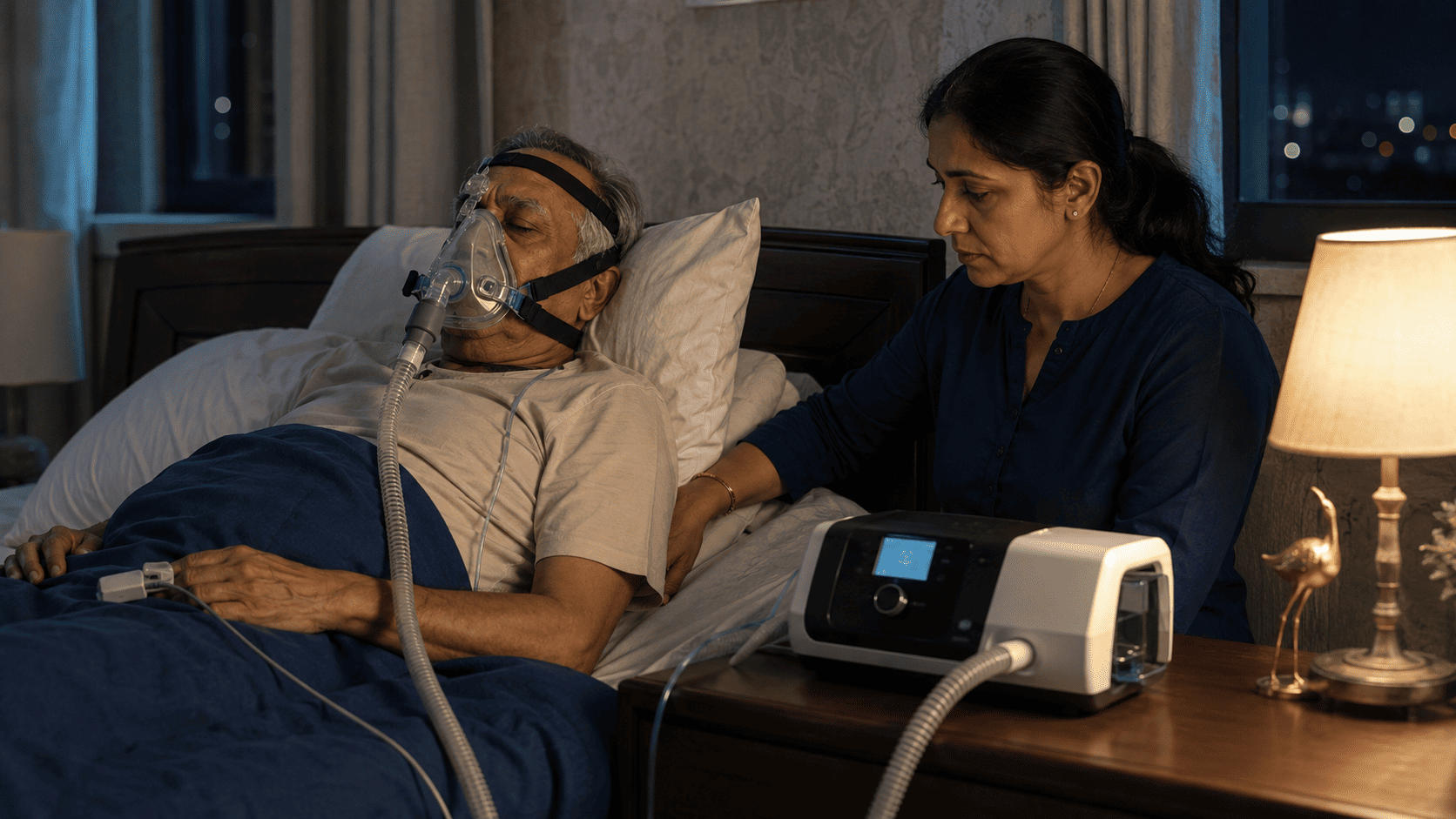
BiPAP may be needed when the problem includes carbon dioxide retention, rather than low oxygen alone. It provides different inspiratory and expiratory pressures. CPAP provides a single continuous pressure and is primarily used for conditions such as obstructive sleep apnoea.
A patient whose oxygen looks acceptable on the oximeter but who is drowsy in the mornings, waking with headaches, confused in the afternoons or unusually sleepy may have symptoms associated with CO₂ retention. A pulse oximeter cannot measure CO₂. Diagnosis requires appropriate clinical assessment and, where indicated, blood gas testing.
What the evidence says about home BiPAP in COPD
Two important trials influenced the use of long-term non-invasive ventilation in selected COPD patients:
- Köhnlein et al. (2014) studied long-term non-invasive ventilation in severe stable hypercapnic COPD and demonstrated a reduction in all-cause mortality.5
- The HOT-HMV trial, Murphy et al. (2017) studied COPD patients who remained hypercapnic after a life-threatening exacerbation. Adding home BiPAP to home oxygen improved admission-free survival.6
The European Respiratory Society provides guidance on long-term home non-invasive ventilation in selected patients with COPD.7
Modes and settings
COPD BiPAP may be prescribed in ST mode or in selected cases a volume-assured mode such as AVAPS or iVAPS. The appropriate mode, pressure and backup rate depend on the patient's clinical assessment.
Some patients have both COPD and obstructive sleep apnoea — known as "overlap syndrome". In these patients, machine selection depends on the clinical picture and should be determined by the treating physician.
Never set your own pressures
IPAP, EPAP, backup rate and supplemental oxygen must come from the treating physician. Incorrect settings can be harmful. Equipment providers should configure machines according to the prescription provided and should not independently prescribe clinical parameters.
What else does a COPD home setup need?
Pulse oximeter
Useful for monitoring oxygen saturation and establishing the patient's personal baseline. Remember: it measures oxygen, not CO₂.
Nebuliser
May be used for prescribed medication delivery, particularly for patients who have difficulty coordinating an inhaler.
Hospital bed
Backrest elevation can make positioning easier for patients who have difficulty lying flat or require prolonged bed rest.
Suction machine
May be useful for selected patients with a weak cough who cannot effectively clear respiratory secretions.
Air or alpha mattress
Helps with pressure-injury prevention when mobility becomes significantly reduced.
Wheelchair or walker
Can help preserve mobility and make hospital appointments and outdoor movement easier for patients with limited exercise tolerance.
Beyond equipment, pulmonary rehabilitation — supervised breathing and exercise training — remains an important intervention for symptom control and quality of life in COPD and should be discussed with the treating team. Chest physiotherapy and breathing exercises at home are covered in physiotherapy at home after hospitalisation.
How do you handle a COPD flare-up at home?
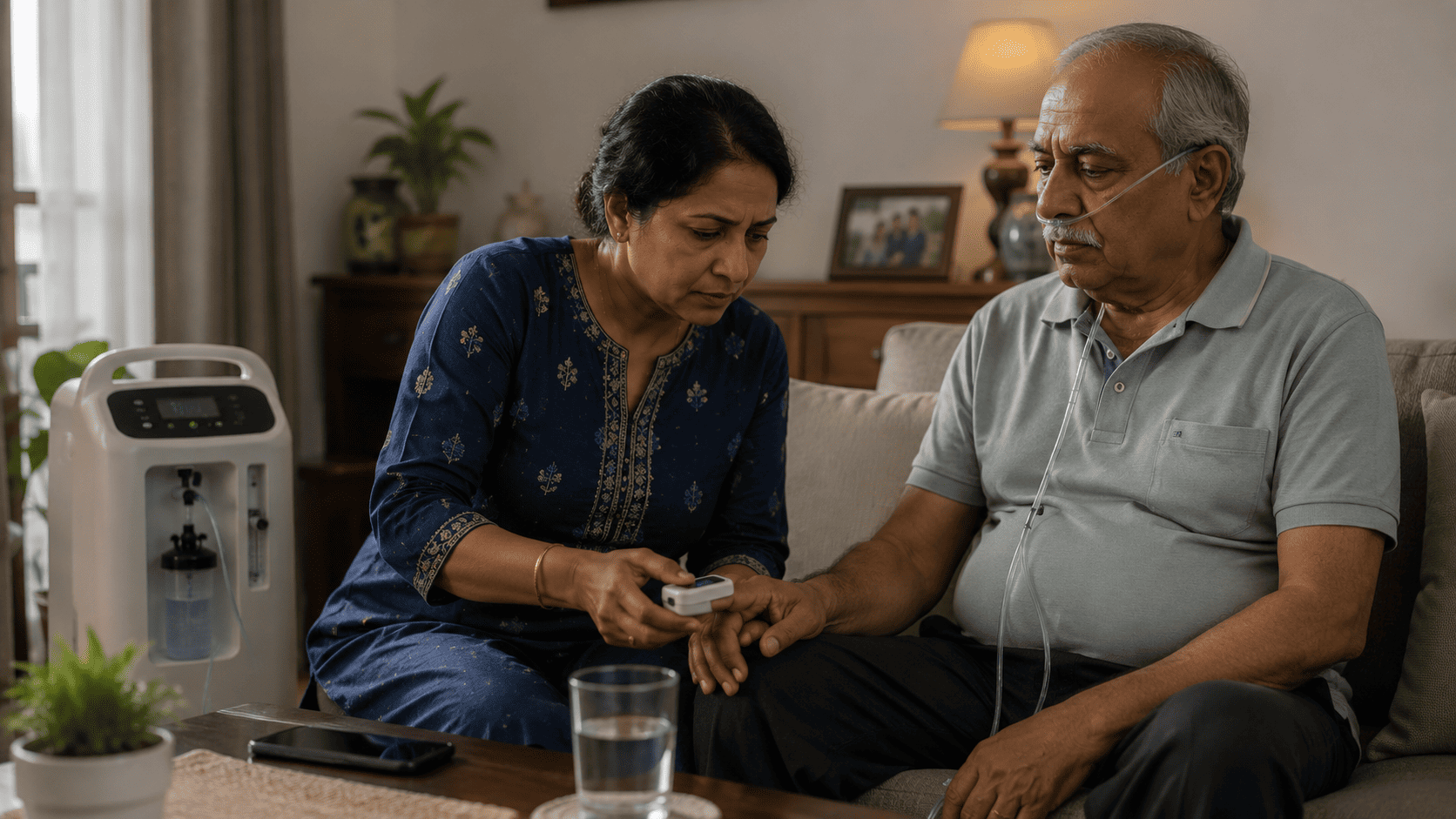
An exacerbation is a sustained worsening beyond normal day-to-day variation — such as increased breathlessness, increased sputum, or a change in sputum colour.8 Families should have an action plan prepared with the treating physician before a flare-up occurs.
Agree a written action plan with the pulmonologist in advance while the patient is stable. It should specify the patient's baseline saturation, what changes warrant a call, whether rescue medicines are pre-authorised, and who to contact outside normal hours.
Seek emergency care immediately if you see any of these
In India, dial 112 for emergency services, or 108 for an ambulance in states where that service operates.
- Saturation falling well below the patient's usual range and not recovering on prescribed oxygen.
- Confusion, unusual drowsiness, or difficulty waking the patient — this can indicate CO₂ retention and requires urgent medical attention.
- Blue tinge to the lips or fingertips.
- Breathlessness so severe the patient cannot complete a short sentence.
- Chest pain or new swelling of both ankles.
- A fever or new sputum change that does not settle or is accompanied by worsening symptoms.
Do not raise the oxygen flow rate above the prescription in an attempt to fix drowsiness. Seek medical help.
What should COPD families in Delhi NCR and Punjab do before winter?
Treat October as the start of the risk season, not December. Because air pollution is an important contributor to India's COPD burden,2 environmental preparation is an important part of home care.
- Audit equipment early. Check concentrator filters, tubing, BiPAP masks and other equipment before peak winter demand.
- Plan for power cuts. Confirm the capacity of your backup power system and discuss an appropriate oxygen backup plan.
- Control indoor air. Avoid incense, mosquito coils and indoor smoke. On high-AQI days, consider reducing exposure to outdoor pollution.
- Manage cold exposure. Keep the sleeping environment comfortable and protect the nose and mouth from very cold air when outdoors.
- Vaccination. Discuss influenza and pneumococcal vaccination with the treating doctor.
- Stock consumables early. Keep nasal cannulas, nebuliser masks, tubing and other prescribed consumables available.
Should you rent or buy COPD equipment?
For many COPD households, renting can be useful because equipment requirements can change over time. A patient may require a different oxygen flow rate or additional ventilatory support as the condition changes.
| Consideration | Renting | Buying |
|---|---|---|
| Upfront cost | Monthly rental plus applicable deposit. | Full purchase price immediately. |
| If prescription changes | Equipment may be upgraded according to availability and requirements. | A different machine may require a new purchase. |
| Servicing | Usually supported during the rental period. | Owner is responsible according to warranty and service terms. |
| Short-term requirement | Suitable for temporary or post-discharge requirements. | May be less economical for short-term use. |
| Long-term stable requirement | Rental costs accumulate over time. | Can make sense for a stable long-term requirement. |
The right choice depends on the prescribed therapy, expected duration, budget and whether equipment requirements are likely to change.
Where Healthy Jeena Sikho delivers COPD equipment
Delhi NCR:Delhi, Noida, Greater Noida, Gurugram, Faridabad and Ghaziabad.
Chandigarh Tricity:Chandigarh, Mohali, Panchkula and Kharar, served from the head office and store in Sector 73, Mohali, Punjab.
Punjab:Ludhiana, Jalandhar and Bathinda.
Rajasthan and Uttar Pradesh:Jaipur and Lucknow.
Equipment sales are available more widely across India. Delivery, installation and service support are limited to the cities listed above, subject to serviceable pin code and stock. Call +91 98769 78488 or WhatsApp +91 98759 15278.
How Healthy Jeena Sikho supports COPD families
- Rental-first flexibility. Equipment can be changed according to the patient's evolving requirements and available rental options.
- Delivery across North India. Delhi, Noida, Greater Noida, Gurugram, Faridabad, Ghaziabad, Chandigarh, Mohali, Panchkula, Kharar, Ludhiana, Jalandhar, Bathinda, Jaipur and Lucknow.
- Home installation and demonstration. The team can demonstrate equipment operation, basic maintenance and alarm handling according to the supplied prescription.
- Servicing and replacement support. Rental equipment is supported during the rental tenure according to applicable service terms.
- Recognised equipment brands. Options include brands such as ResMed, Philips, BMC and Oxymed, subject to availability.
- Supplied against a prescription. Flow rates, BiPAP modes and pressures are set to what the treating physician has prescribed, not to what is requested.
For the wider home setup see recovering at home, ICU care at home and bedridden patient care at home.
Healthy Jeena Sikho supplies equipment against a doctor's prescription and does not provide emergency medical care. For an emergency, dial 112 or go to the nearest hospital.
Frequently Asked Questions About COPD Care at Home
Can COPD be cured, or does home care only manage it?
COPD is not currently curable, but it is treatable. Stopping smoking, reducing pollution exposure, correct inhaler use, pulmonary rehabilitation, vaccination and — where indicated — long-term oxygen therapy and home ventilation can help manage symptoms and reduce complications.
What oxygen level is dangerous in COPD?
It depends on the individual's baseline and clinical condition. Broadly, long-term oxygen therapy may be considered when resting SpO₂ is around 88% or below in appropriately assessed patients, while the treatment target for patients at risk of hypercapnic respiratory failure is often 88–92%. Always follow the treating physician's target.
Can I use a CPAP machine for COPD if I already own one?
CPAP should not be used as a substitute for prescribed BiPAP in a patient with hypercapnic COPD. CPAP provides a single continuous pressure, whereas BiPAP provides separate inspiratory and expiratory pressures. The correct device depends on the patient's diagnosis and clinical assessment.
How many hours a day should a COPD patient use oxygen?
When long-term oxygen therapy is prescribed for severe hypoxaemia, the evidence base supports prolonged daily use, commonly at least 15 hours per day including overnight. Follow the exact prescription provided by the treating physician.
Will an oxygen concentrator work during a power cut?
No. Oxygen concentrators require electricity. A household using a concentrator for prescribed long-term oxygen therapy should have an appropriate backup plan for power interruptions. Discuss backup oxygen and power requirements with the treating team and equipment provider.
Does a COPD patient need a hospital bed at home?
Not every COPD patient needs a hospital bed. It can become useful when the patient spends significant time in bed, has difficulty lying flat, or requires assistance with positioning and repositioning.
Is an air purifier worth it for a COPD patient in Delhi NCR?
Reducing indoor particulate exposure can be a useful supportive measure, particularly during periods of high outdoor pollution. It does not replace prescribed medication, oxygen therapy or ventilation.
How quickly can equipment reach us after a hospital discharge?
Delivery time depends on location, stock and service availability. Across Delhi NCR and Tricity, same-day delivery may be available in selected locations. For other North Indian service areas, delivery timelines may vary.
In which cities does Healthy Jeena Sikho deliver COPD equipment?
Delivery, installation and service support are available in Delhi, Noida, Greater Noida, Gurugram, Faridabad, Ghaziabad, Chandigarh, Mohali, Panchkula, Kharar, Ludhiana, Jalandhar, Bathinda, Jaipur and Lucknow, subject to serviceable pin code and stock. Equipment sales are available more widely across India. Call +91 98769 78488 or WhatsApp +91 98759 15278 to check your location.
References
- World Health Organization. Chronic obstructive pulmonary disease (COPD) fact sheet.
- India State-Level Disease Burden Initiative CRD Collaborators. The burden of chronic respiratory diseases and their heterogeneity across the states of India . Lancet Global Health 2018;6(12):e1363–74.
- O'Driscoll BR, Howard LS, Earis J, Mak V; BTS Emergency Oxygen Guideline Development Group. British Thoracic Society Guideline for oxygen use in adults in healthcare and emergency settings . BMJ Open Respiratory Research 2017;4(1):e000170 — including the 88–92% target range for patients at risk of carbon dioxide retention.
- Hardinge M, Annandale J, Bourne S, et al.; British Thoracic Society Home Oxygen Guideline Development Group. British Thoracic Society guidelines for home oxygen use in adults . Thorax 2015;70(Suppl 1):i1–43 — including the recommendation that long-term oxygen therapy be ordered for a minimum of 15 hours a day.
- Köhnlein T, Windisch W, Köhler D, et al. Non-invasive positive pressure ventilation for the treatment of severe stable chronic obstructive pulmonary disease: a prospective, multicentre, randomised, controlled clinical trial. Lancet Respiratory Medicine 2014;2(9):698–705.
- Murphy PB, Rehal S, Arbane G, et al. Effect of home noninvasive ventilation with oxygen therapy vs oxygen therapy alone on hospital readmission or death after an acute COPD exacerbation: a randomized clinical trial. JAMA 2017;317(21):2177–2186.
- Ergan B, Oczkowski S, Rochwerg B, et al. European Respiratory Society guidelines on long-term home non-invasive ventilation for management of COPD. European Respiratory Journal 2019;54(3):1901003.
- Global Initiative for Chronic Obstructive Lung Disease (GOLD) — global strategy for the diagnosis, management and prevention of COPD.
Medical disclaimer. This page is general educational information about home care for chronic obstructive pulmonary disease. It is not medical advice and does not replace consultation with a qualified physician. The thresholds and target ranges quoted here are general guideline figures and do not apply to every patient. Oxygen flow rates, target saturation ranges, BiPAP pressures, ventilation modes and medication must be prescribed and adjusted only by the treating doctor, and excess oxygen can be harmful in patients at risk of carbon dioxide retention. Healthy Jeena Sikho supplies, installs and services home medical equipment according to the prescription provided, and does not diagnose conditions or independently set clinical parameters. In an emergency, dial 112 or go to the nearest hospital immediately.