
Pelvic Floor Physiotherapy: What It Is, Who It Helps and What to Expect
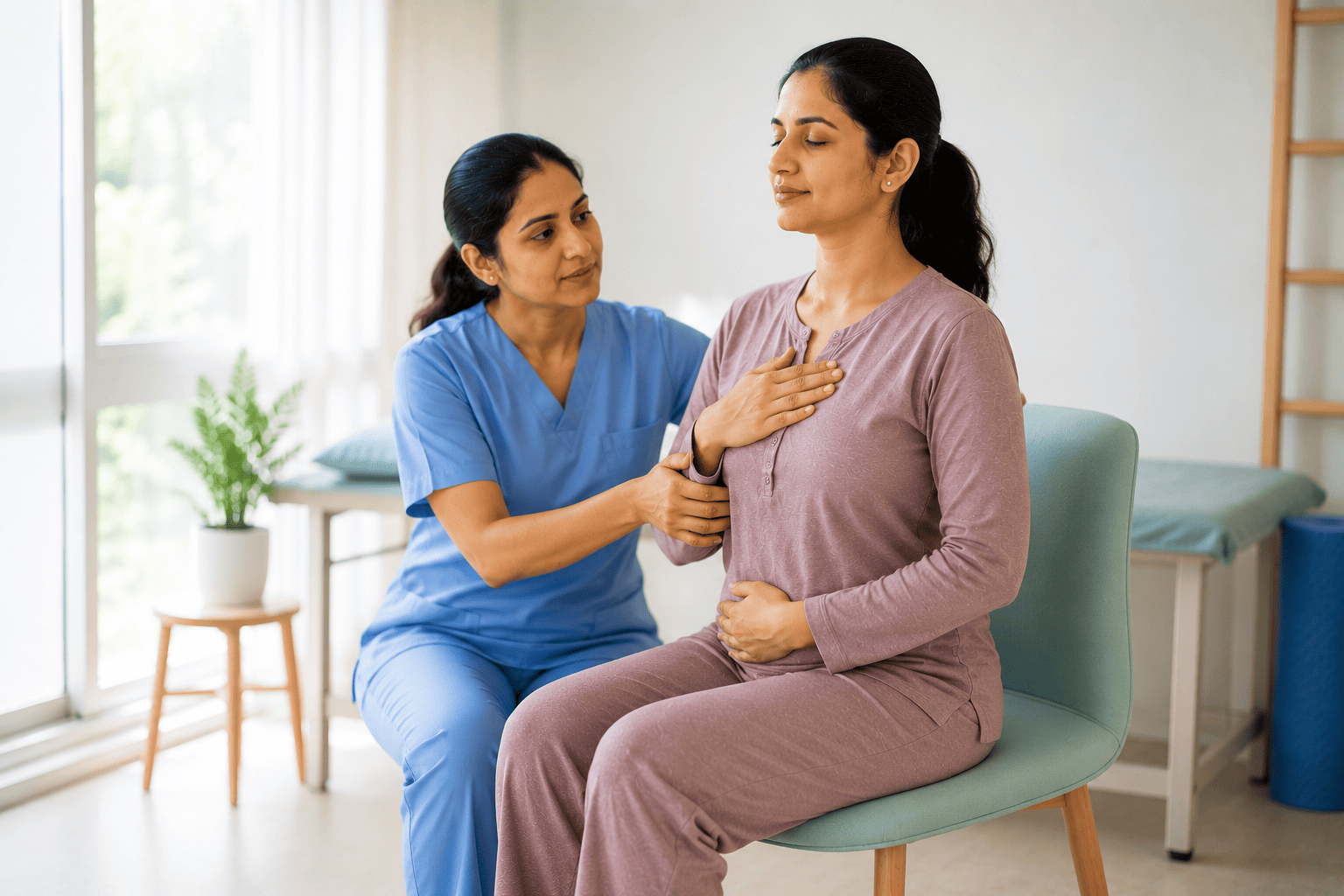
The short version
- It is a recognised medical treatment, not a set of exercises. Assessment, a supervised programme progressed over months, and review — which is why guidelines specify supervised training rather than a leaflet.2
- It treats far more than urinary leakage. Bladder and bowel emptying problems, faecal incontinence, prolapse, chronic pelvic pain and sexual dysfunction are all covered by pelvic floor dysfunction guidance.4
- A tight pelvic floor is as much a problem as a weak one. If your muscles are overactive, doing more Kegels makes symptoms worse. This is the single most important reason to be assessed first.
- Men need it too. Leakage after prostate surgery and chronic pelvic pain in men both respond to pelvic floor rehabilitation.
- Nothing is done without your consent. Consultation format and any physical examination are agreed with you, and you can decline any part of it at any time.5
- Expect three months, not three sessions. Guidelines recommend supervised programmes of at least three months for incontinence and at least sixteen weeks for prolapse.2
Pelvic floor physiotherapy is one of the most effective and least requested treatments in Indian healthcare. The symptoms it treats — leaking, urgency, heaviness, pain, bowel problems — are the ones people are least likely to mention, and NICE itself notes that women often feel embarrassed discussing them and assume the healthcare professional will be embarrassed too.5 This page explains what the treatment actually is, who it helps, what happens at an assessment, and why being assessed matters more than being handed a list of exercises.
What is pelvic floor physiotherapy?
It is a specialised branch of physiotherapy that assesses and treats the muscles, nerves and connective tissue of the pelvic floor — the sling of muscles supporting the bladder, bowel and, in women, the uterus. Treatment is built around a supervised, progressive programme designed for your specific problem, rather than a generic set of exercises.
The pelvic floor does four jobs at once, and problems can arise in any of them. Understanding this is what explains why the same symptom — leaking, say — can need completely different treatment in two different people.
Support
Holds the bladder, bowel and uterus in position against gravity and pressure from above.
Control
Keeps the urethra and anus closed until you choose otherwise, and lets go completely when you do.
Stability
Works with the deep abdominal muscles, diaphragm and back to stabilise the trunk during movement.
Sexual function
Contributes to comfortable and normal sexual function; both weakness and excessive tension can interfere.
What conditions does pelvic floor physiotherapy treat?
Pelvic floor dysfunction covers urinary incontinence, bladder emptying disorders, faecal incontinence, bowel emptying disorders, pelvic organ prolapse, sexual dysfunction and chronic pelvic pain, with urinary incontinence, faecal incontinence and prolapse being the three most common.4 Pelvic floor physiotherapy is the core non-surgical treatment across most of these.
| Problem | What people notice | Who it commonly affects |
|---|---|---|
| Stress urinary incontinence | Leaking on coughing, sneezing, laughing, lifting or exercising | After childbirth, at menopause, after prostate surgery in men |
| Urgency and overactive bladder | Sudden desperate urge, frequent trips, leaking before reaching the toilet | Any age; often worsens with caffeine and habitual "just in case" trips |
| Pelvic organ prolapse | Heaviness or dragging, a bulge sensation, incomplete emptying | After childbirth, after menopause, with chronic constipation or heavy lifting |
| Faecal incontinence and urgency | Difficulty controlling wind or stool, urgency to open the bowels | After perineal tear, after bowel surgery, with ageing |
| Constipation and difficult emptying | Straining, incomplete emptying, needing to strain hard despite soft stool | Often linked to an overactive pelvic floor that will not relax |
| Chronic pelvic pain | Ongoing pain in the pelvis, perineum, tailbone or lower abdomen | Both women and men; often associated with muscle overactivity |
| Painful intercourse | Pain or difficulty with penetration, often with involuntary tightening | After childbirth, after menopause, after pelvic surgery or trauma |
| Pregnancy-related pelvic girdle pain | Pain at the pubic bone or back of the pelvis, worse on walking or stairs | During pregnancy and in the postnatal months |
| Diastasis recti | Separation of the abdominal muscles, a doming or bulge on effort | Postnatal, and often managed alongside pelvic floor work |
| After prostate surgery | Leakage after catheter removal, urgency, dribbling | Men after prostatectomy or other prostate procedures |
| Before and after pelvic surgery | Preparing the pelvic floor beforehand and rehabilitating it afterwards | Gynaecological, colorectal and urological surgery |
| Menopause-related symptoms | New or worsening leakage, urgency and prolapse symptoms | Perimenopause and after, as tissue support changes |
If your symptoms started after childbirth specifically, the causes, timeline and what to expect are covered in urinary leakage after delivery.
Weak or too tight? Why this changes everything

A pelvic floor can fail in two opposite ways. It can be underactive — weak, poorly coordinated, unable to hold — or overactive: tight, unable to relax, and just as symptomatic. Both can cause leaking. Only one is helped by strengthening, and doing Kegels on an overactive pelvic floor usually makes things worse.
| Feature | Underactive (weak) | Overactive (too tight) |
|---|---|---|
| Typical symptoms | Leaking on effort, heaviness, prolapse sensation, poor control | Pain, urgency, difficulty emptying bladder or bowel, painful intercourse, and often leaking too |
| What it feels like | "I cannot hold it" | "It hurts", "I strain but nothing comes", "I always feel I need to go" |
| Main treatment direction | Strengthening and coordination work, built up progressively | Relaxation, downtraining, breathing, manual therapy and stretching before any strengthening |
| What happens if you guess wrong | Little progress if the programme is too easy or done incorrectly | Symptoms often get actively worse with more squeezing |
| How it is identified | Assessment. There is no reliable way to tell from symptoms alone, which is why guidelines recommend confirming pelvic floor muscle contraction before supervised training begins2 | |
This is the reason "just do Kegels" fails so often
Kegel exercises are excellent treatment for the right person. For someone with an overactive pelvic floor, they are the wrong direction entirely, and months of diligent squeezing produce more pain and more urgency. NICE notes that many women reaching specialist services have been performing pelvic floor exercises incorrectly for years, with no improvement in symptoms.3 Assessment first is not a formality — it decides which way the treatment goes.
Not sure which one applies to you?
That is exactly what an assessment answers. Healthy Jeena Sikho arranges pelvic floor physiotherapy across Chandigarh, Mohali, Panchkula and Kharar, at our Mohali centre or at home, with a female physiotherapist available on request.
What happens at the first appointment?
Mostly talking. A detailed history of your symptoms, bladder and bowel habits, deliveries or surgeries, and what you can and cannot do. Then, with your agreement, a physical assessment. The format of the consultation and any examination is agreed with you in advance, and you can decline any part of it.5
| Part of the assessment | What it involves |
|---|---|
| History | Symptoms and when they started, bladder and bowel patterns, pregnancies and deliveries, surgeries, medicines, exercise, and how it affects your daily life |
| Bladder diary | You may be asked to record fluids, toilet trips and leakage for a few days. It is simple and it changes the plan more than any single test |
| General physical assessment | Posture, breathing pattern, abdominal muscles, back and hips — all of which interact with the pelvic floor |
| Pelvic floor assessment | With your consent, an examination to check whether the muscles contract and relax correctly, their strength and endurance, and any tenderness |
| Explanation | What is happening, why it is happening, and what the plan is — in plain language |
| The programme | A written home programme, with what to do, how often, and what to expect over the coming weeks |
Your rights during the assessment
- Nothing happens without your consent. Any examination is explained first and you can say no to any part of it.
- You can request a female physiotherapist, and it does not need to be justified.
- You can bring someone with you, or ask for a chaperone to be present.
- You can stop at any point, including partway through, without explanation.
- Treatment can start without an internal examination if you prefer, and be reconsidered later.
- Sessions are private, and at home this means a closed room with only those you want present.
On the embarrassment
NICE explicitly advises clinicians to be aware of cultural sensitivities, and that women may feel embarrassed discussing these symptoms and may believe the healthcare professional will be embarrassed too.5 For a physiotherapist working in this field, these are the ordinary symptoms they treat every working day. You do not need the right medical words. "I leak when I cough", "I feel heaviness", "it hurts", or "I cannot control wind" is a complete starting point.
What does the treatment actually involve?
A combination selected for your problem, not all of it for everyone. The core is supervised pelvic floor muscle training, supported by bladder or bowel retraining, breathing and posture work, manual therapy where there is tension or pain, and practical education about daily habits.
| Component | What it does | Used for |
|---|---|---|
| Pelvic floor muscle training | Progressive strengthening, endurance and coordination work, adjusted as you improve | Stress and mixed incontinence, prolapse, post-prostatectomy leakage |
| Downtraining and relaxation | Teaching the muscles to let go, using breathing, positioning and release techniques | Overactive pelvic floor, pain, difficulty emptying, painful intercourse |
| Bladder training | Gradually retraining the bladder to hold normal volumes and reducing urgency | Urgency and mixed incontinence, minimum six weeks2 |
| Bowel habit retraining | Toilet position, breathing, timing and technique to empty without straining | Constipation, difficult emptying, faecal urgency |
| Manual therapy | Hands-on release of tense or tender muscle and scar tissue, with consent | Pelvic pain, perineal scarring, overactive muscles |
| Breathing and posture work | Coordinating the diaphragm, abdominals and pelvic floor so they work together | Almost all pelvic floor problems |
| Functional retraining | Bracing before a cough, safe lifting, and return to running or gym work | Anyone returning to activity or lifting a baby or heavy loads |
| Education and lifestyle | Constipation management, fluids, caffeine, toilet habits, weight where relevant | Everyone — these change outcomes more than most people expect |
Two things you may have read about are worth noting: NICE advises against routinely using perineometry or pelvic floor electromyography as biofeedback as part of pelvic floor muscle training, and against routinely using electrical stimulation for overactive bladder or in combination with pelvic floor muscle training.2 A clinic advertising machines as the main treatment is not following the recommended approach.
How long does it take?
Plan for months, not weeks. NICE recommends supervised pelvic floor muscle training of at least three months as first-line treatment for stress or mixed urinary incontinence, and considers a supervised programme of at least sixteen weeks as a first option for symptomatic early-stage pelvic organ prolapse.2 Where the programme is working, it is continued rather than stopped.
| Stage | What is happening | What you may notice |
|---|---|---|
| Weeks 1 to 2 | Assessment, learning the correct action, building the habit | Often nothing yet, which is normal and not a reason to stop |
| Weeks 3 to 6 | The programme is progressed as control improves | Early changes — fewer episodes, better warning time, less heaviness |
| Weeks 6 to 12 | Strength and endurance building; functional training added | Clearer improvement in daily situations such as coughing or lifting |
| 3 months | Formal review of progress against the goals set at the start | Decision to continue, adjust, or refer on if progress is inadequate |
| Beyond 3 months | Maintenance, since benefits are kept by continuing2 | Symptoms controlled, with the programme continued at lower frequency |
The commonest reason treatment fails is not the treatment. It is stopping at week three because nothing has changed yet, which is exactly when nothing has changed yet.
Pelvic floor physiotherapy for men
Men have a pelvic floor too, and it can develop the same problems. The largest group who benefit are men with urinary leakage after prostate surgery, followed by men with chronic pelvic or perineal pain, bowel urgency, and difficulty emptying.
- After prostate surgery, leakage after catheter removal is common and pelvic floor rehabilitation is a standard part of recovery. Starting early, with correct technique, matters.
- Chronic pelvic pain in men — pain in the perineum, testicles, tip of the penis or tailbone — is frequently linked to overactive pelvic floor muscles, and often mislabelled as recurrent prostatitis for years.
- Bowel urgency and difficulty emptying respond to the same retraining approaches used in women.
- Heavy lifting, chronic cough and straining load the male pelvic floor too, particularly in physically demanding jobs.
- A male physiotherapist can be requested, in the same way a female one can.
Very few men in India are ever told this treatment exists. Most are given medication, told to wait, or told nothing at all.
Myths worth dropping
| Commonly believed | Verdict | What is actually the case |
|---|---|---|
| "It's only for women after childbirth" | Myth | It treats men after prostate surgery, women at menopause, athletes, and anyone with bowel, bladder or pelvic pain problems. |
| "Kegels are the treatment" | Partly | Kegels are one component, and the wrong one for an overactive pelvic floor. The treatment is a programme built after assessment. |
| "Stop urine midstream to exercise" | Outdated | Once standard advice, now discouraged as a routine exercise because repeatedly interrupting flow can interfere with bladder emptying. |
| "Surgery is the only real fix" | Myth | Supervised pelvic floor muscle training is the recommended first-line treatment, and many people avoid surgery entirely with it. |
| "Machines and gadgets do it faster" | Myth | NICE advises against routine use of electrical stimulation and EMG biofeedback as part of pelvic floor muscle training.2 |
| "It's a normal part of ageing" | Myth | More common with age, yes. Something you must accept, no. It is treatable at any age. |
| "An internal examination is compulsory" | Myth | It is recommended for accurate assessment, but it is done only with your consent and treatment can begin without it if you prefer. |
| "If two weeks of exercises did nothing, it won't work" | Myth | Programmes are recommended for at least three months. Judging it at two weeks is judging it before it has started. |
When to see a doctor first
These need medical assessment, not physiotherapy alone
- Blood in the urine or stool.
- Inability to pass urine, or a painful full bladder with only dribbling.
- Fever with pain in the lower abdomen or back, which may indicate infection.
- New numbness around the genital or saddle area, or new leg weakness — seek emergency care immediately.
- Sudden loss of bladder or bowel control that is new and unexplained.
- Unexplained weight loss, or a change in bowel habit that persists.
- Severe or rapidly worsening pelvic pain.
- Post-menopausal vaginal bleeding.
Pelvic floor physiotherapy works alongside medical care. It does not replace investigation of symptoms that need a diagnosis first.
How to choose a pelvic floor physiotherapist
Look for qualification, specific training in pelvic health, and a method that starts with assessment. A physiotherapist in India holds a BPT or MPT degree with state council registration; pelvic health is a further area of training beyond the general degree.
- Qualified and registered — BPT or MPT with state council registration. It is reasonable to ask.
- Specific training in pelvic health, not general musculoskeletal physiotherapy alone.
- Assesses before treating, and explains what they found in plain language.
- Explains consent clearly and offers a chaperone or a same-gender therapist without being asked twice.
- Sets measurable goals — "no leaking when you cough" rather than "we will strengthen".
- Gives a written home programme and reviews it at each visit.
- Plans for months, with a formal review point, rather than selling a fixed package of a few sessions.
- Refers on where needed — to a gynaecologist, urologist or colorectal specialist when the problem is outside their scope.
- Does not promise a guaranteed cure. Anyone guaranteeing results is selling, not treating.
Pelvic floor physiotherapy with Healthy Jeena Sikho
- Assessment before any programme. Because the treatment for a weak pelvic floor and an overactive one are opposite, nothing is prescribed before it is assessed.
- Female physiotherapist on request. Arranged without needing an explanation, subject to availability. Male physiotherapists available for men who prefer this.
- At our centre or at your home. Sessions at the Healthy Jeena Sikho physiotherapy centre in Sector 71, Mohali, or at home for complete privacy and no travelling.
- A supervised programme, reviewed over months. Structured, progressed and formally reviewed — not a leaflet and not a fixed package of three sessions.
- Consent and privacy taken seriously. Everything explained first, a chaperone available, and the right to decline any part of an assessment at any point.
- Across Chandigarh, Mohali, Panchkula and Kharar, with home physiotherapy for those who prefer sessions at home.
Related guides: urinary leakage after delivery, physiotherapy at home after hospitalisation, nutrition during recovery at home, and the recovering at home hub. Equipment for recovery is on the hospital bed on rent and mobility aids pages.
Pelvic floor physiotherapy across Chandigarh, Mohali, Panchkula and Kharar. Same-gender physiotherapist available on request, subject to availability.
Frequently Asked Questions
What is pelvic floor physiotherapy?
It is a specialised area of physiotherapy that assesses and treats the muscles, nerves and connective tissue of the pelvic floor — the muscles supporting the bladder, bowel and uterus. Treatment is a supervised, progressive programme designed around your specific problem, and it includes far more than pelvic floor exercises alone.
What conditions does pelvic floor physiotherapy treat?
Urinary incontinence, bladder emptying problems, faecal incontinence, bowel emptying problems, pelvic organ prolapse, sexual dysfunction and chronic pelvic pain, all of which fall under pelvic floor dysfunction. It also covers pregnancy-related pelvic girdle pain, diastasis recti, recovery after prostate surgery in men, and preparation and rehabilitation around pelvic surgery.
Can a tight pelvic floor cause the same symptoms as a weak one?
Yes, and this is the most important thing to understand. An overactive, tight pelvic floor can cause leaking, urgency, pain, difficulty emptying and painful intercourse. Strengthening exercises usually make an overactive pelvic floor worse, which is why assessment comes before any programme is prescribed.
How long does pelvic floor physiotherapy take to work?
Plan for months. NICE recommends supervised pelvic floor muscle training of at least three months as first-line treatment for stress or mixed urinary incontinence, and at least sixteen weeks is considered for symptomatic early-stage prolapse. Many people notice nothing in the first two weeks, which is normal and not a reason to stop.
Is an internal examination compulsory?
No. It is recommended for accurate assessment, because it is the reliable way to confirm whether the muscles contract and relax correctly, but it is done only with your consent. The consultation format and any physical examination are agreed with you in advance, you can request a chaperone or same-gender therapist, and treatment can begin without it if you prefer.
Do men need pelvic floor physiotherapy?
Yes. The largest group are men with urinary leakage after prostate surgery, where pelvic floor rehabilitation is a standard part of recovery. It also helps men with chronic pelvic or perineal pain — often mislabelled as recurrent prostatitis for years — as well as bowel urgency and difficulty emptying. A male physiotherapist can be requested.
Are machines like electrical stimulation and biofeedback necessary?
Not routinely. NICE advises against using perineometry or pelvic floor electromyography as biofeedback as a routine part of pelvic floor muscle training, and against routinely using electrical stimulation for overactive bladder or in combination with pelvic floor muscle training. A service presenting machines as the main treatment is not following the recommended approach.
Can pelvic floor physiotherapy help avoid surgery?
For many people, yes. Supervised pelvic floor muscle training is the recommended first-line treatment for stress and mixed urinary incontinence and a first option for early-stage prolapse, and surgery is considered where symptoms persist despite an adequate trial of non-surgical treatment. That decision is made with a specialist.
Is pelvic floor physiotherapy safe during pregnancy?
Pelvic floor and pelvic girdle problems are commonly managed during pregnancy, and supervised pelvic floor muscle training is offered to pregnant women with stress or mixed urinary incontinence. What is appropriate depends on your pregnancy and any complications, so it should be assessed individually and cleared with your obstetrician.
What should I expect at the first session?
Mostly conversation — a detailed history of your symptoms, bladder and bowel habits, deliveries or surgeries, and how it affects daily life. You may be asked to keep a bladder diary. There is a general physical assessment of posture, breathing and abdominal muscles, and with your consent a pelvic floor assessment. You leave with an explanation and a written home programme.
Is it too late if my symptoms started years ago?
No. Treatment is usually easier and faster when started early, but supervised pelvic floor muscle training remains the recommended first-line approach regardless of how long symptoms have been present. Many people in India seek help years after symptoms began and still improve substantially.
Do you offer pelvic floor physiotherapy in the Tricity?
Yes. Healthy Jeena Sikho provides pelvic floor physiotherapy across Chandigarh, Mohali, Panchkula and Kharar, either at the physiotherapy centre in Sector 71, Mohali, or at home for complete privacy. A same-gender physiotherapist can be requested, subject to availability, and assessment is always done before a programme is started. Call +91 98769 78488 or message +91 98759 15278 on WhatsApp.
References
- National Institute for Health and Care Excellence. Urinary incontinence and pelvic organ prolapse in women: management , NICE guideline NG123.
- National Institute for Health and Care Excellence. Urinary incontinence and pelvic organ prolapse in women: management — Recommendations , NICE guideline NG123 — including recommendation 1.3.4 (confirm pelvic floor muscle contraction before supervised training), 1.4.4 (supervised pelvic floor muscle training of at least 3 months as first-line treatment), 1.4.6 and 1.4.8–1.4.9 (do not routinely use biofeedback or electrical stimulation), 1.4.7 (continue the programme if beneficial), 1.4.11 (bladder training for a minimum of 6 weeks) and 1.7.5 (supervised training for at least 16 weeks for stage 1 or 2 prolapse).
- National Institute for Health and Care Excellence. Urinary incontinence in women — Quality statement 4: supervised pelvic floor muscle training , NICE quality standard QS77.
- National Institute for Health and Care Excellence. Pelvic floor dysfunction: prevention and non-surgical management — Context , NICE guideline NG210 — the symptoms covered by pelvic floor dysfunction, including urinary and faecal incontinence, emptying disorders, prolapse, sexual dysfunction and chronic pelvic pain.
- National Institute for Health and Care Excellence. Pelvic floor dysfunction: prevention and non-surgical management , NICE guideline NG210 — including agreeing consultation formats with each woman and awareness of cultural sensitivities and embarrassment when discussing symptoms.
Medical disclaimer. This page is general educational information about pelvic floor physiotherapy. It is not medical advice and does not replace assessment by a qualified doctor or pelvic health physiotherapist. No specific exercise programme is prescribed here deliberately, because pelvic floor symptoms can arise from underactive, overactive, poorly coordinated or scarred muscles, and strengthening an overactive pelvic floor can worsen symptoms — which is why guidelines recommend assessment before supervised training begins. Do not begin, change or intensify a pelvic floor programme, and do not start any medication or supplement for bladder or bowel symptoms, without professional advice, particularly during pregnancy or while breastfeeding. Some symptoms require medical investigation before physiotherapy: seek medical care for blood in the urine or stool, inability to pass urine, fever with abdominal or back pain, post-menopausal bleeding, unexplained weight loss, or a persistent change in bowel habit, and seek emergency care immediately for new numbness around the genital or saddle area or new leg weakness. Healthy Jeena Sikho supplies home medical equipment and arranges nursing, attendant and physiotherapy services, and does not diagnose conditions or independently set clinical parameters.