
Nutrition During Recovery at Home: A Practical Guide for Indian Families
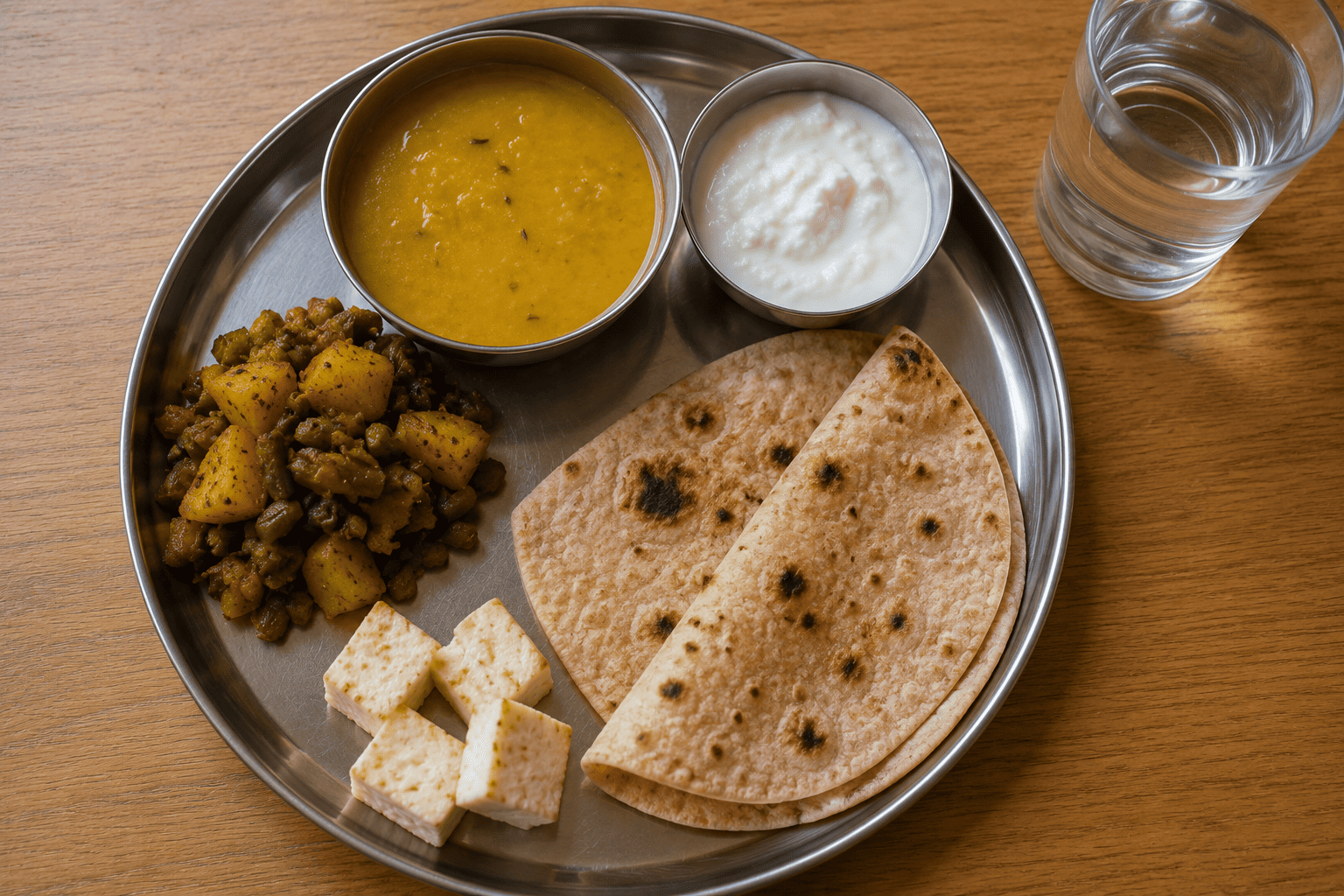
The short version
- Healing is construction work, and it needs materials. Wound repair, new skin and rebuilt muscle all run on protein, energy and fluid.1 A patient eating half their meals heals slower, whatever else is done for them.
- The biggest Indian mistake is weeks of plain khichdi. "Pathya" taken too far leaves a recovering patient short of exactly the protein their body is trying to rebuild with.
- Appetite drops after hospitalisation, and that is expected. Medicines change taste, pain and constipation kill hunger, and lying in bed reduces it further. Small frequent meals work better than three big ones.
- Constipation is very common after major surgery. Opioid painkillers, reduced movement and lower fluid intake work together. It ruins appetite, so it needs treating rather than ignoring.
- Every number belongs to the dietitian, not the internet. Protein targets, fluid limits and salt limits differ completely between a kidney patient, a heart failure patient and a healthy post-surgical one.
- Weigh weekly. Falling weight is the earliest warning that intake is not keeping up,3 and it shows before the skin, strength or wound do.
Nutrition is the part of home recovery that families think they already understand, so it gets the least attention. The equipment is arranged, the physiotherapist is booked, and meanwhile the patient is eating three spoons of khichdi twice a day because "heavy khana abhi nahi dena". Weeks later the wound is slow, the pressure sore appeared anyway, and the physiotherapy is not producing strength — because there was nothing to build it from.
Why does nutrition matter so much during recovery?
Because the body is rebuilding tissue, not just resting. Wound healing, new skin over a pressure point, immune defence against infection and rebuilding muscle lost to bed rest all require raw materials. Poor intake after an illness or operation is linked with slower wound healing, higher infection risk, more pressure sores, weaker muscles and longer recovery overall.1
| What the body is doing | What it needs | What happens if intake is poor |
|---|---|---|
| Healing a wound | Protein, vitamin C, zinc, adequate energy | Slower closure, weaker scar, higher chance of the wound opening |
| Rebuilding lost muscle | Protein plus enough total energy, and physiotherapy to use it | Physiotherapy produces little, because there is nothing to build with |
| Protecting the skin | Protein, fluid, and body weight maintained | Pressure sores form faster and heal slower over bony points2 |
| Fighting infection | Overall nourishment, protein, micronutrients | Higher risk of chest and urinary infections after discharge |
| Replacing blood loss | Iron, folate, vitamin B12, protein | Persistent tiredness and breathlessness that gets blamed on the surgery |
| Keeping bowels moving | Fibre, fluid and movement | Constipation, which then destroys appetite and worsens everything above |
Why has the patient stopped eating?
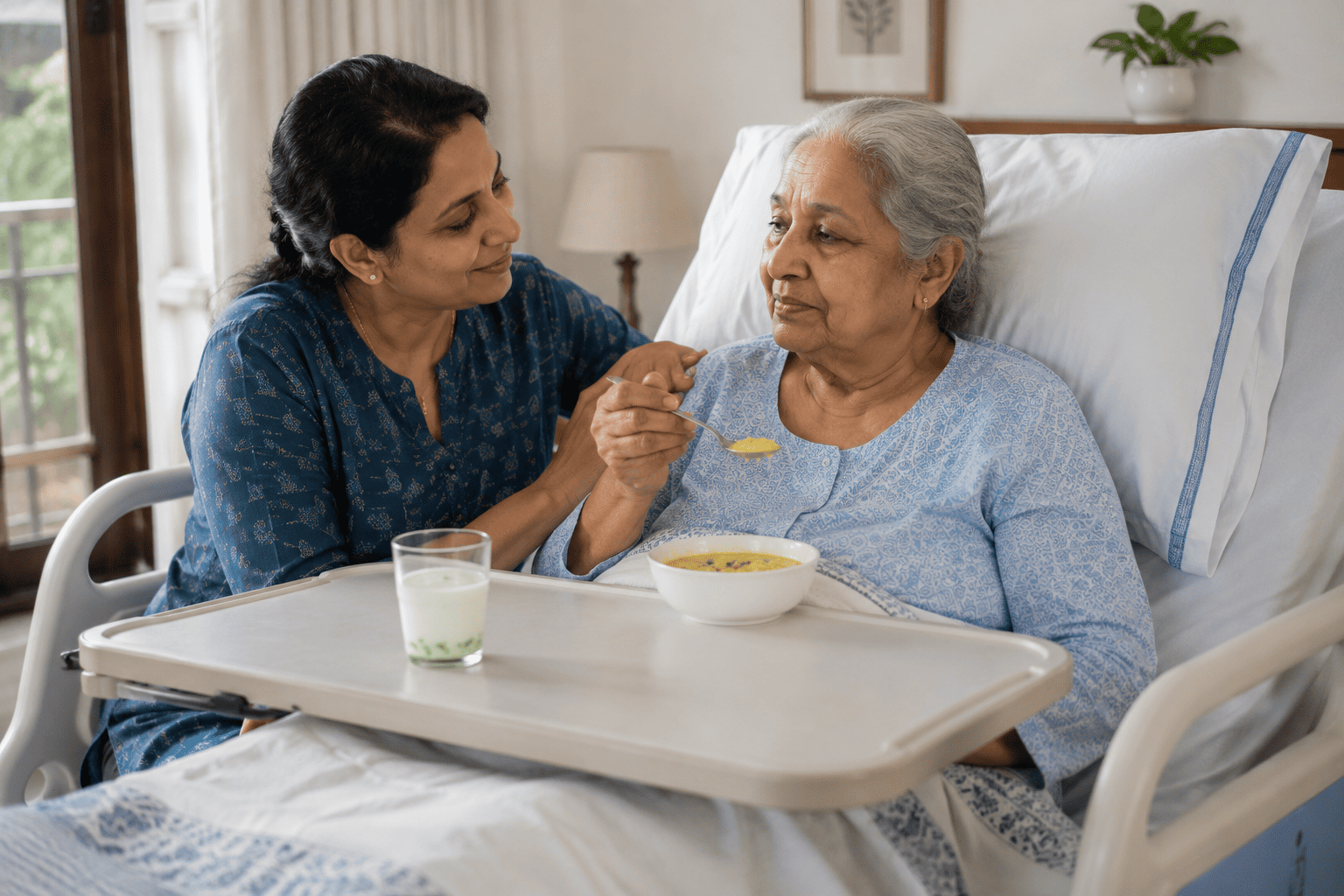
Loss of appetite after a hospital stay is normal and has identifiable causes — most of them fixable. Families usually respond by pleading and arguing at mealtimes, when the useful response is to work out which of the causes below is operating and address that.
| Cause | How it shows | What helps |
|---|---|---|
| Constipation | Feels full, bloated, refuses food, no bowel movement for days | Treat it — fibre, fluid, movement, and ask the doctor about a laxative |
| Medicine side effects | Metallic taste, nausea, dry mouth, food "tastes like nothing" | Mention it at review; timing changes or an anti-nausea medicine may help |
| Pain | Eats a little then stops, avoids sitting up for meals | Time meals about half an hour after pain medication |
| Mouth problems | Sore mouth, ulcers, thrush, ill-fitting dentures after weight loss | Oral hygiene after every meal, softer textures, dental review |
| Low activity | Lying in bed all day, never feels hungry | Sitting out of bed and any physiotherapy improves appetite |
| Low mood | Withdrawn, refuses food and therapy alike, sleeps oddly | Raise with the doctor; low mood after illness is common and treatable |
| Portion size | A full thali arrives and the patient gives up before starting | Small plate, small portions, offered more often |
| Fear of the bathroom | Deliberately eating and drinking less to avoid toilet trips | A bedside commode removes the reason entirely |
That last one is more common than families realise. A patient who is afraid of falling on the way to the toilet will quietly restrict food and water. A commode chair beside the bed solves a nutrition problem, not just a mobility one — see fall prevention during recovery.
The four things a recovery diet must cover
Protein, energy, fluid and fibre. Everything else is detail. If those four are adequate and the patient is eating a normally varied diet, most micronutrient needs follow. The exact amounts depend on the patient's condition and must be set by the treating doctor or dietitian, particularly where kidney, liver, heart or diabetes conditions are involved.1
Protein
The building material for wound repair, new skin and muscle. Recovery needs are typically higher than usual, and this is the nutrient Indian recovery diets most often fall short on.
Energy
If total intake is too low, the body burns the protein for fuel instead of using it to rebuild. Weight loss during recovery means the plan is not working.
Fluid
Supports circulation, skin condition, kidney function and bowel movement. Restricted in some heart and kidney patients, so follow the doctor's instruction.
Fibre
Keeps the bowels moving when painkillers and immobility are working against them. Needs fluid alongside it, or it makes constipation worse.
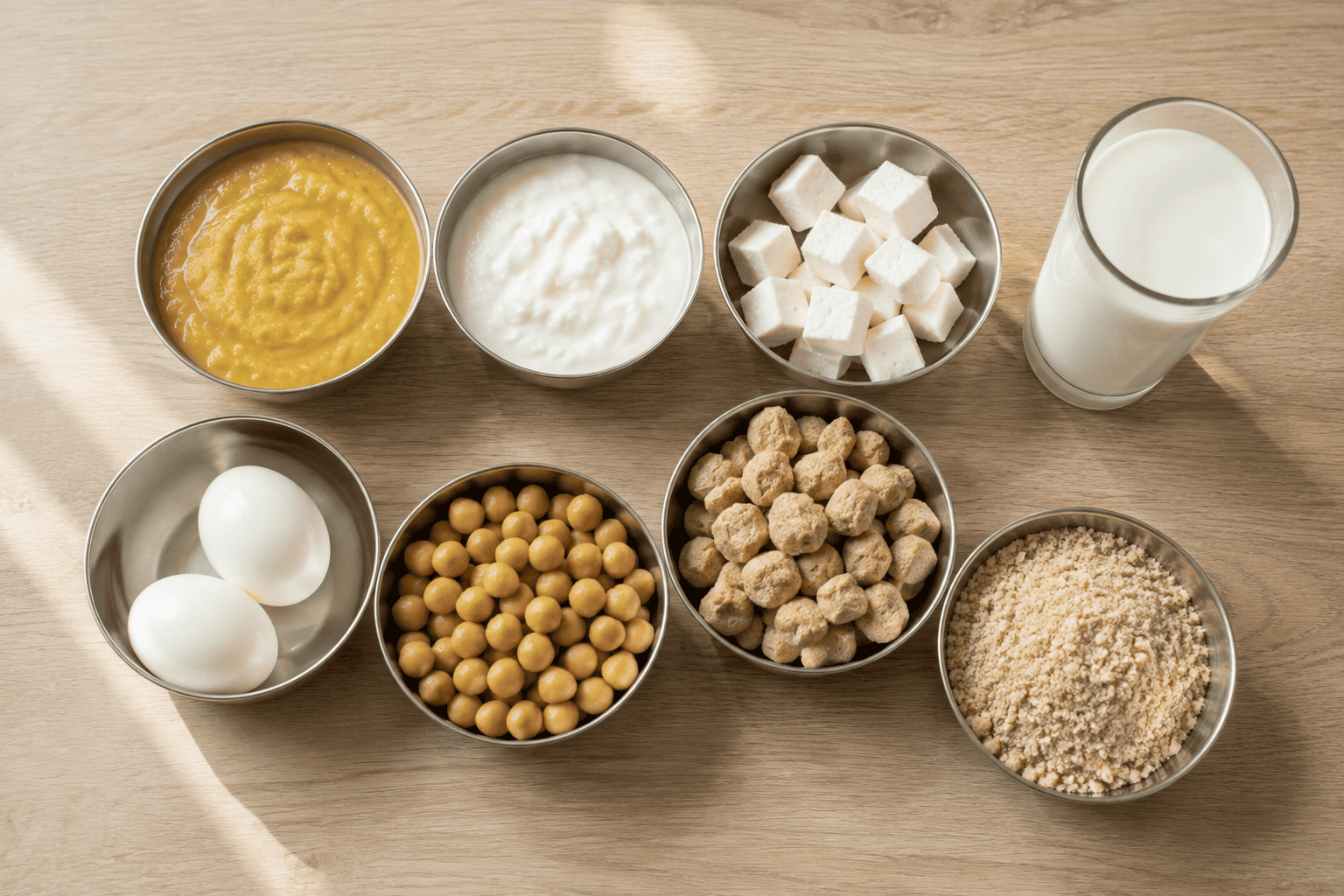
Protein: practical Indian sources
| Source | Easy ways to give it | Note |
|---|---|---|
| Dal and legumes | Thicker dal rather than watery, dal khichdi, rajma, chana, sprouts | Make dal thicker instead of adding more water to increase volume |
| Curd and milk | Curd with meals, buttermilk, milk with meals, paneer in sabzi | Easy to take when appetite is poor, and gentle on a sore mouth |
| Paneer and cheese | Grated into dal or khichdi, cubes in sabzi, paneer bhurji | Adds protein without much extra volume on the plate |
| Eggs | Boiled, bhurji, added to dal or soup | Convenient, soft, and easy to prepare in small portions |
| Chicken and fish | Shredded in soup, soft curry, steamed fish | Easier to chew when cooked soft and shredded |
| Soya and tofu | Soya chunks in curry, soya granules in khichdi | High protein vegetarian option, needs to be cooked soft |
| Nuts and seeds | Powdered almond or peanut stirred into milk, dal or porridge | Powdering avoids the chewing and choking problem |
| Sattu and besan | Sattu drink, besan chilla, added to porridge | Familiar, inexpensive and easy to increase gradually4 |
How to get more into a patient who eats very little
Stop trying to increase the size of meals and increase what is inside them instead. Several small nourishing offerings across the day beat three large plates that are half-returned, and a small bowl of dal enriched with paneer or nut powder delivers more than a large bowl of thin dal.3
- Small plate, small portions, offered often. A full thali is discouraging before the first bite.
- Enrich rather than enlarge. Stir milk powder, grated paneer, powdered nuts, ghee or a beaten egg into dal, khichdi, porridge or soup.
- Make dal thicker instead of diluting it. Volume without nourishment fills the patient and delivers little.
- Drink calories when eating is hard — milk, buttermilk, sattu, milk-based porridge, soup with shredded chicken or dal.
- Keep fluids for after the meal, not before, so water does not take the place of food.
- Offer the most food when appetite is best, which for many patients is the morning.
- Sit fully upright for meals and stay up for about half an hour afterwards, which helps digestion and swallowing safety.
- Eat with the family where possible. Meals taken alone in a room tend to be eaten less.
- Clean the mouth before and after meals. A dirty or sore mouth kills appetite and raises chest infection risk.
Constipation after surgery: the problem nobody warns about
It is very common after major surgery, because opioid painkillers slow the bowel, movement is reduced, fluid intake drops and the patient is using an unfamiliar toilet arrangement. It matters far beyond discomfort: a constipated patient stops eating, and a patient who stops eating stops healing.
- Expect it and act early rather than waiting until several days have passed with no bowel movement.
- Fluid first. Fibre without enough fluid makes constipation worse, not better.
- Fibre from food — vegetables, fruit, whole dals, soaked and softened where chewing is hard.
- Movement, where medically permitted. Even sitting out of bed and short walks help bowel function alongside adequate fluid and fibre.
- Keep a regular toileting time, typically after a meal, and give the patient privacy and enough time.
- Correct posture matters. Feet supported on a low stool while sitting on the toilet makes passing stool easier.
- Ask the doctor about a laxative if painkillers are the cause. Do not start regular laxatives on your own, and never use enemas at home without advice.
- Report immediately if there is severe abdominal pain, vomiting, a hard swollen abdomen or no wind passing — these need urgent assessment, not a home remedy.
Vitamins, minerals and supplements
A varied diet covers most needs.4 Where a specific deficiency is likely — iron, vitamin B12, vitamin D — it should be confirmed by the treating doctor and corrected on prescription, not guessed at. Supplements bought over the counter are not harmless, and some interact with prescription medicines.
| Nutrient | Why it matters in recovery | Common food sources |
|---|---|---|
| Protein | Wound repair, muscle rebuilding, immune function | Dal, curd, paneer, eggs, chicken, fish, soya, sattu |
| Vitamin C | Collagen formation, which is what holds a healing wound together | Amla, guava, citrus, capsicum, tomato |
| Zinc | Wound healing and immune function2 | Whole pulses, nuts and seeds, eggs, meat, whole grains |
| Iron | Replacing blood loss; deficiency causes persistent fatigue | Green leafy vegetables, dals, jaggery, meat and liver, with vitamin C to aid absorption |
| Vitamin B12 | Blood formation and nerve function; often low in long-term vegetarians | Milk, curd, paneer, eggs; supplementation if a doctor confirms deficiency |
| Vitamin D and calcium | Bone health, muscle strength and fall risk, particularly after fracture surgery | Milk and milk products, sunlight exposure; testing and dosing decided by the doctor |
| Fluids | Circulation, skin, kidney function and bowel movement | Water, buttermilk, soups, nimbu pani — within any limits the doctor has set5 |
Do not start supplements on your own
Protein powders, vitamin megadoses, iron tablets and herbal or ayurvedic preparations can interact with prescription medicines or be actively unsafe in specific conditions. Protein supplements need caution in kidney disease, potassium-rich products in kidney patients, vitamin K containing products in patients on blood thinners, and iron in patients not actually deficient. Take everything the patient is being given — including supplements bought at a pharmacy or recommended by relatives — to the next appointment and have it reviewed as a whole.
What changes for specific conditions
This is where general advice becomes dangerous. Protein, fluid, salt and potassium targets are completely different for a kidney patient, a heart failure patient and a healthy post-surgical patient. The table below shows what shifts; the actual numbers must come from the treating doctor or dietitian.
| Condition | What changes | Who sets the plan |
|---|---|---|
| Diabetes | Carbohydrate timing and consistency matter, and eating less than usual while on the same medicine dose risks low blood sugar | Treating doctor and dietitian, with medication reviewed against actual intake |
| Chronic kidney disease | Protein, potassium, phosphate, salt and fluid may all be restricted, which conflicts with standard recovery advice | Nephrologist and renal dietitian — general recovery diets do not apply |
| Heart failure | Salt restriction and often a daily fluid limit, with weight monitored for fluid retention rather than nutrition alone | Cardiologist and dietitian |
| Liver disease | Salt restriction, specific protein guidance, and frequent small meals including a late evening snack in some patients | Hepatologist and dietitian |
| Swallowing difficulty | Texture of food and thickness of fluids are prescribed after a swallow assessment | Speech and language therapist or treating team |
| Tube feeding | Formula, volume, rate and flushes are prescribed; upright positioning is essential | Dietitian and treating doctor, delivered by a trained nurse |
| Cancer treatment | Taste changes, mouth soreness, nausea and food safety needs during low immunity | Oncology team and dietitian |
| Pressure sores present | Protein and energy needs rise further while the wound is healing2 | Treating doctor and dietitian, alongside pressure care |
For patients with a pressure sore, nutrition works alongside the mattress and turning schedule rather than instead of them — see pressure sore prevention at home. For patients with an unsafe swallow after a stroke, the texture must be set before oral feeding begins, covered in stroke care at home.
Indian recovery food myths worth dropping
| What is commonly believed | Verdict | What is actually the case |
|---|---|---|
| "Only khichdi until they are fully better" | Myth | Weeks of plain khichdi is a low-protein diet at the exact moment protein needs are highest. Enrich it with dal, paneer, egg or soya rather than serving it plain. |
| "Protein damages the kidneys" | Depends | In people with normal kidney function there is no good evidence that adequate dietary protein harms the kidneys. In patients who already have kidney disease, protein genuinely is restricted — by their nephrologist, not by the family. |
| "Stop all ghee and oil" | Myth | Fat is a concentrated energy source and is useful when a patient is eating very little. Type and quantity should be sensible, but blanket removal makes it harder to meet energy needs. |
| "Curd causes cold and cough, avoid it" | Myth | Curd is one of the easiest protein sources for a patient with poor appetite or a sore mouth. There is no good evidence it causes respiratory infection. |
| "Eat less so the wound dries faster" | Myth | The opposite. Wound healing increases nutritional requirements. Underfeeding slows closure and weakens the scar. |
| "Protein powder is a substitute for meals" | Myth | Supplements are a top-up when food intake is inadequate, and should be chosen by a dietitian. They are not a replacement for eating, and some are unsafe in kidney disease. |
| "Papaya, banana or specific foods must be avoided" | Usually myth | Blanket food bans passed around the family narrow the diet without benefit. Genuine restrictions come from the treating doctor and are condition-specific. |
| "Drink less water so there are fewer toilet trips" | Harmful | Restricting fluid to avoid the bathroom causes dehydration, constipation, urinary infection and dizziness on standing. Solve the toilet problem instead, with a bedside commode. |
How to tell whether it is working
Track three simple things: weight weekly, what is actually eaten daily, and bowel movements. Families usually track medicines carefully and food not at all, which means the first sign of a nutrition problem is a stalled recovery weeks later.
- Weigh weekly, same time of day, same scale, and write it down. Unintentional weight loss is an important warning that intake may not be meeting the patient's needs.3
- Keep a simple intake note — what was offered and roughly how much was actually eaten, not what was served.
- Record bowel movements, because constipation is the commonest hidden cause of poor eating.
- Watch the wound. A wound that is not progressing despite good dressing care may be a nutrition problem.
- Take the record to appointments. "He is not eating properly" is far less useful to a doctor than two weeks of written intake and weights.
Tell the doctor if you see any of these
- Steady, unintentional weight loss over two or more weeks.
- Eating and drinking almost nothing for more than a day or two.
- Coughing, choking or a wet gurgly voice during or after meals.
- Persistent vomiting, or severe abdominal pain with a hard swollen abdomen.
- No bowel movement for several days, especially with pain or vomiting.
- New confusion, extreme drowsiness or sweating and shakiness in a patient on diabetes medicine.
- Signs of dehydration — very dark urine, passing very little urine, a dry mouth and dizziness on standing.
- A wound that is not healing, or a new pressure sore appearing despite good care.
Where Healthy Jeena Sikho provides attendants, nursing and equipment
Delhi NCR:Delhi, Noida, Greater Noida, Gurugram, Faridabad and Ghaziabad.
Chandigarh Tricity:Chandigarh, Mohali, Panchkula and Kharar, served from the head office and store in Sector 73, Mohali, Punjab.
Punjab:Ludhiana, Jalandhar and Bathinda.
Rajasthan and Uttar Pradesh:Jaipur and Lucknow.
Equipment sales are available more widely across India. Attendants, nursing, physiotherapy and installation are limited to the cities listed above, subject to serviceable pin code and availability. Call +91 98769 78488 or WhatsApp +91 98759 15278.
How Healthy Jeena Sikho supports nutrition at home
- Trained attendants who actually feed the patient. Assistance with meals, upright positioning, small frequent feeds and recording what was really eaten rather than what was served.
- Nurses for tube feeding. Ryle's tube and PEG feeding as prescribed, with correct positioning, flushes, aspiration checks and hygiene.
- Equipment that makes eating possible. Hospital beds with backrest elevation for safe upright feeding, over-bed tables, and bedside commode chairs so patients stop restricting food and water to avoid the bathroom.
- Intake and weight charting. A written record the family can take to the doctor or dietitian, which is far more useful than a verbal report.
- Doctors and physiotherapy on panel. Nutrition works alongside rehabilitation, because protein without exercise does not rebuild muscle and exercise without protein has nothing to build from.
- Delivery across Delhi NCR, Chandigarh Tricity, Punjab, Jaipur and Lucknow, with same-day setup where stock and service allow.
For the complete setup see recovering at home, or the programmes for after surgery recovery, bedridden patient care and ICU care at home. Rebuilding strength is covered in physiotherapy at home after hospitalisation. Equipment is on the hospital bed on rent and medical equipment on rent pages.
A free home assessment and same-day scheduling may be available in serviceable locations, subject to availability. Healthy Jeena Sikho does not replace a dietitian; diet plans should come from the treating doctor or dietitian.
Frequently Asked Questions About Recovery Nutrition
What should a patient eat after surgery at home?
A normal varied diet with enough protein, energy, fluid and fibre, unless the treating doctor has set restrictions. Practical Indian sources of protein include thick dal, curd, paneer, eggs, chicken, fish, soya and sattu, spread across small frequent meals rather than three large ones. Specific targets and any restrictions must come from the treating doctor or dietitian, especially in diabetes, kidney, liver or heart conditions.
Is only khichdi enough during recovery?
No. Plain khichdi eaten for weeks is a low-protein diet at the point when protein requirements are highest, and it is one of the commonest reasons Indian patients heal slowly. Khichdi itself is fine — enrich it with extra dal, paneer, a beaten egg, soya granules, ghee or powdered nuts rather than serving it plain.
Why has the patient lost their appetite after hospital?
Usually a combination of constipation, medicine side effects such as altered taste or nausea, pain, mouth soreness, very low activity and low mood. Some patients also deliberately eat and drink less to avoid toilet trips they find frightening. Each of these has a fix, so the useful step is identifying which one is operating rather than arguing at mealtimes.
How do you increase protein when the patient eats very little?
Enrich rather than enlarge. Stir milk powder, grated paneer, powdered nuts, a beaten egg or extra dal into khichdi, porridge, dal or soup so a small bowl carries more. Make dal thicker instead of adding water, offer food in small portions more frequently through the day, and use milk, buttermilk or sattu when chewing is difficult.
Does protein damage the kidneys?
In people with normal kidney function, there is no good evidence that adequate dietary protein causes kidney damage. In patients who already have chronic kidney disease, protein is genuinely restricted — but that restriction is set by the treating nephrologist and dietitian, and general recovery advice does not apply to them. Do not restrict protein in a recovering patient on the assumption that it is safer.
How do you manage constipation after surgery?
Expect it, because opioid painkillers, low movement and reduced fluid all slow the bowel. Increase fluid first, then fibre from food, encourage sitting out of bed and short walks, keep a regular toileting time after a meal, and support the feet on a low stool while sitting. Ask the doctor about a laxative if painkillers are the cause, and seek urgent advice for severe abdominal pain, vomiting or a hard swollen abdomen.
Should a recovering patient take protein powder or supplements?
Only if the treating doctor or dietitian advises it. Supplements are a top-up when food intake is inadequate, not a replacement for meals, and some are unsafe in specific conditions — protein and potassium products in kidney disease, vitamin K containing products in patients on blood thinners, and iron in patients who are not actually deficient. Take everything the patient is being given for review as a whole.
How much water should a recovering patient drink?
Enough to stay well hydrated, unless a fluid limit has been set. Heart failure and some kidney patients have specific daily limits, and those instructions override general advice. What should never happen is a patient restricting fluids to avoid bathroom trips — that causes dehydration, constipation, urinary infection and dizziness on standing. Solve the toilet problem with a bedside commode instead.
Does nutrition affect pressure sores?
Yes, substantially. Skin repair needs protein, energy, fluid and micronutrients such as vitamin C and zinc, and a patient who is losing weight also loses the padding that protects bony points. Nutrition works alongside the pressure mattress and the repositioning schedule, not instead of them. Where a sore is already present, requirements rise further.
When should you tell the doctor about eating problems?
When there is steady unintentional weight loss over two or more weeks, almost no intake for more than a day or two, coughing or choking during meals, persistent vomiting, no bowel movement for several days, signs of dehydration, or a wound that is not healing. Take a written record of intake and weekly weights to the appointment rather than describing it from memory.
Where does Healthy Jeena Sikho provide attendants and nursing for feeding support?
Attendants, nursing, physiotherapy and equipment installation are available in Delhi, Noida, Greater Noida, Gurugram, Faridabad, Ghaziabad, Chandigarh, Mohali, Panchkula, Kharar, Ludhiana, Jalandhar, Bathinda, Jaipur and Lucknow. Equipment sales are available more widely across India. Call +91 98769 78488 or WhatsApp +91 98759 15278 to check your location.
References and further reading
- European Society for Clinical Nutrition and Metabolism (ESPEN). Guideline on clinical nutrition in surgery, and Guideline on clinical nutrition and hydration in geriatrics.
- European Pressure Ulcer Advisory Panel, National Pressure Injury Advisory Panel and Pan Pacific Pressure Injury Alliance. Prevention and Treatment of Pressure Ulcers/Injuries: Clinical Practice Guideline — nutrition chapter.
- National Institute for Health and Care Excellence (NICE). Nutrition support for adults, clinical guideline CG32.
- Indian Council of Medical Research and National Institute of Nutrition. Dietary Guidelines for Indians.
- World Health Organization. Healthy diet fact sheet, and guidance on sodium intake.
Medical and nutrition disclaimer. This page is general educational information about nutrition during recovery at home. It is not medical or dietetic advice and does not replace consultation with a qualified physician or registered dietitian. No specific quantities, targets or restrictions are prescribed here deliberately, because protein, fluid, salt, potassium and carbohydrate requirements differ completely between individuals and are particularly restricted in kidney disease, liver disease, heart failure, diabetes and swallowing disorders. Diet plans, texture modification, tube feeding prescriptions and any supplements must be decided by the treating doctor or dietitian. Do not start, stop or change any supplement or restrict any food group in a recovering patient without professional advice. Healthy Jeena Sikho supplies home medical equipment and arranges nursing, attendant and physiotherapy services, and does not provide dietetic prescriptions or diagnose conditions.