
Cancer Care at Home: Equipment, Safety, Pain Relief & Caregiver Guide
The short version
- Fever after chemotherapy is an emergency, not a wait-and-watch. A temperature of 38°C or above in a patient on chemotherapy needs urgent hospital assessment the same hour — never paracetamol at home first.[5]
- India recorded about 14.6 lakh new cancer cases in 2022, projected to reach 15.7 lakh by 2025 — and most of the care journey happens at home between hospital visits.[1]
- Palliative care is not end-of-life care. It runs alongside active treatment and is best started early, not at the end.[3,4]
- Equipment needs change with the phase of illness. Chemotherapy cycles, post-surgical recovery and advanced disease each need a different home setup — which is why renting usually makes more sense.
- The caregiver is the second patient. Trained attendant or nursing support at home prevents the collapse that follows months of unbroken caregiving.
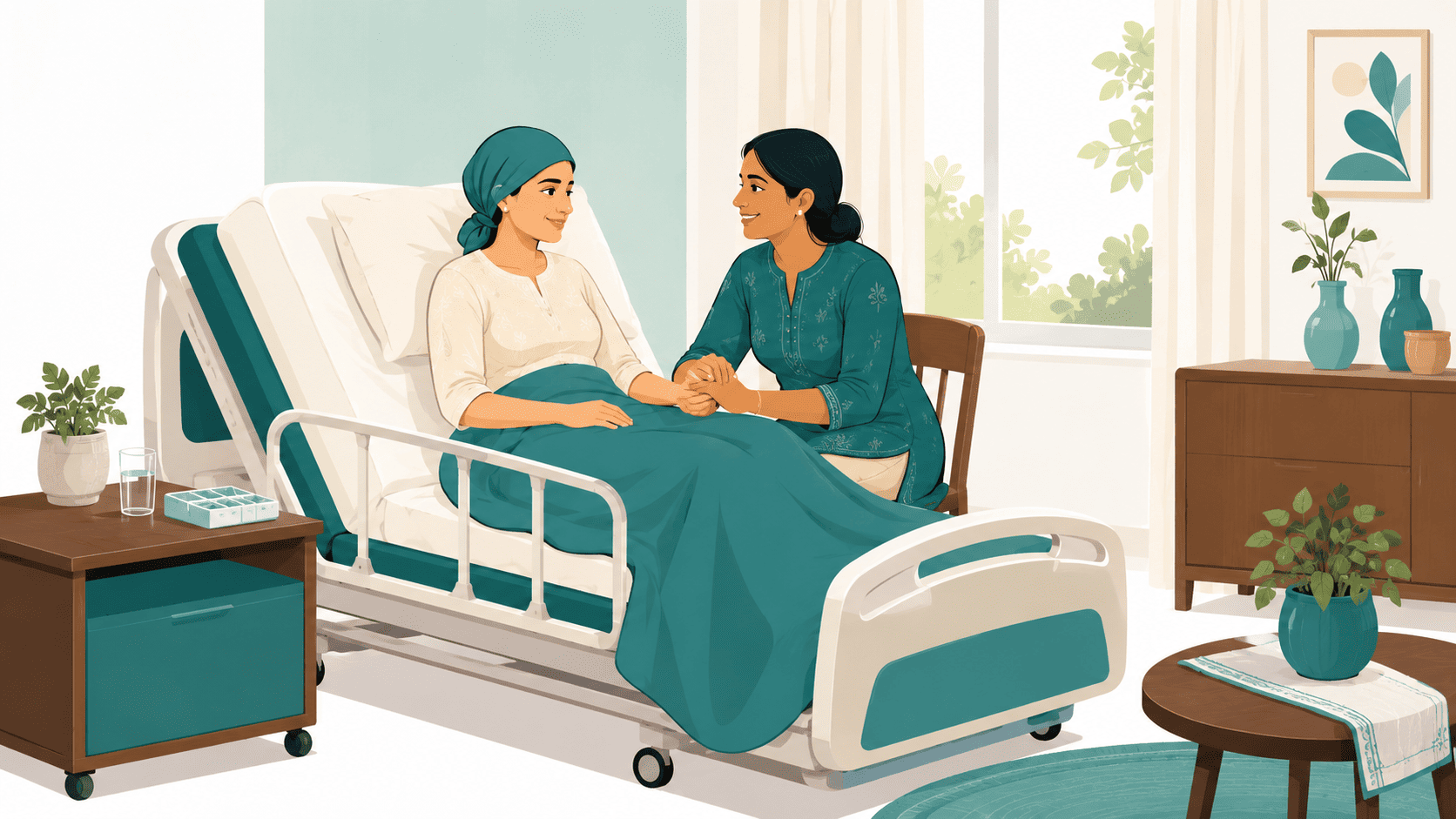
Most of cancer treatment does not happen in a hospital. It happens in a bedroom, between cycles, managed by a family that was handed a discharge summary and very little else. This guide covers what a cancer home setup actually requires, how to keep a patient safe when immunity is low, how pain is managed at home, and the specific warning signs that mean you stop managing and start driving to the hospital.
What does cancer care at home actually cover?
Cancer care at home covers everything between hospital visits: recovery between chemotherapy cycles, post-surgical wound and mobility care, infection prevention when immunity is low, pain and symptom control, nutrition support, and — in advanced disease — palliative and comfort care delivered in familiar surroundings.
It does not replace oncology treatment. Chemotherapy, radiotherapy, surgery and immunotherapy remain hospital-led and consultant-directed. Home care is the infrastructure that keeps a patient stable, comfortable and out of avoidable readmissions between those interventions.
The ICMR National Cancer Registry Programme estimated 14,61,427 new cancer cases in India in 2022, a crude rate of 100.4 per 100,000, with incidence projected to rise to about 15.7 lakh by 2025.[1] Hospital beds are limited, distances in North India are long, and repeated admissions are exhausting for families. Healthy Jeena Sikho supports this gap by supplying home medical equipment, home nursing and trained patient attendants across Delhi NCR, Punjab, Haryana and the Chandigarh Tricity.
Which cancer patients can be cared for at home?
Most patients can, provided the oncology team agrees and the home has the right equipment and supervision. The decision depends on the treatment phase, the patient's mobility, whether symptoms are controlled, and whether someone is available to observe and escalate.
Use the table below as an orientation for a conversation with the treating oncologist. It is not a substitute for that conversation.
| Phase of illness | What the home setup usually needs | Why |
|---|---|---|
| Between chemotherapy cycles, ambulant patient | Thermometer, pulse oximeter, clean separate room, prescribed anti-emetics and supportive medicines | The priority is infection surveillance and side-effect management, not heavy equipment. |
| Recovering after major cancer surgery | Hospital bed with backrest, walker or wheelchair, commode chair, wound-care nursing visits | Safe positioning and assisted mobility reduce falls and support wound healing. |
| Low blood counts after treatment | Strict infection precautions, thermometer, immediate escalation plan, oximeter | Neutropenia raises infection risk sharply; early recognition matters more than any device. |
| Lung involvement or breathlessness | Oxygen concentrator if prescribed, oximeter, backrest positioning | Oxygen is prescribed against measured saturation, never started on breathlessness alone. |
| Largely bed-bound, advanced disease | Hospital bed, alpha or air mattress, suction machine, commode, attendant or nursing support | Pressure-injury prevention, secretion clearance and dignity in daily care become central. |
| Palliative and end-of-life care at home | Full comfort setup plus a documented symptom and escalation plan from the palliative team | Families need clear instructions in advance, especially for nights and weekends. |
What equipment does a cancer patient need at home?
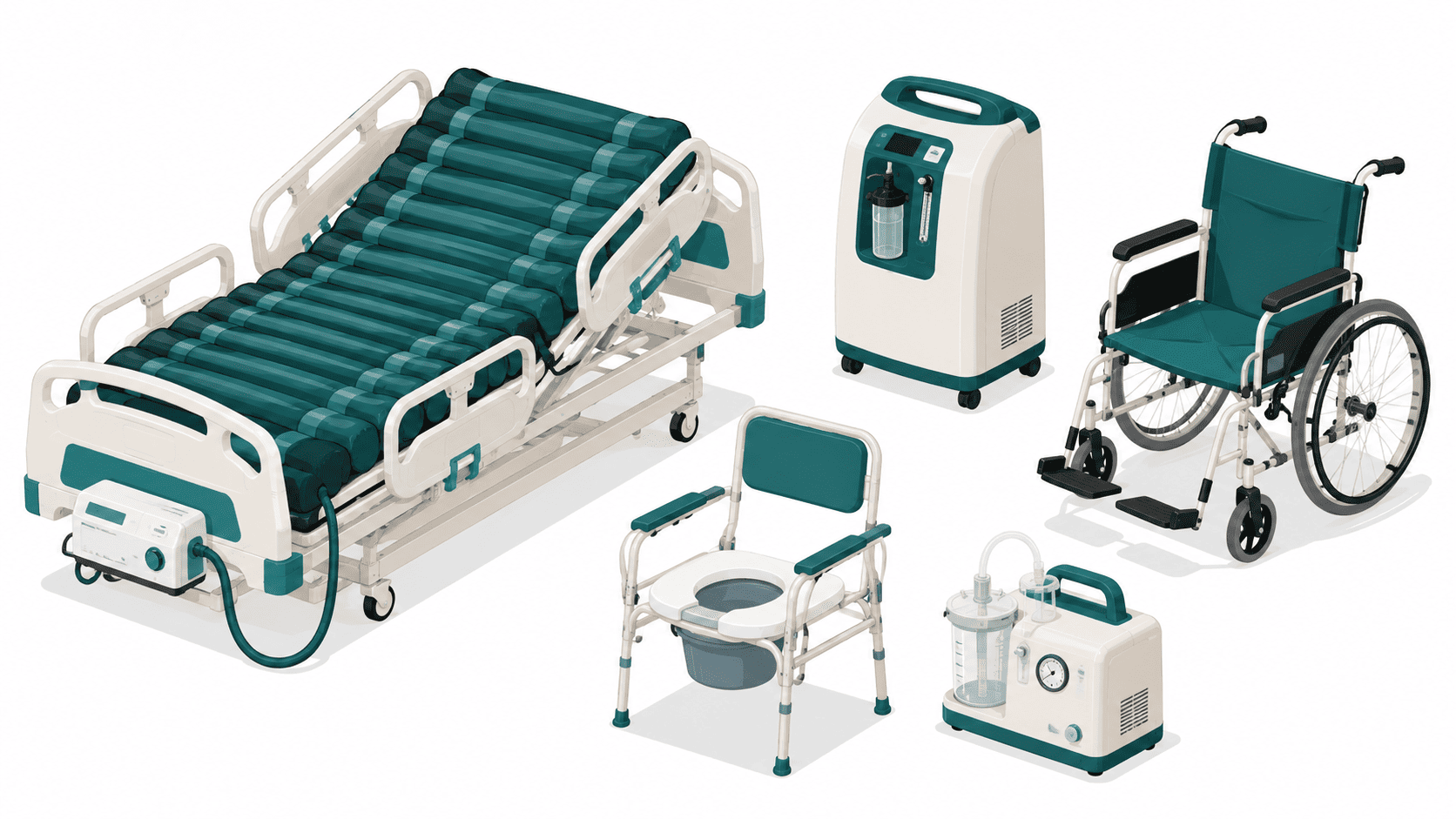
There is no single cancer equipment list. The setup is built around the patient's mobility, symptoms and treatment phase, and it is expected to change over the course of illness.
Hospital Bed
Backrest and knee elevation help with breathlessness, feeding, and safe transfers. Electric beds reduce strain on the caregiver.
Alpha / Air Mattress
Alternating-pressure mattresses help prevent bed sores in patients who spend long hours in bed with reduced mobility.
Oxygen Concentrator
Used only when supplemental oxygen is prescribed against measured saturation, most often where lungs are involved.
Suction Machine
Helps clear secretions in patients with a weak cough, head and neck cancers, or a tracheostomy.
Wheelchair or Walker
Preserves mobility and makes hospital visits, day-care chemotherapy and scans far less exhausting.
Commode Chair
Reduces the risk of falls during night-time toilet trips, which is one of the commonest home injuries in weak patients.
Pulse Oximeter & Thermometer
The two most important devices in the house. Temperature readings drive emergency decisions during chemotherapy.
Home Nursing Support
Trained nurses for injections, wound dressing, catheter care, feeding tube care and vitals monitoring as prescribed.
Healthy Jeena Sikho supplies hospital beds on rent, oxygen concentrators on rent, air mattresses, suction machines, wheelchairs and commodes — see the full medical equipment on rent range — with delivery and home installation across its service cities. Before delivery day, the patient room setup guide covers measurements, sockets and access.
Same-day delivery may be available in selected Delhi NCR and Tricity locations, subject to stock and service availability.
How do you keep a patient safe during chemotherapy at home?
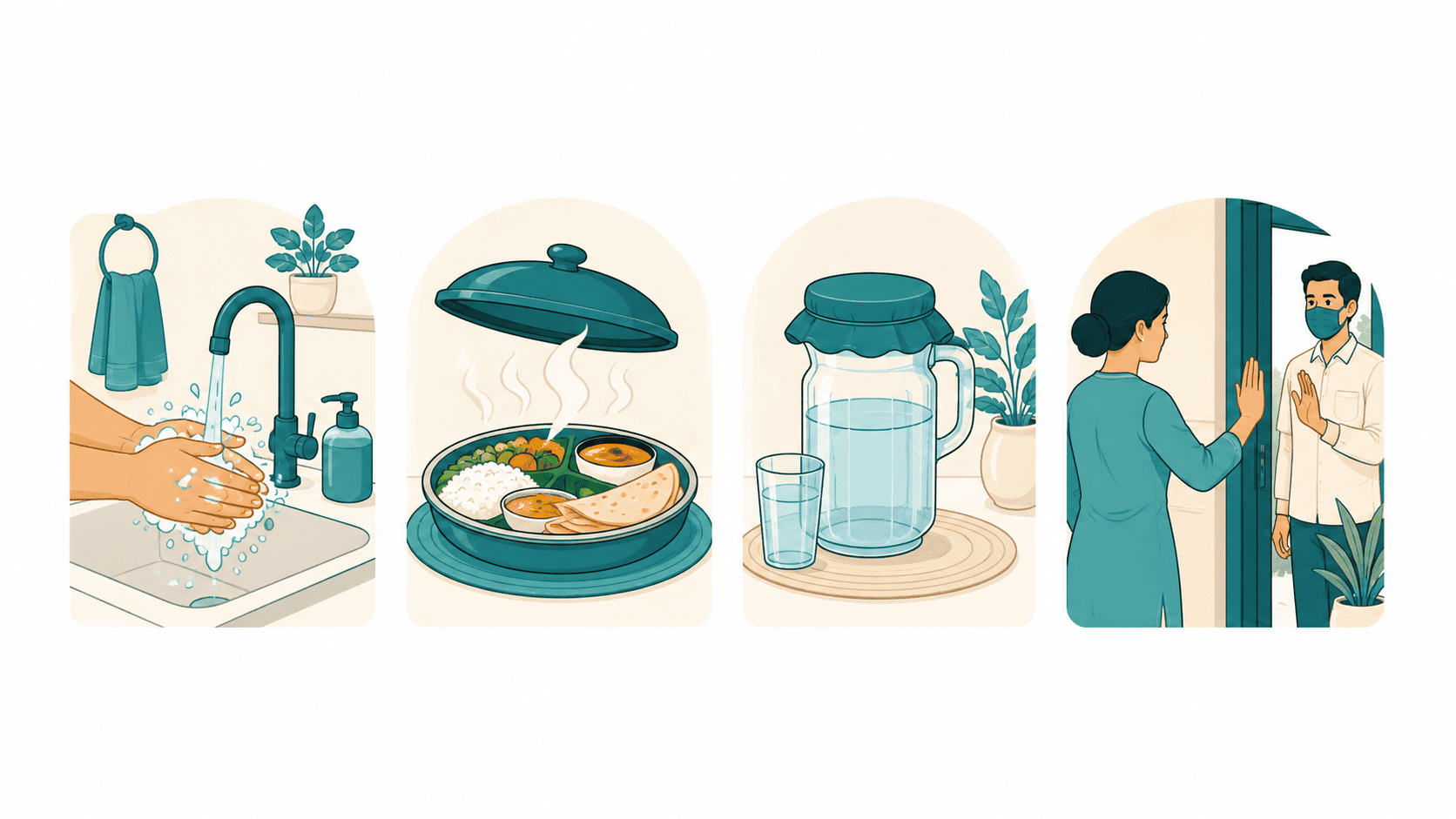
By protecting against infection. Chemotherapy lowers the white blood cell count, usually reaching its lowest point roughly seven to fourteen days after a cycle. During that window an ordinary infection can become serious very quickly, so household precautions matter more than at any other time.[5]
Household precautions that actually matter
- Hand hygiene above everything else. Everyone entering the patient's room washes hands or uses sanitiser first — visitors, children and staff included.
- Keep unwell visitors away completely. Anyone with fever, cough, cold, loose motions or a rash should not visit, however close the relative.
- Freshly cooked, hot food only. Avoid street food, cut fruit from outside, raw salads, unpasteurised milk and leftovers reheated more than once.
- Clean water for drinking and for taking medicines. Boiled or filtered water, in a covered container, changed daily.
- Daily mouth care. A soft brush and prescribed mouth rinses help with mucositis, which is both a comfort problem and an infection entry point.
- Protect the skin. Avoid injections, blood tests and blood pressure cuffs on an arm where lymph nodes have been removed, unless the treating team advises otherwise.
- Keep the room ventilated and dust-free. Avoid construction dust, potted soil, incense smoke and mosquito coils.
Care of a chemo port, PICC or central line
Central lines and chemotherapy ports are direct routes into the bloodstream, which makes them convenient for treatment and dangerous if neglected. Dressings and flushing must be done by a trained nurse according to the hospital protocol. Redness, swelling, pain, discharge or fever around a line site should be reported to the oncology team the same day. Healthy Jeena Sikho provides trained home nursing support for prescribed line care, dressings and injections.
What are the warning signs that need emergency care?
The single most important rule in cancer home care is this: fever during or after chemotherapy is a medical emergency. It should be treated as urgently as chest pain, and it must never be managed at home with paracetamol while waiting to see if it settles.
Go to hospital immediately if any of these occur
- Temperature of 38°C (100.4°F) or above in a patient on or recently after chemotherapy — this may indicate febrile neutropenia, which requires urgent assessment and antibiotics without delay.[5]
- Shaking chills or rigors, even if the thermometer reads normal.
- Bleeding that does not stop — from the nose, gums, in vomit, in urine or in stool — or widespread new bruising and pinpoint red spots.
- Sudden or severe breathlessness, chest pain, or oxygen saturation falling below the level the treating team has specified.
- Persistent vomiting or diarrhoea with an inability to keep fluids down, reduced urine output, or dizziness on standing.
- New confusion, unusual drowsiness, seizure, or difficulty waking the patient.
- Sudden severe headache, new weakness in a limb, or loss of bladder or bowel control — particularly with spinal or brain involvement.
- Pain that has broken through the prescribed medication and is not settling.
Keep the oncology team's number, the patient's diagnosis, current medication list and last treatment date written on one page near the bed. In an emergency, no one should be searching through files.
How is cancer pain managed at home?

Through a prescribed, scheduled regimen rather than on-demand dosing. Cancer pain is generally controllable, and the World Health Organization approach steps treatment up from simple analgesics to stronger opioid medication as required, always under medical supervision.[2]
The most common mistake families make is giving pain medicine only when the pain becomes unbearable. Scheduled dosing keeps pain below the threshold; rescue doses are then prescribed separately for breakthrough pain. Both come from the treating doctor, and neither should be reduced or stopped because of fear of dependence — that fear leads to a great deal of unnecessary suffering in Indian homes.
| What families should track | Why it helps the doctor |
|---|---|
| Pain score out of 10, three times a day | Turns a vague complaint into a trend the oncologist can act on. |
| When pain returns before the next dose | Indicates the dose interval or strength may need review. |
| How many rescue doses were used | A rising rescue count usually means the baseline dose needs adjusting. |
| Bowel movements | Constipation is an expected effect of opioids and is managed preventively, not after it becomes a crisis. |
| Drowsiness, confusion or nausea | Side effects that need reporting rather than silent dose reduction at home. |
Never adjust cancer medication doses at home
Painkillers, opioids, steroids, anti-emetics and blood-thinners in cancer care are prescribed against the patient's weight, organ function and treatment protocol. Increasing, reducing or stopping a dose without the treating doctor can be dangerous. Healthy Jeena Sikho supplies equipment and trained nursing support according to the prescription provided, and does not prescribe or alter medication.
What is palliative care, and when should it begin?
Palliative care is specialist support focused on relieving pain, symptoms and distress. It is not restricted to the final weeks of life. Evidence supports introducing palliative care early, alongside active cancer treatment, to improve quality of life and symptom control.[3,4]
The misunderstanding that palliative care means "giving up" delays referral in many Indian families. In practice, a palliative team manages pain, breathlessness, nausea, appetite loss, constipation, anxiety and sleep — problems that continue throughout treatment, whatever the prognosis.
Access remains limited. Palliative care services reach only a small fraction of the patients worldwide who need them, and provision in India varies widely between states.[3] Where a formal palliative service is not available nearby, families should ask the treating oncologist specifically about symptom management and a written escalation plan for nights and weekends.
Questions worth asking the oncology team
- What is our escalation plan at 2 a.m. — who do we call, and where do we go?
- Which symptoms should be managed at home, and which always mean hospital?
- Is a palliative care referral appropriate now, alongside treatment?
- What should we expect over the next few weeks, so we can prepare the house?
- Are there advance care preferences the family should discuss while the patient can express them?
How should nutrition and hydration be handled at home?
Through small, frequent, protein-rich and freshly cooked meals, guided by a clinical dietitian where available. Appetite loss, taste changes, mouth ulcers and nausea are treatment effects to be worked around, not signs of a patient refusing to cooperate.
- Offer small portions every two to three hours instead of three large meals.
- Soft, moist foods are easier where there are mouth ulcers or swallowing difficulty.
- Cold or room-temperature food is often better tolerated when smells trigger nausea.
- Maintain fluid intake steadily through the day unless fluids have been restricted.
- Report weight loss, persistent vomiting or an inability to eat to the treating team early.
Be cautious with supplements and alternative remedies
High-dose vitamins, herbal preparations and "immunity boosters" can interact with chemotherapy, radiotherapy and immunotherapy, and some affect liver function or bleeding risk. Every supplement, ayurvedic preparation or home remedy must be disclosed to the oncologist before it is started. No food, juice or supplement treats cancer, and delaying medical treatment in favour of alternative remedies causes real harm.
Who provides day-to-day care — a nurse or an attendant?
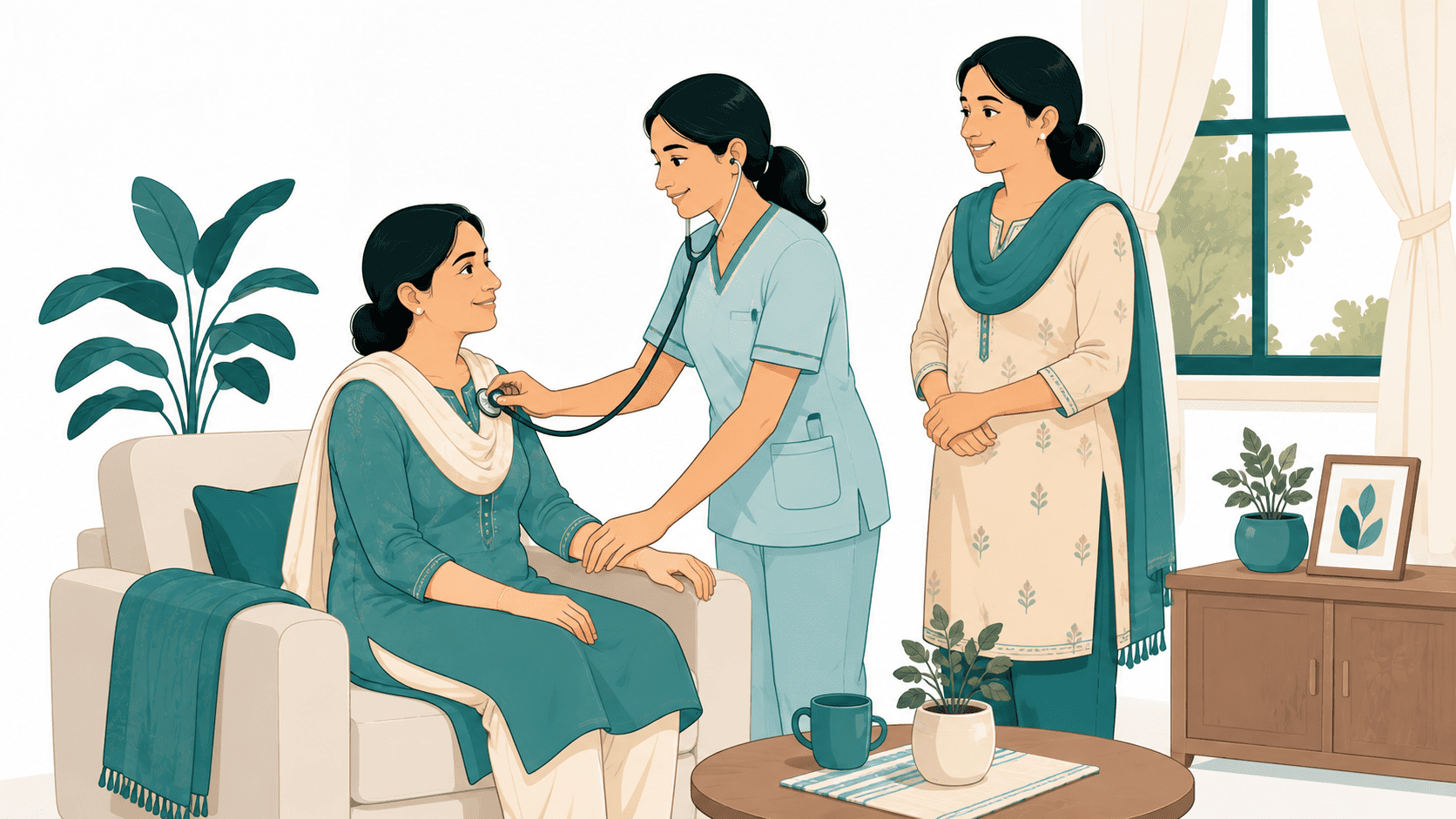
Both roles exist and they are not interchangeable. A trained nurse performs clinical tasks under prescription. A patient attendant supports daily living — hygiene, feeding, positioning, mobility and companionship. Many families need a combination.
| Home nurse | Patient attendant | |
|---|---|---|
| Typical tasks | Injections, IV and line care, wound dressing, catheter and feeding tube care, vitals monitoring. | Bathing, changing, feeding, repositioning, toileting support, assisted walking, companionship. |
| Best suited to | Post-surgical recovery, patients with lines or tubes, prescribed clinical procedures. | Bed-bound patients, elderly patients, and families who cannot provide round-the-clock physical care. |
| Engagement pattern | Visit-based or shift-based depending on requirement. | 12-hour or 24-hour shifts, often over longer periods. |
The caregiver also needs care
Cancer caregiving in Indian families usually falls on one person, often a spouse or daughter, for months at a stretch. Exhaustion, disturbed sleep, lost income and guilt are predictable, not signs of weakness. Rotating night duty between family members, arranging paid attendant support for part of the week, and accepting help are practical necessities. A caregiver who collapses cannot care for anyone. Safe handling matters too — see how to move and transfer a patient safely.
Should you rent or buy cancer care equipment?
Renting suits most cancer households, because requirements change with the phase of illness. A patient who needs a walker during recovery may need a hospital bed and air mattress months later, and may not need either during a stable phase.
| Consideration | Renting | Buying |
|---|---|---|
| Upfront cost | Monthly rental plus applicable deposit. | Full purchase price immediately, at a time of heavy treatment expenses. |
| If requirements change | Equipment can be changed according to requirement and availability. | A different requirement may mean a fresh purchase. |
| Servicing | Usually supported through the rental tenure. | Owner is responsible under warranty and service terms. |
| Short or uncertain duration | Suitable, and returnable when no longer needed. | Leaves unused equipment in the house afterwards. |
| Long, stable requirement | Rental cost accumulates over time. | Can be more economical once the requirement is settled. |
Related home care guides
Pressure Sore Prevention
Turning schedules, the 30-degree tilt and daily skin checks for bed-bound patients.
Moving and Transferring Safely
Bed to wheelchair transfers, and the handling mistakes that injure carers.
Bedridden Patient Care
Daily hygiene, positioning and routines when mobility is largely lost.
Setting Up a Patient Room
Measurements, socket planning and access before equipment arrives.
Home Care After Discharge
What to secure before leaving the ward, and the first 30 days at home.
Medical Equipment on Rent
The full rental range, from beds and mattresses to oxygen and suction.
How Healthy Jeena Sikho supports cancer families
- Complete home setup from one place. Hospital beds, alpha mattresses, oxygen concentrators, suction machines, wheelchairs, walkers and commodes on rent or purchase.
- Trained home nursing and patient attendants. Nursing for prescribed clinical care, and attendants for daily living support in 12-hour or 24-hour shifts.
- Fast delivery after discharge. Same-day delivery may be available in Delhi NCR and Tricity, so the room is ready before the patient reaches home.
- Installation and family demonstration. The Healthy Jeena Sikho team sets up equipment and shows the family how to operate it, reposition safely and handle alarms.
- Flexible, changeable rentals. Equipment can be changed as the patient's requirements evolve, subject to availability.
- Wide North India coverage. Delhi, Gurugram, Noida, Faridabad, Ghaziabad, Chandigarh, Mohali, Panchkula, Ludhiana, Jalandhar, Jaipur and Lucknow.
- Operating since 2015. ISO 9001:2015 certified, serving families across Delhi NCR and North India.
Frequently Asked Questions About Cancer Care at Home
Is fever always an emergency in a cancer patient?
In a patient on or recently after chemotherapy, yes — a temperature of 38°C or above should be treated as an emergency requiring immediate hospital assessment. Low white cell counts mean infection can progress rapidly, and delay is the main avoidable risk. Do not give paracetamol and wait, because it can mask the fever without treating the cause.
Can chemotherapy be given at home?
Chemotherapy administration is a hospital or day-care procedure in almost all cases, because it requires monitoring for reactions and safe handling of cytotoxic drugs. Some oral chemotherapy and supportive injections are taken at home strictly as prescribed. What home care does provide is everything around the cycle — recovery, symptom management, infection precautions and nursing support.
Does a cancer patient at home need oxygen?
Only when it is prescribed. Oxygen is started against measured saturation and clinical assessment, most often where the lungs are involved or where there is significant breathlessness with low oxygen levels. Breathlessness alone can have several causes, including anaemia, fluid collection or anxiety, and each is managed differently. An oximeter reading should be discussed with the treating team rather than acted on independently.
How do we prevent bed sores in a bed-bound cancer patient?
Reposition the patient roughly every two hours, keep skin clean and dry, avoid dragging during transfers, and use an alternating-pressure air mattress. Inspect the heels, hips, lower back, elbows and shoulder blades daily. Any persistent redness that does not fade after pressure is relieved should be reported early, because pressure injuries are far easier to prevent than to heal. The full routine is in pressure sore prevention at home.
Is palliative care the same as end-of-life care?
No. Palliative care focuses on relieving pain, symptoms and distress, and can run alongside active cancer treatment from an early stage. End-of-life care is one part of it, applying in the final phase. Asking for a palliative referral does not mean treatment is being stopped.
Will strong painkillers cause addiction?
When opioid medication is prescribed and monitored for cancer pain, the concern most families have about addiction is generally out of proportion to the risk, while the harm from untreated pain is immediate and real. Doses should never be reduced or stopped at home out of fear. Discuss any worry about dependence, drowsiness or constipation directly with the treating doctor, who can adjust the regimen.
How soon can equipment be delivered after a hospital discharge?
Delivery timelines depend on location, stock and service availability. Across Delhi NCR and Tricity, same-day delivery may be available in selected locations. Families are advised to arrange the bed, mattress and any prescribed equipment a day before discharge so the room is ready when the patient arrives. Call +91 98769 78488 or message +91 98759 15278 on WhatsApp.
Can family members catch cancer or be affected by chemotherapy drugs?
Cancer is not contagious. Chemotherapy drugs, however, can remain in body fluids for a short period after a cycle, so hospitals advise routine precautions such as gloves when handling soiled linen or waste, careful hand washing, and flushing the toilet with the lid closed. The oncology team will specify the precautions and how long they apply for the specific drugs used.
What support is available for the caregiver?
Practical support matters most: paid attendant shifts to allow the primary caregiver to sleep, rotating night duty within the family, and equipment that reduces physical lifting. Counselling and caregiver support groups are available through many cancer centres and NGOs in India, and hospital medical social workers can also advise on financial assistance schemes.
References and further reading
- Sathishkumar K, Chaturvedi M, Das P, et al. Cancer incidence estimates for 2022 & projection for 2025: result from National Cancer Registry Programme, India. Indian Journal of Medical Research 2022;156(4&5):598–607.
- World Health Organization. Cancer fact sheet.
- World Health Organization. Palliative care fact sheet.
- Temel JS, Greer JA, Muzikansky A, et al. Early palliative care for patients with metastatic non–small-cell lung cancer. New England Journal of Medicine 2010;363(8):733–742.
- National Cancer Institute (NIH). Infection and neutropenia during cancer treatment.
- International Agency for Research on Cancer (IARC), World Health Organization. Global Cancer Observatory — India factsheet.
Medical disclaimer. This page is general educational information about home care for people living with cancer. It is not medical advice, does not diagnose or treat cancer, and does not replace consultation with a qualified oncologist or palliative care physician. Chemotherapy, radiotherapy, surgery, oxygen therapy, pain medication and all other treatment must be prescribed and adjusted only by the treating medical team. Healthy Jeena Sikho supplies, installs and services home medical equipment and arranges trained nursing and attendant support according to the prescription and care plan provided. We do not diagnose conditions, prescribe medication, or independently set clinical parameters. In an emergency, contact your oncology team or nearest hospital immediately.