
Heart Failure Care at Home: Daily Weight, Salt, Warning Signs & Equipment
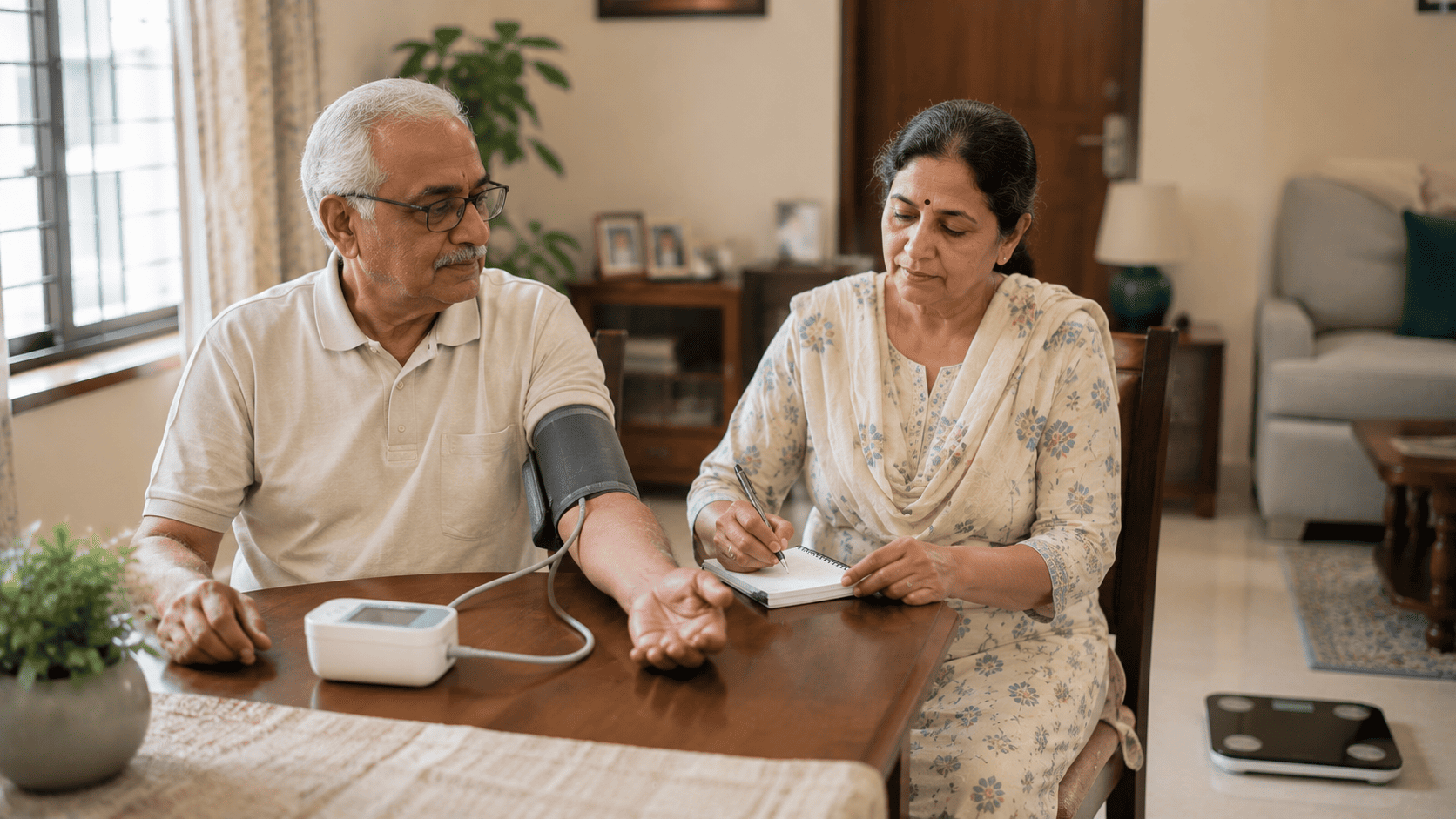
The short version
- An inexpensive weighing scale is the most valuable equipment in the house. Weigh every morning, same time, same clothes, after the toilet. A gain of more than about 2 kg in two to three days means fluid is building up — call the doctor before breathlessness starts.
- Heart failure does not mean the heart has stopped. It means the heart cannot pump or fill well enough to meet the body's needs, and it is a condition to be managed for years, not a death sentence.
- Salt matters more than most families realise, and the biggest sources in an Indian kitchen are not the salt shaker — they are pickle, papad, namkeen, packaged masala and baking soda.
- Common over-the-counter painkillers can worsen heart failure. Anti-inflammatory painkillers cause fluid retention and strain the kidneys. Ask before taking anything for body ache or fever.
- Never stop the medicines because the person feels better. Feeling better is what the medicines are doing. In Indian registry data, only a quarter of eligible patients left hospital on the full recommended combination — and those who did lived longer.[2,3]
- Oxygen is not a treatment for breathlessness in heart failure unless blood oxygen is actually low. Breathlessness from fluid needs fluid treatment.
Heart failure is managed in the kitchen and on the bathroom scale far more than it is managed in the hospital. Most admissions do not happen suddenly — they build over a week or two, as fluid accumulates quietly and nobody notices until the person cannot lie flat at two in the morning. Families who catch that early, with a scale and a symptom list, avoid a very large share of those admissions. This guide covers exactly what to watch, what to change, and what equipment genuinely helps.
What does heart failure actually mean?
It means the heart muscle can no longer pump strongly enough, or fill well enough, to move blood around the body as required. Blood and fluid then back up — into the lungs, causing breathlessness, and into the legs and abdomen, causing swelling. The heart has not stopped and is not about to. Heart failure is a long-term condition managed with medicines, salt and fluid control, and monitoring.
Two broad types are described, and the distinction affects treatment: heart failure with reduced ejection fraction, where the pumping strength is weakened, and heart failure with preserved ejection fraction, where the pumping fraction looks normal but the heart is stiff and fills poorly. The ejection fraction, or EF, is the percentage of blood pushed out with each beat — it appears on the echocardiogram report and is worth knowing, but it is only one part of the picture and does not by itself predict how someone will feel or do.
The four functional stages families are asked about
| Class | What the person can do | What it usually means at home |
|---|---|---|
| Class I | Ordinary activity causes no symptoms. | Normal routine, with medicines, monitoring and risk-factor control. |
| Class II | Comfortable at rest; ordinary activity causes breathlessness or fatigue. | Pacing, planned rests, no equipment usually needed. |
| Class III | Comfortable at rest; less than ordinary activity causes symptoms. | Commode near the bed, shower chair, help with stairs and bathing. |
| Class IV | Symptoms at rest, worse with any activity. | Adjustable bed for propped sleeping, wheelchair, close monitoring, frequent review. |
Why is the daily weight check the most important thing you do at home?
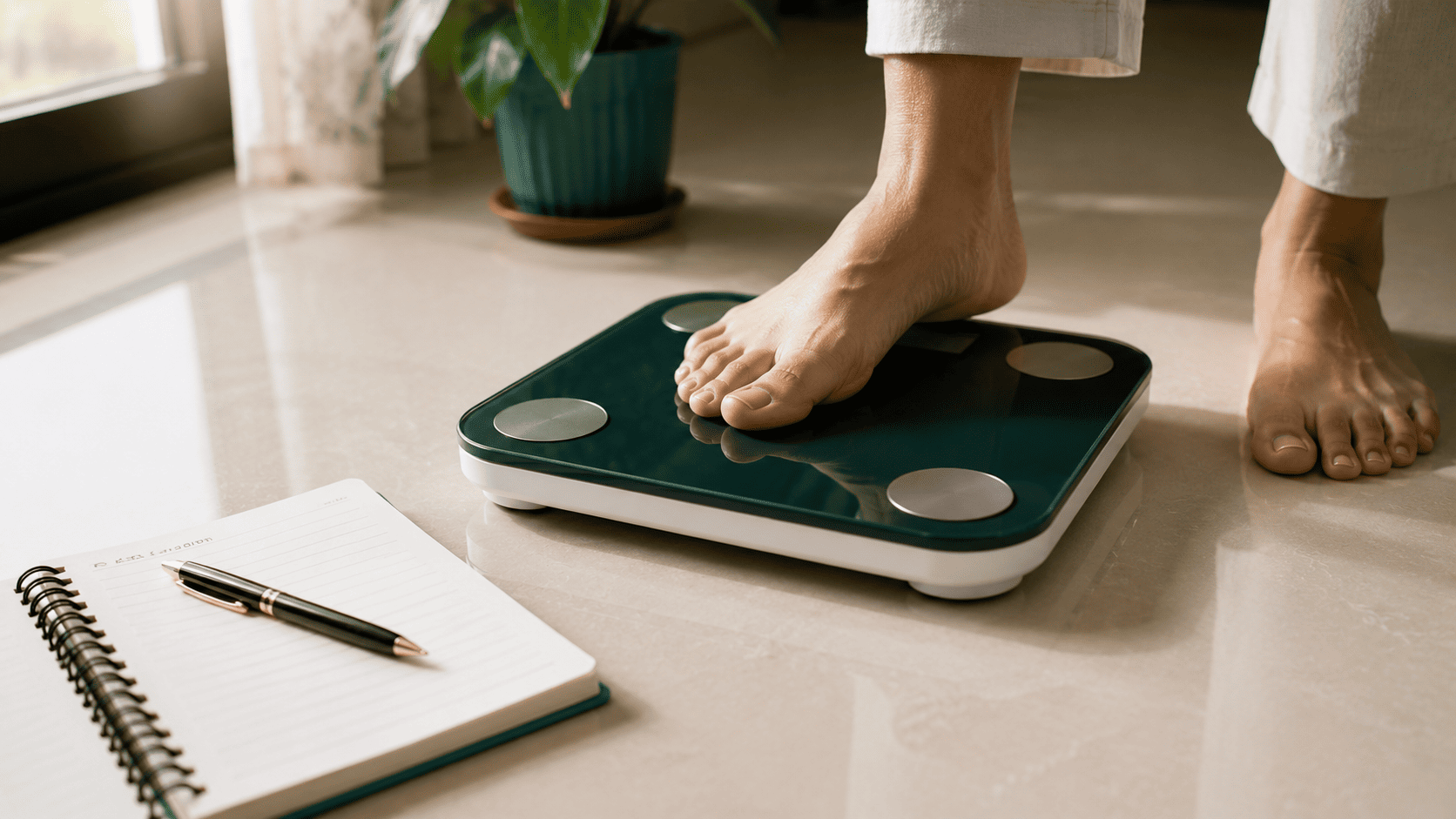
Because weight rises before symptoms do. Fluid accumulates for days before it becomes breathlessness, and the scale detects it while it is still easy to treat with a medication adjustment at home rather than an admission. Weigh every morning, at the same time, in the same clothes, after using the toilet and before eating, and write the number down.
The rule to agree with the treating doctor
A commonly used threshold is a gain of more than about 2 kg over two to three days, or a steady climb over a week, as the point to make contact.[5,7] Some patients are given a "flexible diuretic" plan allowing a temporary dose adjustment at home under specific instructions. That plan must come from the treating cardiologist in writing — it is not something to improvise.
Weight loss matters too. A steady unintentional fall in weight in heart failure can signal a different problem and should also be reported.
What the daily record should contain
| Entry | How to record it | Why it matters |
|---|---|---|
| Morning weight | Same time, same clothes, after the toilet, before food. | The earliest reliable sign of fluid accumulation. |
| Blood pressure and pulse | Seated, arm supported, after five minutes of rest. | Guides medication decisions and detects a new irregular rhythm. |
| Pillows needed to sleep | Note the number, and any night waking with breathlessness. | Going from one pillow to three is a classic early warning. |
| Ankle and abdominal swelling | Press the shin for a few seconds and note whether a dent remains. | Visible fluid, and easy for any family member to check. |
| What they could do that day | Stairs climbed, distance walked, tasks completed. | A falling exercise tolerance is often the first thing to change. |
What are the early warning signs that heart failure is worsening?
Weight gain, needing more pillows to sleep, waking at night breathless, swelling of the ankles or abdomen, a dry cough when lying down, loss of appetite or bloating, and being unable to do what was manageable last week. Almost all of these appear days before an emergency. The zone system below is the standard way heart failure teams teach families to act on them.
| Zone | What you see | What to do |
|---|---|---|
| Green — stable | Weight steady, no new swelling, sleeping on the usual pillows, usual activity manageable. | Continue medicines, salt and fluid plan, daily weight, and normal activity. |
| Amber — act today | Weight up more than about 2 kg in two to three days, new or worse ankle swelling, needing an extra pillow, dry cough at night, more breathless than usual on the same activity, bloating or loss of appetite, unusual tiredness. | Contact the treating doctor the same day. Review salt and fluid intake. Do not wait to see if it settles. |
| Red — emergency | Breathless at rest or unable to lie flat, chest pain, fainting or near-fainting, confusion, coughing pink frothy sputum, a fast or irregular heartbeat with dizziness. | Call an ambulance or go to the nearest emergency department immediately. |
Print this table and put it where the medicines are kept. In households where several people share caregiving, a shared written rule removes the "should we call or wait until morning" argument that costs so many admissions.
How much salt is safe, and where is it hiding in Indian food?

Follow the limit the treating team sets — commonly a moderate restriction rather than a severe one. The practical point is that in most Indian households, the salt shaker is not the problem. Pickle, papad, namkeen, packaged masala mixes, bakery items, processed and preserved foods, and baking soda contribute far more sodium than the salt added while cooking, and removing them changes the total more than cooking bland food does.
| Watch out for | Why it matters |
|---|---|
| Achar, papad, chutney powders | Very high sodium in a small serving; often eaten daily without being counted as food. |
| Namkeen, chips, bhujia, salted nuts | Concentrated sodium; easy to eat large quantities during television or visits. |
| Ready masala mixes, instant noodles, soup powders, sauces | Salt is a main ingredient even where the taste is not obviously salty. |
| Baking soda, and antacid or effervescent powders | Sodium bicarbonate is a direct sodium load; check every remedy with the doctor. |
| Black salt, rock salt, sendha namak | Frequently believed to be safe alternatives. They are still salt. |
| Bakery items, biscuits, bread, cheese | Sodium is present even in sweet-tasting products. |
| Restaurant, catered and outside food | Sodium content is unknown and typically far higher than home cooking. |
Making low-salt food that people actually eat
- Build flavour with lemon, tamarind, amchur, black pepper, jeera, garlic, ginger, curry leaves, hing, fresh coriander and green chilli rather than salt.
- Cook the whole family's food less salty and let others add at the table. Cooking two meals never lasts.
- Read the label for sodium per 100 g, not just for "salt".
- Roast and grind your own masalas where possible — the packaged versions are a hidden and repeated source.
- Taste is largely habit. Most people adjust within three to four weeks, so the difficult phase is short.
Do not switch to a "low sodium" salt substitute without asking
Most low-sodium salt substitutes replace sodium with potassium. Several standard heart failure medicines also raise potassium, and a high potassium level can cause dangerous heart rhythm problems. Ask the treating doctor before using any salt substitute, potassium supplement or potassium-rich health product.
Should fluids be restricted, and how do you manage thirst?
Only if the treating team has prescribed a limit — fluid restriction is not automatic for everyone with heart failure, and it is more often applied where fluid overload or low sodium levels are a problem. Where a limit is set, the count includes everything liquid at room temperature: water, tea, coffee, milk, dal, curry gravy, soup, curd, buttermilk, juice and ice.
- Measure the day's allowance into one bottle each morning and drink only from it. Guessing across a day never works.
- Use small cups. The same number of cups feels like more fluid.
- Manage thirst without volume — ice chips, a rinse and spit, sugar-free chewing gum, lemon slices, and frequent oral hygiene.
- Take tablets with meals where the doctor allows, rather than with a separate glass of water each time.
- Reduce salt first. Salt drives thirst — the fluid limit becomes much easier once the salt intake falls.
- Discuss hot weather in advance. In a North Indian summer, a fixed fluid limit may need review. Ask rather than improvising in June.
What should families know about heart failure medicines?
That the combination is the treatment. Modern heart failure care uses several medicines together, each contributing to survival, and the benefit comes from staying on all of them at the doses the cardiologist builds up to. Feeling well is the intended result of the medicines, not a signal to reduce them. Stopping tablets independently is one of the most common reasons a stable patient is readmitted.
Practical points for the household
- Take the water tablet in the morning, and any second dose in the early afternoon rather than at night, unless the doctor advises otherwise — night doses mean broken sleep and bathroom trips in the dark.
- Expect the dose to be increased gradually. Several heart failure medicines are started low and built up over weeks. That is the plan working, not a sign of deterioration.
- Carry the full medicine list to every consultation, including any doctor treating something unrelated.
- Report dizziness on standing rather than stopping the tablet. The dose or the timing can usually be adjusted.
- Keep blood tests up to date. Kidney function and potassium are monitored because the medicines affect them.
- Discuss vaccination — respiratory infections are a common trigger for heart failure decompensation.
Painkillers and remedies that can make heart failure worse
Anti-inflammatory painkillers of the kind widely sold over the counter in India for body ache, joint pain and fever can cause salt and water retention, reduce the effect of heart failure medicines and strain the kidneys.[5,7] Effervescent and antacid powders can carry a significant sodium load. Some herbal, ayurvedic and supplement products interact with heart medicines or contain sodium or liquorice. Check with the treating doctor or pharmacist before taking anything new, including something bought without a prescription.
What equipment helps at home with heart failure?
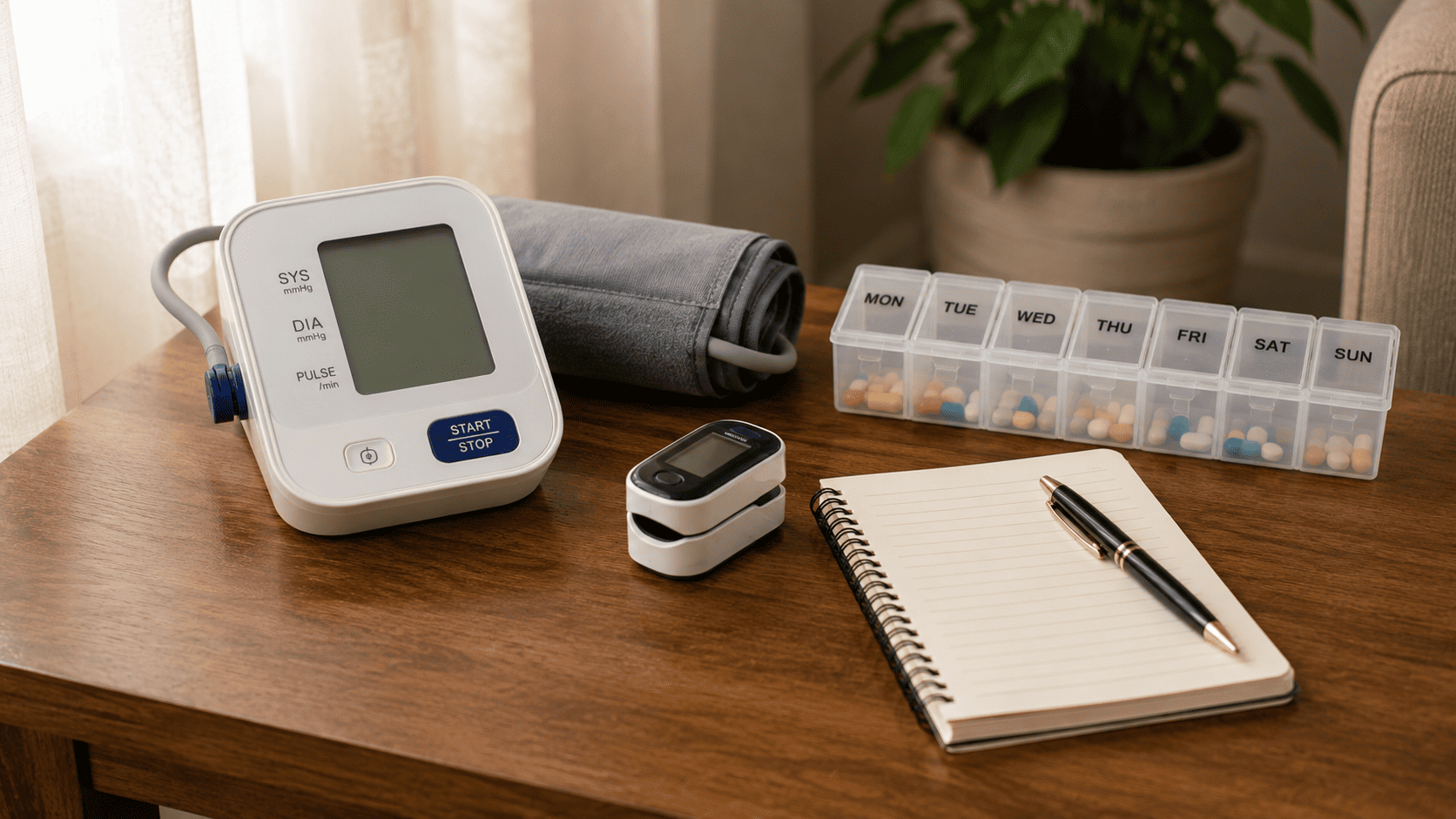
Monitoring equipment first, mobility equipment later. A weighing scale, a blood pressure monitor and a pulse oximeter cover almost everything a stable patient needs. Beds, wheelchairs and oxygen belong to advanced disease or to specific prescribed situations — not to breathlessness in general.
Digital weighing scale
The single most useful item. Keep it in one fixed place on a hard floor, not on tiles one day and a mat the next.
Blood pressure monitor
An upper-arm automatic monitor, used seated with the arm supported. Wrist monitors are less reliable for this purpose.
Pulse oximeter
Useful for spotting a genuinely low oxygen reading and for tracking pulse rate and irregularity. It does not measure fluid.
Adjustable hospital bed
Backrest elevation lets someone sleep propped up properly instead of sliding off a stack of pillows all night.
Commode chair
Water tablets mean frequent, urgent trips. A commode beside the bed prevents night falls and reduces exertion.
Wheelchair and shower chair
Preserve outings and safe bathing when walking distance and standing tolerance drop.
| Situation | Usually needed | Why |
|---|---|---|
| Newly diagnosed, symptoms with ordinary activity | Weighing scale, BP monitor, pill organiser, written symptom diary | Early detection is the whole job at this stage. |
| Symptoms on mild activity, poor sleep lying flat | Adjustable bed or reliable back support, commode chair, shower chair, pulse oximeter | Sleep quality and safe night-time toileting become daily problems. |
| Symptoms at rest, very limited mobility | Hospital bed, wheelchair, air or alpha mattress, close monitoring | Time spent seated and in bed increases pressure-injury risk. |
| Measured low blood oxygen, prescribed by a doctor | Oxygen concentrator or cylinder as prescribed | Oxygen is treatment for low measured oxygen levels, not for breathlessness in general. |
| Coexisting sleep apnoea diagnosed by a sleep study | CPAP or BiPAP as prescribed by the treating specialist | Sleep-disordered breathing is common alongside heart failure and needs its own assessment. |
Oxygen is not a general treatment for breathlessness in heart failure
When breathlessness is caused by fluid in the lungs, the treatment is directed at the fluid, not at the oxygen. Supplemental oxygen is prescribed when blood oxygen is measurably low, based on a clinical assessment. Using oxygen at home to relieve breathlessness without a prescription can delay the treatment that is actually needed. If someone is breathless at rest, the correct action is medical assessment, not a higher flow rate.
Healthy Jeena Sikho supplies hospital beds on rent, oxygen concentrators and BiPAP machines against a valid prescription, along with wheelchairs, commode chairs and mattresses — see the full medical equipment on rent range.
Same-day delivery may be available in selected Delhi NCR and Tricity locations, subject to stock and service availability.
Should someone with heart failure exercise or rest?
Exercise, within limits set by the treating team. Prolonged rest weakens the muscles and worsens breathlessness, creating a spiral that looks like the heart deteriorating but is largely deconditioning. Regular moderate activity and structured cardiac rehabilitation improve exercise capacity and quality of life in stable heart failure.[5,7] During an amber or red period, activity is reduced until the situation is reviewed.
- Start low and build slowly, guided by a physiotherapist or cardiac rehabilitation programme.
- Use the talk test. If the person cannot speak a short sentence while moving, the intensity is too high.
- Warm up and cool down rather than starting and stopping abruptly.
- Add light resistance work for leg and arm strength — standing from a chair is the movement that matters most.
- Avoid heavy lifting and straining, including straining at stool; treat constipation actively.
- Stop and seek advice for chest pain, dizziness, palpitations or breathlessness that is worse than usual.
- Avoid extreme heat and extreme cold, both of which add cardiovascular strain.
For supervised strengthening and mobility work at home, Healthy Jeena Sikho provides home physiotherapy and a panel of rehabilitation and pain-management doctors.
How common is heart failure in India, and why does home management matter here?
Indian heart failure patients are typically younger than Western ones, more often men, and more often have coronary artery disease as the cause. Outcomes in Indian registry data have been worse than in comparable international registries, and a major reason is that many patients are not on the full recommended combination of medicines. Home management — weight, salt, medicines, early contact — is where most of the available improvement sits.
The Trivandrum Heart Failure Registry, which enrolled 1,205 consecutive heart failure admissions across 18 hospitals in Kerala, reported a mean age of 61.2 years, 69% men, and ischaemic heart disease as the cause in 72% of cases. The authors concluded that these patients were younger, more often men, had more ischaemic disease, stayed in hospital longer and had higher mortality than published data from other registries.[1] In-hospital mortality was higher in those with reduced ejection fraction (9.7%) than preserved ejection fraction (4.8%).[4]
Longer-term follow-up from the same registry found a median survival of 3.1 years and a five-year mortality of 59% — and importantly, that only 25% of eligible patients received guideline-directed medical therapy.[2] Ten-year follow-up confirmed that guideline-directed therapy carried lasting survival benefit.[3]
What this means for families in Punjab and Delhi NCR
- Ask explicitly whether the patient is on the full recommended combination, and if not, why. It is a reasonable question and the evidence supports asking it.
- Do not let doses drift. Prescriptions that are meant to be gradually increased are often left at the starting dose when follow-up lapses.
- Blood pressure and diabetes control are heart failure treatment, not separate problems.
- Winter raises risk. Cold weather increases blood pressure and cardiac strain, and respiratory infections in winter are a frequent trigger of decompensation.
When should you go to hospital?
Call an ambulance or go to emergency immediately for any of these
- Severe breathlessness at rest, or being unable to lie flat at all.
- Coughing up pink or frothy sputum.
- Chest pain or pressure, especially with sweating, nausea or pain spreading to the arm or jaw.
- Fainting, or near-fainting with a very fast or very slow pulse.
- A racing or irregular heartbeat with dizziness or breathlessness.
- New confusion, drowsiness or cold clammy skin.
- Blue tinge to the lips or fingertips.
Contact the treating doctor the same day for: weight up more than about 2 kg in two to three days, new or worsening swelling, needing extra pillows, night-time breathlessness, a persistent dry cough when lying down, bloating or loss of appetite, or a clear drop in what the person can manage.
Should you rent or buy heart failure equipment?
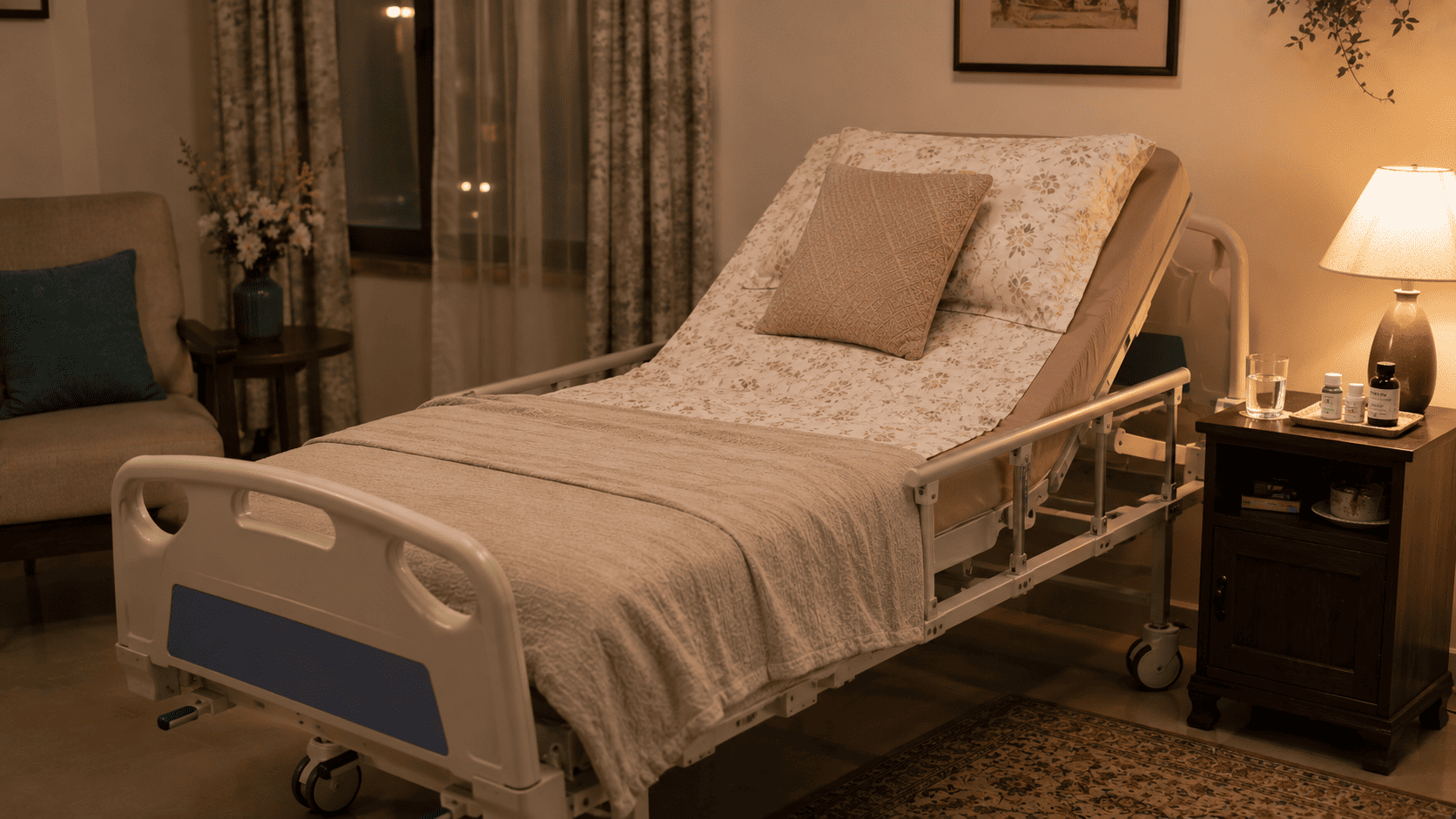
Buy the monitoring equipment, rent the rest. A scale, BP monitor and oximeter are inexpensive, used daily for years, and should be owned. Beds, wheelchairs, mattresses and prescribed oxygen equipment relate to particular phases and are usually better rented, because heart failure fluctuates and equipment needs often ease after a decompensation is treated.
| Item | Usually better to | Reasoning |
|---|---|---|
| Weighing scale, BP monitor, pulse oximeter | Buy | Low cost, used every single day, and consistency of the same device matters for tracking. |
| Commode chair, shower chair | Buy if used daily | Cheap, and needed continuously once symptoms limit bathroom access. |
| Adjustable hospital bed | Rent | Often needed most acutely after a decompensation; the right specification becomes clear in use. |
| Wheelchair | Rent | Requirement commonly eases once fluid is controlled and exercise tolerance recovers. |
| Air / alpha mattress | Rent | Needed when time in bed increases; servicing and pump support are covered during the rental period. |
| Oxygen concentrator, CPAP or BiPAP | Rent, against prescription | Prescribed for specific measured indications, and the requirement is reviewed over time. |
Related home care guides
Oxygen Concentrator on Rent
5L, 10L and portable units, and when oxygen is actually prescribed.
Hospital Bed on Rent
1, 3 and 5 function beds compared, and which suits propped sleeping.
Setting Up a Patient Room
Measurements, socket planning and access before equipment arrives.
Pressure Sore Prevention
Turning schedules and skin checks once time in bed increases.
Home Care After Discharge
What to secure before leaving the ward, and the first 30 days at home.
Medical Equipment on Rent
The full rental range, from beds and mattresses to oxygen and BiPAP.
How Healthy Jeena Sikho supports heart failure families
- Fast setup after a discharge. Heart failure admissions often end abruptly. Same-day delivery may be available in selected Delhi NCR and Tricity locations, subject to stock and service availability.
- Prescription-led supply. Oxygen concentrators, CPAP and BiPAP are supplied and configured according to the prescription provided — we do not set clinical parameters ourselves.
- The full home care list in one place. Adjustable hospital beds, air and alpha mattresses, wheelchairs, commode and shower chairs, oxygen equipment and monitoring devices.
- Rental that follows the phase. Take a bed and wheelchair after a decompensation, return them as exercise tolerance recovers.
- Home physiotherapy and nursing support. Supervised activity to rebuild strength safely, and trained attendants where daily assistance is needed.
- Delivery across Delhi NCR and Tricity. Service availability includes Delhi, Gurugram, Noida, Faridabad, Ghaziabad, Chandigarh, Mohali and Panchkula.
Frequently Asked Questions About Heart Failure Care at Home
Does heart failure mean the heart has stopped working?
No. Heart failure means the heart cannot pump or fill efficiently enough to meet the body's needs, causing fluid to back up into the lungs, legs and abdomen. It is a long-term condition managed with medicines, salt and fluid control, monitoring and activity — not an indication that the heart is about to stop.
How much weight gain is a warning sign in heart failure?
A commonly used threshold is a gain of more than about 2 kg over two to three days, or a steady rise across a week, measured every morning at the same time in the same clothes after using the toilet. That usually reflects fluid accumulation rather than body weight, and it warrants contacting the treating doctor the same day. Confirm the exact threshold with your cardiologist.
Why does a heart failure patient wake up breathless at night?
Lying flat redistributes fluid towards the lungs, so breathlessness worsens when lying down and can wake a person an hour or two after falling asleep. Needing extra pillows, or sleeping sitting up, is an important warning sign of fluid overload and should be reported rather than managed with more pillows.
Can a heart failure patient use oxygen at home for breathlessness?
Only if it has been prescribed after a clinical assessment showing measurably low blood oxygen. Breathlessness in heart failure is usually caused by fluid, and the treatment is directed at the fluid. Using oxygen without a prescription can mask the problem and delay the treatment actually required. Breathlessness at rest needs medical assessment, not a higher oxygen flow.
Which painkillers should be avoided in heart failure?
Anti-inflammatory painkillers commonly sold over the counter for body ache, joint pain and fever can cause salt and water retention, reduce the effect of heart failure medicines and strain the kidneys. Effervescent and antacid powders can also carry a significant sodium load. Check with the treating doctor or pharmacist before taking any new medicine, including anything bought without a prescription.
Is rock salt or black salt safe in a heart failure diet?
No. Rock salt, black salt and sendha namak are still sodium and are counted the same way as table salt. Low-sodium salt substitutes are a separate concern because most replace sodium with potassium, which can be unsafe alongside common heart failure medicines. Ask the treating doctor before using any substitute.
Should someone with heart failure rest or stay active?
Stay active within limits agreed with the treating team. Prolonged rest weakens muscles and worsens breathlessness through deconditioning. Regular moderate activity and structured cardiac rehabilitation improve exercise capacity and quality of life in stable heart failure. Activity is reduced during a period of worsening symptoms until it has been reviewed.
When should the water tablet be taken?
Usually in the morning, with any second dose in the early afternoon rather than at night, so that sleep is not broken by bathroom trips and night-time falls are avoided. Doses and timing must follow the treating doctor's instructions, and should not be skipped or adjusted at home unless a written flexible plan has been provided.
Does a heart failure patient need a hospital bed at home?
Not in the early stages. An adjustable bed becomes useful when the person cannot sleep lying flat, needs to be propped up consistently through the night, or has become largely bed-bound. Backrest elevation provides stable positioning that a stack of pillows cannot, and side rails and height adjustment make care safer for one caregiver.
How quickly can equipment be delivered after a heart failure admission?
Delivery time depends on location, stock and service availability. Across Delhi NCR and Tricity, same-day delivery may be available in selected locations. Sharing the discharge date a day in advance allows the bed and any prescribed equipment to be installed before the patient reaches home. Call +91 98769 78488 or message +91 98759 15278 on WhatsApp.
References and further reading
- Harikrishnan S, Sanjay G, Anees T, et al. Clinical presentation, management, in-hospital and 90-day outcomes of heart failure patients in Trivandrum, Kerala, India: the Trivandrum Heart Failure Registry . European Journal of Heart Failure 2015;17(8):794–800.
- Harikrishnan S, Jeemon P, Ganapathi S, et al. Five-year mortality and readmission rates in patients with heart failure in India: results from the Trivandrum Heart Failure Registry . International Journal of Cardiology 2021.
- Long-term prognosis in heart failure: findings from the ten-year follow-up of the Trivandrum Registry .
- Ganapathi S, Jeemon P, Krishnasankar R, et al. In-hospital and three-year outcomes of heart failure patients in South India: the Trivandrum Heart Failure Registry . Journal of Cardiac Failure 2018.
- McDonagh TA, Metra M, Adamo M, et al. ESC guidelines for the diagnosis and treatment of acute and chronic heart failure . European Heart Journal.
- Clinical profile and 90-day outcomes of 10,851 heart failure patients across India: National Heart Failure Registry . ESC Heart Failure 2022.
- National Institute for Health and Care Excellence (NICE). Chronic heart failure in adults: diagnosis and management, NICE guideline NG106 .
Medical disclaimer. This page is general educational information about home care for chronic heart failure. It is not medical advice and does not replace consultation with a qualified cardiologist or physician. Medication choices and doses, diuretic adjustments, salt and fluid limits, oxygen therapy, CPAP or BiPAP settings and exercise prescriptions must be determined by the treating clinical team, and medicines must never be started, changed or stopped at home. Healthy Jeena Sikho supplies, installs and services home medical equipment according to the prescription provided and arranges nursing and therapy services; we do not diagnose conditions or independently set clinical parameters. For severe breathlessness, chest pain, fainting or a sudden deterioration, call emergency services or go to the nearest hospital immediately.